I never knew this! How cool!!
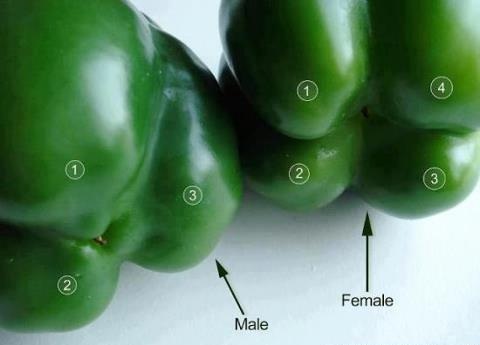
Flip the bell peppers over to check their gender. The ones with four bumps are female and those with three bumps are male. The female peppers are full of seeds, but sweeter and better for eating raw and the males are better for cooking.
Category Archives: ~Gardening
Magic Jelly Beans
As the weather gets nicer outside I am dieing to get out and garden. I found this great little planting treat on Face Book on $5-10 Dollar Meals- Cheap Eats. Grab a handful of Jelly Beans and plant them in the garden with your children. Have them water them thoroughly and talk to them about planting and how something that starts from seeds can grow and provide us with food to eat. Do tell them though that these Jelly Beans are a fun magical experiment and that if they plant them and nourish them carefully something might grow that they will love. In a couple of days after you see them watering and caring for their magical beans – when they are not looking – take the beans out and “plant” a huge lollipop. They learn something about the process of gardening, doing a little work pays off and may want to help more in the garden.
\
A Few Unusual Ideas For Decorating Your Home by Guest Writer Ella Andrews
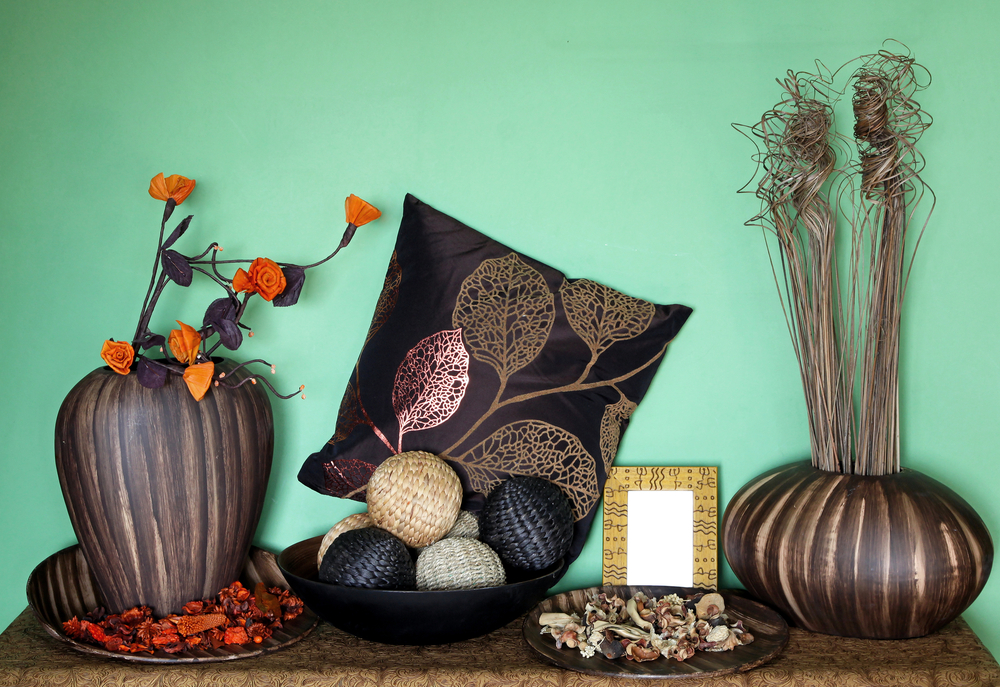
If you are not keen on traditional ways of home decorating you can always go for some nontraditional ways of doing that. We can assure you that your friends are going to love your place. As you know most people prefer to stick to traditional ways of making their dwellings more comfortable and cosy. That is why an innovative approach to the matter is always welcome. The following lines will give you a few ideas on how to decorate the rooms in your place in an unconventional way so that you can make it a great place to live in and to pleasantly surprise your guests.
Decorate the bedroom
People are used to thinking that bedrooms as a rule should all look in the same way – a bed, a chair and that is. But this is not obligatory. You can always think of some clever ways to renovate the room. Many people place their mattresses directly on the floor so that they can be closer to the ground. This is an interesting idea that you can make even more unconventional. Hide the mattress under a colourful tent made of a couple of veils. This will turn your bedroom into a real fairytale in Oriental style. Another interesting solution for your bedroom is to use a mannequin where you can put the clothes you are about to wear on the next day. Or you can simply use different combinations of clothes and colours to decorate it and use it to brighten your room mood.
Decorate the kitchen
This is the most difficult place to decorate as actually you do not have a great choice on what exactly to decorate. You cannot place a flowerpot on your oven after all. However, you can still experimentalise and play with the kitchen lockers and shelves. What you can do is replace or relocate the doors of the lockers with small curtains in colourful and bright prints. You can choose flower prints, dots or anything else you like that makes you feel good. But you can go even further – you can use the box of your old TV to store your collection of books.
Decorate the bathroom
Instead of buying new shower curtains you can use a couple of towels to serve you with the very same purpose. Or you can alternate a shower curtain with a towel. This decoration looks quite interesting. Its only disadvantage is that towels are more difficult to get dry but it is worth it.
Decorate your garden
If you are living in a house you will have to think of a few ways to make your garden look more cosy and beautiful. You can use a ladder on which to place flowerpots or an old bicycle where to hang baskets with flowers. You can even paint a construction cart in bright colours and fill it with flowers.
Bio: Ella Andrews is a content writer who has great flair for decoration and interior design. She is always searching for new challenges. Therefore her present article is focused on exterior home design related theme.
Flowering Shrubs Guide By Guest Writer FlowersByPost.Org.UK
There are quite a few flowering shrubs which can make your garden look particularly pretty and any landscape much more appealing. If you live in a temperate region, it’s easier to grow and take care of such a shrub. The following list is based on the seasonal interest of each flowering shrub. This interest is not only based on the blooms of the shrub, but also on their shape, branching pattern and any other striking peculiarity. The blooming times of the following shrubs vary depending on the region they are growing at. Most people purchase flowering shrubs that they can enjoy all year long so this is the main focus of the list as well.
Spring Flowering Shrubs: There are many lovely shrubs which are in bloom in spring, so it won’t be hard to pick one. Forsythia is a shrub with bright yellow blooms which will beautify your garden from the very first days of spring. Some growers even use methods for forcing the flowers to bloom before spring has come. Some of the most famous flowering shrubs are azaleas and rhododendrons, with some of their types being evergreen. Another popular choice is the lilac, which is a late-comer, but it’s one of the perfect heralds of spring. The lilac has a lovely scent, whose aroma floats in the air everywhere around it and it’s quite recognizable all over the world. Its pretty petals will make your garden a true fairytale spot.
Summer Flowering Shrubs: If you live to the south, you can enjoy the blooms of the mountain laurel, a symbol of the transition from spring to the warmest season. In areas
where the laurel is native to, it can be mostly found in the forests. Another flowering shrub for the summer is the Rose of Sharon, which is in bloom in the second half of summer. The shrub is related to the Hibiscus, but its blossoms are not as large.
Some of these flowering shrubs double in fall and winter too – not devoid of interest. With outstanding autumn colours they add beauty to every landscape.
Fall Shrubs: Shrubs may be smaller than trees, but in autumn it rarely matters, as these following types look lovely. The Viburnum shrub produces white blooms in spring and attractive fall foliage too. They also have clusters of bluish berries which makes them even prettier. The Oakleaf Hydrangea is all about its beautiful clusters of white flowers during the summer. In Fall, on the other hand, its foliage turns purple, red or orangey-bronze – the perfect autumn colours for your garden.
Winter shrubs: Perhaps winter is not the best season for plants, shrubs and flowers, but it shouldn’t result in you neglecting your garden. In terms of landscape interest it’s quite poor, so the focus is usually on the unusual branching patterns. One of the examples of a winter shrub with
a peeling bark is the oakleaf hydrangea, thus making the shrub a triple winner – popular in summer, fall and winter. Another shrub worth a mention is Harry Lauder’s Walking Stick. Because of its rather unusual branching pattern this shrub is often called “contorted filbert” and “corkscrew hazel”. Many people who have this shrub in their garden his shrub in their garden decorate it for Christmas and New Year’s. It’s a good prop for hanging Halloween lanterns and decoration as well.
The Three Sisters – Corn, Beans and Squash
Editor’s Note: Copied from: http://www.threes.com/index.php?option=com_content&view=article&id=2335:three-sisters-corn-beans-squash&catid=79:food-nutrition&Itemid=57 – Please check out this great website for more great information like is found in this article. I read this and thought about how great a story this is and wanted to share with my readers. Hope you enjoy and please check The Book Of Three’s.
_____________________________________________________________________________________________________________________________
The ancient Native American technique of growing Corn, Beans, and Squash together in an arrangement called the Three Sisters is the ultimate in companion planting and helps increase harvests, naturally!
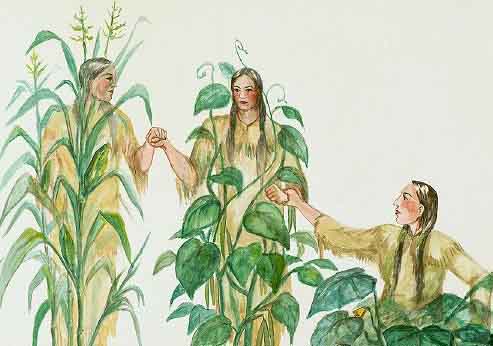
Corn acts as a support for climbing bean vines, the beans fix nitrogen in the soil for the high feeding requirements of corn and squash, and the squash provides mulch and root protection for the corn and beans! After cooperating beautifully in the garden, corn and beans form a complete protein when eaten together! How’s that for a mutually beneficial relationship?
The Three Sisters are all easy to direct sow in the garden and are a great project for children, teaching them about the beauty of natural harmony while providing a fast-growing reward for their efforts.
Make the best possible use of your garden space this season, and try growing the Three Sisters! Just follow the easy steps listed below, fertilize well, plant other companions like herbs to assist with pest control, and you’ll be harvesting your best crop in no time!
The Iroquois believe corn, beans and squash are precious gifts from the Great Spirit, each watched over by one of three sisters spirits, called the De-o-ha-ko, or “Our Sustainers”. The planting season is marked by ceremonies to honor them, and a festival commemorates the first harvest of “green” corn on the cob. By retelling the stories and performing annual rituals, Native Americans passed down the knowledge of growing, using and preserving the Three Sisters through generations.
Planting instructions
In May or June when soil has warmed:
Shape a flat-topped circular mound of soil about a foot high and 2 feet across at the top, sloping outward toward the base. Plant a circle of Corn seeds on top, about 5 or 6, and water them in well, tamping down your soil mound firmly so it doesn’t wash away in the first rain. Space the mounds 3 or 4 feet apart in the garden.
Since all corn grows on sturdy, dependable stalks, the variety you choose depends on the flavor, disease resistance, and holding ability you want. Sugar Buns is a Sugar Enhanced (SE) yellow hybrid with absolutely scrumptious golden kernels and is positively scrumptious. For SE whites, you can’t beat Silver Princess, with extra-long ears bursting with flavor. And for the sweetest ears yet, you absolutely must try new Corn Mirai™, available in Yellow, White, Bicolor, and even a Mini!
About two weeks later:
When your corn reaches about 5 or 6 inches high, plant Bean seeds (6 to 8 of them) around the edges of the flat top or about halfway down the sloping sides of the circular mound. Push the seeds down deep into the soil and, if you’re planting on the slope, make sure the soil is nice and firm. Add a bit of Nature’s Aid at planting time to help the Beans fix nitrogen.
To get your Beans to climb up the cornstalks, choose Pole rather than Bush varieties. Smeraldo is far and away the best-tasting Pole Bean, with flat pods up to 10 inches long on vigorous 4- to 6-foot vines. Park gardeners rave about Kwintus, a super-early performer with succulent pods on stringless 8- to 10-inch pods. And Blue Lake is the classic name in Beans, with top-quality dark green pods that are both stringless and fiberless, even if you pick them a bit late. We even have Blue Lake available in organic seed!
One week or so after that:
Plant Squash seeds around the base of the mound, on flat ground. You can make them radiate around the mound, or just go in the direction you have available space! 6 to 8 seeds in a ring around the base of the mound is usually plenty.
The traditional Squash family member for this Sister is Pumpkin, with its all-American flavor and long growing season. Rumbo is a unique Korean variety that looks like an heirloom Pumpkin but tastes sweeter and more succulent than a Butternut Squash! For a quicker harvest, grow Summer Squash varieties such as organic Park’s Early Summer Crookneck or Zucchini such as space-saving One Ball Hybrid.
When everything begins growing . . .
Thin the plantings to 2 or 3 Corn stalks, each with no more than 2 Bean plants winding around it. (You’ll need to help the Beans get started growing up the stalks). The Squash is going to vine along the ground, so the number of plants you need depends on how far apart your mounds of corn and beans are, how long the vines get, and how much walking space you need in the garden.