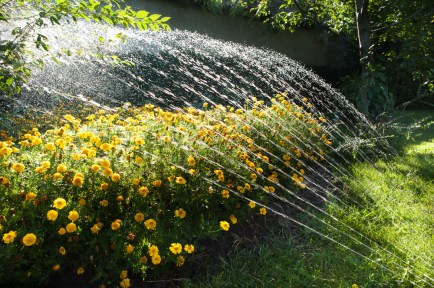
 There are quite a few flowering shrubs which can make your garden look particularly pretty and any landscape much more appealing. If you live in a temperate region, it’s easier to grow and take care of such a shrub. The following list is based on the seasonal interest of each flowering shrub. This interest is not only based on the blooms of the shrub, but also on their shape, branching pattern and any other striking peculiarity. The blooming times of the following shrubs vary depending on the region they are growing at. Most people purchase flowering shrubs that they can enjoy all year long so this is the main focus of the list as well.
Spring Flowering Shrubs: There are many lovely shrubs which are in bloom in spring, so it won’t be hard to pick one. Forsythia is a shrub with bright yellow blooms which will beautify your garden from the very first days of spring. Some growers even use methods for forcing the flowers to bloom before spring has come. Some of the most famous flowering shrubs are azaleas and rhododendrons, with some of their types being evergreen. Another popular choice is the lilac, which is a late-comer, but it’s one of the perfect heralds of spring. The lilac has a lovely scent, whose aroma floats in the air everywhere around it and it’s quite recognizable all over the world. Its pretty petals will make your garden a true fairytale spot.
Summer Flowering Shrubs: If you live to the south, you can enjoy the blooms of the mountain laurel, a symbol of the transition from spring to the warmest season. In areas  where the laurel is native to, it can be mostly found in the forests. Another flowering shrub for the summer is the Rose of Sharon, which is in bloom in the second half of summer. The shrub is related to the Hibiscus, but its blossoms are not as large.
Some of these flowering shrubs double in fall and winter too – not devoid of interest. With outstanding autumn colours they add beauty to every landscape.
Fall Shrubs: Shrubs may be smaller than trees, but in autumn it rarely matters, as these following types look lovely. The Viburnum shrub produces white blooms in spring and attractive fall foliage too. They also have clusters of bluish berries which makes them even prettier. The Oakleaf Hydrangea is all about its beautiful clusters of white flowers during the summer. In Fall, on the other hand, its foliage turns purple, red or orangey-bronze – the perfect autumn colours for your garden.
Winter shrubs: Perhaps winter is not the best season for plants, shrubs and flowers, but it shouldn’t result in you neglecting your garden. In terms of landscape interest it’s quite poor, so the focus is usually on the unusual branching patterns. One of the examples of a winter shrub with  a peeling bark is the oakleaf hydrangea, thus making the shrub a triple winner – popular in summer, fall and winter. Another shrub worth a mention is Harry Lauder’s Walking Stick. Because of its rather unusual branching pattern this shrub is often called “contorted filbert” and “corkscrew hazel”. Many people who have this shrub in their garden his shrub in their garden decorate it for Christmas and New Year’s. It’s a good prop for hanging Halloween lanterns and decoration as well.
If you like this post and want to share it then click the service!

 Country & Victorian Times