Green Cleaning

It’s time to get your home spring-ready. More than likely you have been buying the same cleaning products for years. However, it’s a good idea to consider switching to cleaning products tagged green or good for the environment. They aren’t just at specialty stores anymore; they’re popping up every day at grocery stores and supercenters. With more options comes confusion and uncertainty.

To cut through it all, we talked to Matt Pliszka, a scientist with Simply Safe Products. His company’s mission is to bring green cleaning to the mass market at an affordable price.

What should you look for in a green cleaning product?

First, look at your mainstream traditional brands. If the label says “warning, corrosive, danger,” that should be a big tip-off. If it burns the skin, then chances are it’s not good for you or the environment. Things to look for on the label are “non-hazardous,” “mild or nonirritant,” and “neutral pH.”

What does neutral pH mean?

A pH in the 7 range, that’s the pH of water. Alkalinity can cause skin irritation and other issues. Generally, if there is no mention of pH, then the product is either an acid or alkaline.

If it has a neutral pH, how does it clean?

Neutral pH cleaners use detergents and get underneath the soil to loosen it from below. Then wiping takes soil away. The detergents release the soils from the surface.Chemical cleaning agents attack the soil and surface, which can be very aggressive. Chemical cleaning also doesn’tjust stop at soil, which is why the surface you’re cleaning can become marred or ruined.

I have noticed a lot of cleaners use citrus or say they are all-natural. Are these green?

There’s an assumption that if it’s all-natural, it’s safe and environmentally friendly. Not necessarily true. Many orange cleaners use d-limonene from orange peels. It is a great cleaning agent for grease, but it’s flammable and an air pollutant. If you see a cleaning agent that says all-natural, be suspicious; there’s a lot of chemical processing involved in converting fruits into cleaning agents. Likewise for nontoxic because household cleaners are never meant to be consumed.

Which cleaning products are the biggest offenders?

Drain cleaners are the most hazardous. There really is no other option, so buyjust enough for one use. Of the most commonly used products, dishwasher detergents, tub-and-tile cleaners, and toilet bowl cleaners are the worst. Look for dishwasher detergents that contain no phosphates. Waste-treatment plants cannot remove phosphates, so they end up in natural water areas. •

Here’s A Tip For You – Actually Several

1-Get a wonderful shine for your hair by rinsing it with cool water and vinegar. Don’t worry about the smell; it goes away quickly, leaving your hair shiny and lustrous.

2-If you have mineral deposits in a narrow neck jar vase, try using a denture tablet. Add a small amount of water to the vase and drop in the tablet, breaking it up as needed. Let it sit overnight or as the package recommends and rinse well.

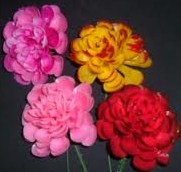
3-To freshen old plastic flowers, spray with hairspray.

4-To get rid of static cling on a skirt and slip, just pin a small safety pin to the inside of the hem.

5-If your small appliance has a long cord, try looping it and stuffing the excess through a cardboard paper towel or toilet paper roll.

6-Protect teeth on hand saws by covering them up in storage. Cut a length of garden hose to  fit the length of the saw, then split it down one side. Push the teeth of the saw into the split – an added benefit is you are also protected.

7-Want to keep your refrigerator operating efficiently? Try these two small tricks: First, clean the gaskets on the door, and replace them if they are loose. If you close a dollar bill in the door and can pull it out easily it is time to replace the gaskets. Then, stock empty space with jars or pitchers of water. Cold water is refreshing and helps keep air in your fridge cold.

Antique Doll Care

Storage

Some people make the mistake of storing antique dolls in plastic boxes. This can lead to problems if moisture finds its way into the box and causes mold to grow on the doll’s clothes. The best place to store antique dolls is in a chest or cupboard. For added protection, you should wrap acid free paper around each doll. Also, you should never lay dolls down on their back for lengthy periods of time. Lay them face down to prevent their eyes from falling out.

Cleaning

Wooden antique dolls should never be exposed to water as this can leave a stain on them. For other types of dolls, you should only use distilled water and a soft cloth to to clean them. If you make the mistake of using soap, the residue can cause the doll to become discolored. Antique dolls made of cloth can be vacuumed safely by putting a layer of nylon netting on the end of the vacuum hose.

Decorations

Many people choose to display their antique dolls around their homes for decorations. If you do this, you should be sure to dust them whenever you dust your home. You should never put them in a place where they are exposed to excessive sunlight. Prolonged exposure to sunlight can fade the paint on the doll and also fade the colors of the clothes.

Insects

If you have wooden antique dolls, you should check them occasionally for insects. Insects can easily destroy wooden dolls. Once they have infected one of the dolls, they can quickly move on to the other dolls in your collection.

Temperature

It is common for people to leave their antique dolls in the basement or attic. This is not the ideal place for these dolls because of the fluctuating temperatures from season to season. Antique dolls should be stored at a constant room temperature.

Antique dolls should always be taken care of properly, especially when they may be sold in the future. If you take good care of them, you can be assured that your investment will pay off in the future.