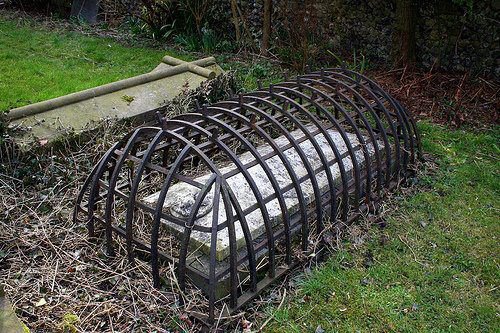
Victorian Caged Grave

Although this is a bit different from what I usually post, I came upon this picture on the internet and just had to share. I have read and watched a lot on the subject of the undead and vampires, and even read about this cage over graves before. However, I have never actually seen a picture of one before and found it unique. So, I know what your asking, “so what does this have to do with this site and why is it posted?” Well, it has to do with the Victorian era and all of their superstitions and what we now know of as irrational fears.

The caged grave as seen above was used to prevent one of two things. 1: If you were to come back alive and become a walking undead then you wouldn’t be able to remove yourself from this cage and you could be dealt with. 2: If you were a vampire the same situation would apply to you.

I find death during the Victorian era to be fascinating, they seemed to have a love affair with death at least from an onlooker some 100 years in the future. Did you know that many peoples only photograph was taken AFTER they died. Yes, if you came from a poor family and you died, your family could scrape enough money together to have a memorial photo of you by yourself or your body could be “staged” to be in a family photo. This included babies and older folks and these photos were kept in a memorial album.

A memorial album was basically a scrapbook of photos of the deceased. You see, you would have photos of your loved ones, but you would also have memorial cards sent to you with the photos of the deceased person on the front announcing their death. Since everything delivered was delivered very slowly back then from one area of the country to another it might be weeks before you found out someone related to you died. This would announce their death but would give you a keepsake of their death and it would be added to your memorial photo album.

Many of these photos are sought after by collectors and can go for large sums of money. Especially sought after are entire albums, photos that are metal and those of young children and babies.

A good source of these pictures may be found at http://memorialphotosofthedead.wordpress.com/ and if you venture there please be advised as to what you will see. There are photos from the Victorian era as well as posed photos of gunned down armed robbers and pictures of famous people who have died since the Victorian era.

The Victorian era is filled with mysterious ideals and love for long forgotten traditions, still some we are using today.
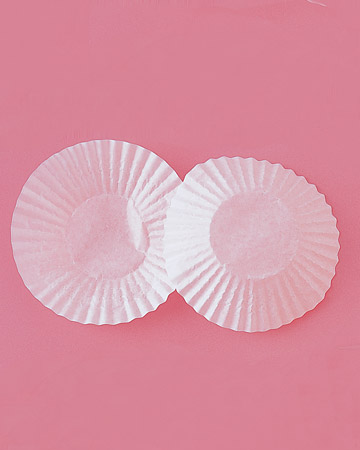
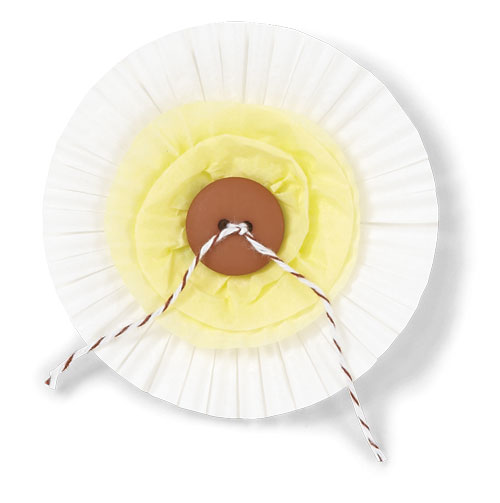
Scrapbook Flower From Cupcake Liner

Scrap Booking Using Kitchen Supplies

Simple techniques can add serious “wow” to your scrapbook layouts when you use unusual supplies to create page accents. And cupcake liners, a kitchen staple, are a perfect substitute for patterned paper when you create flowers. The lightweight texture adds an element of surprise to your creation.

Here, we’ll show you two “can’t miss” flower ideas for your cupcake liners: fringed flowers and box flowers.

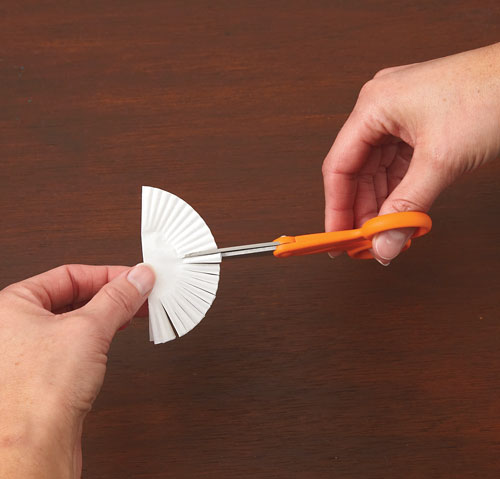
1. Fold cupcake liner in half. Cut fringe along crimped edge of liner. Unfold.

steps

2. Cut another liner in spiral direction, leaving nickel-sized circle as the base.


steps

3. Adhere spiral to circle base in circular fashion. Top with button or brad.

How to Create a Cupcake Liner Box Flower

macro

steps

1. Fold four cupcake liners in half.


steps

2. Layer folded liners over one another and secure together with adhesive.


steps

3. Fold back each cupcake liner edge to add dimension.

(Originally posted at: http://www.creatingkeepsakes.com/articles/Box_Flower_and_Fringe_Flower_Techniques?bc=c ! Scrap Booking Technique: Using Cupcake Liners to Create Flower Accents by Joannie McBride)

“Country Victorian” Decorating

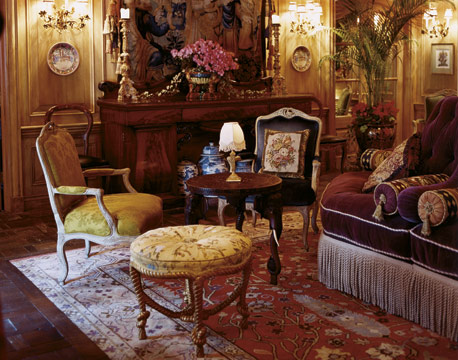
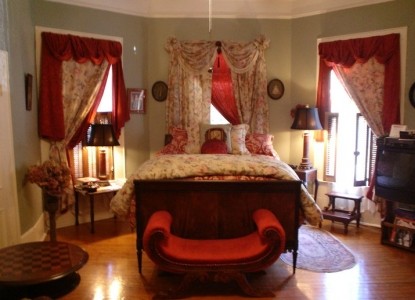
Victorian Era style reflects home decor during the reign of Queen Victoria from 1837 – 1910. “Country Victorian” focuses primarily on the feel and look of Victorian countryside summer homes. While this decorating style is very similar to traditional Victorian decor, it incorporates a more airy and relaxing feel.

Colors: “Country Victorian” decor incorporates a variety of colors such as pastel pinks, greens, blues, and peaches. These can be paired with darker hues of mauve and incorporate the occasional navy, indigo, or deep forest green. “Country Victorian” homes often inspire picturesque images of the countryside or seaside. Pick an idyllic image of a rustic vacation spot and use this to influence your color selections. Sea foam green and varying shades of blue with a touch of peach will invoke an image of the seaside while pink, mauve, mint green, and forest green will speak of a countryside filled with flowers growing down a rolling hillside. Rich patterns are common in Victorian home decor on everything from the furniture to the wallpaper.

Materials: “Country Victorian” decor typically uses lots of lush and luxurious fabrics such as silk, velvet and lace. Your “Country Victorian” home should still have an abundant supply of interesting fabrics, but you should not to use those with a light and airy feel such as cottons and chintz. Use lace or gauzy fabrics at the windows to let plenty of sunlight in. Embroidered blankets, rugs, pillows, and throws will lend to the Victorian feel and look of the home. Tassels and ribbons

are also distinctly Victorian. Furniture with a lacquered grained wood finish will give the home a bit of a rustic feel. Wicker is another material frequently associated with “Country Victorian” homes. Couches and chairs should be plump and a bit overstuffed.

Accessories: In a “Country Victorian” style home, it is the little touches that often bring the look together. Victorian decor is often associated with a business and somewhat cluttered look. Placing antique items and Victorian era prints and artwork throughout the home will complete your “Country Victorian” theme. Dried flowers are a popular feature in homes of this style. Nature-inspired knickknacks such as seashells and pebbles work with this theme as well. Opt for pewter and brass light fixtures. Painted plates and porcelain dogs and other small creatures are fine finishing touches for a “Country Victorian” home.

Valentines Day Gift Of Gloves

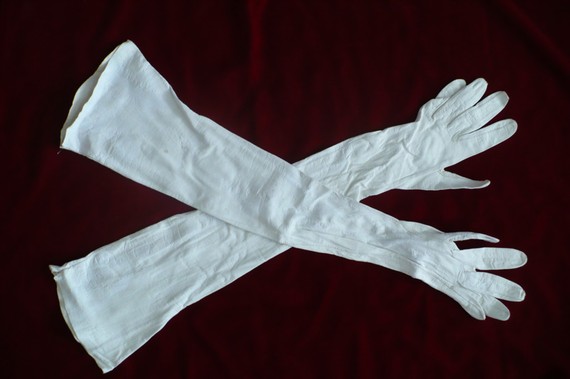
A Valentines Day historical tradition: Just prior to the Elizabethan era, gloves were worn almost exclusively by men. But, by the late 16th century, gloves became a traditional Valentine’s Day gift for women.

In fact, it became custom for a young woman to approach her man of choice and utter the verse  “Good-morrow Valentine, I go today; To wear for you, what you must pay; A pair of gloves next Easter Day.” Having thus been ambushed, the man was expected to send the woman a gift of gloves to wear on Easter Sunday. Sometimes men sent women gloves without an invitation. If the lady wore the gloves on Easter, it was a sign that she favored the gentleman’s romantic overtures.

Pomegranate Seed Harvesting – Quickly

Love, pomegranate seeds but hate to have to get them out, or need them for a recipe…. heres some quick help with this pesky task:

1: Gently roll the pomegranate in your palm against the counter… but not too hard, you don’t want to squish those juice delicious seeds and make them no good.

2: Slice in half – on cutting board…. juice can stain a light colored counter.

3:Pry out seeds in handfuls and transfer them to another bowl.

Then eat the sweet delicious little seeds or have them ready for that special recipe.