How To Prep Your Garden For Cold Winter Months

Having a nice and healthy garden requires certain effort on your part, especially when colder months are as good as here. Of course, your outdoor garden has to get proper sleep so that it can flourish during the spring season. With some changes and a little bit of work, you’ll give your lovely garden perfect conditions for quality winter sleep. So, if you’re unsure about the basic needs of your plants and trees during this cold period, keep on reading.

image-5Some cutting is necessary

Take a good look at your plants and bushes. There will undoubtedly be some dry foliage and stems. It’s very important to cut those back so that you can avoid further decomposition. Also, make sure to collect all the seeds that plants have to offer for the following season.

Remove the weeds

Any type of weed and debris should be removed from the plants’ surroundings before the ground gets too hard. This will allow them to get enough nutrients even during the winter months so that they can look healthy in spring. Also, weeds and debris can attract different pests, so your garden will definitely benefit with them gone.

Add organic compost

With dead plant debris, leaves and other organic waste you can make your own effective and protective compost soil that will keep the plants warm and provide them with nutrients. Make sure to add an extra layer of protective soil once the ground hardens completely. Snow will act as a good protective layer from the cold, but you also need this alternative since you cannot count on snow throughout the whole winter.

image-2Protect the trees

Trees also need adequate protection during winter months. Make sure to add tree-guard products. You can make these yourself or purchase the premade ones. This will significantly reduce the possibility of hungry critters munching on the bark. Also, don’t forget to prune the trees properly. Even though snow will act as a protective layer, drier branches can break under its weight which can be very dangerous.

What about Christmas tree?

If you plan on having a live Christmas tree, make sure to tend to it properly beforehand. This includes digging the hole in the ground for the tree before it gets too hard. Also, make sure to keep the soil somewhere safe in order to prevent freezing. Your garage can serve this purpose perfectly.

image-4Turn off all water sources

Removing water from your garden will actually prevent the soil, plants as well as garden props from freezing. Therefore, make sure to turn off your garden pipe and store the hose in the garage. If you have garden sprinkles, don’t forget to turn these off, too. Moreover, drain the fuel from any of your garden machinery such as lawn mowers.

Rake the leaves

Don’t leave the fallen leaves scattered around your garden. Instead, make sure to rake them and gather them on your pile for organic compost. Still, there will always be organic material that’s too decomposed for this purpose. Don’t try to make it work, but get the organic waste removed in JNS skip bins and similar services.
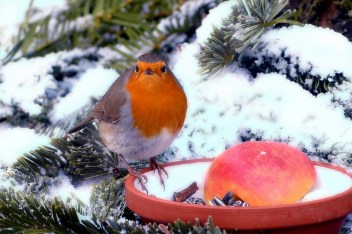
image-1

Some plants will require more specific work compared to others when it comes to prepping for the winter season. In that respect, make sure to do a thorough research so that you know how to deal with every type of plant, herb, vegetable or shrub in your garden. The above-mentioned steps are the ultimate basics for effective winter garden prep, but you still need to pay special attention to tenderer flora that you want to take care of.
Recreating A Victorian Christmas: It’s Not As Difficult As You Think By Eve Pearce

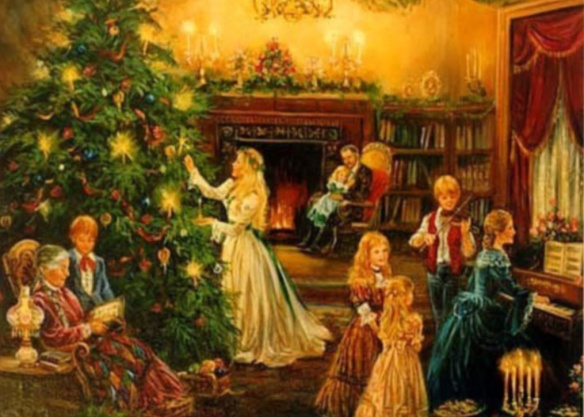
539770-bigthumbnailA winter festival has been celebrated since pagan times but it wasn’t until the Victorian era (1837-1901) that traditions that are associated with Christmas really took off and the season began to resemble modern-day Christmas.
You may have thought that Christmas cards, Christmas crackers, turkey dinner with too much punch and opulent toy store displays were symbols of the commercialism that comes with today’s festive season, but they actually had their origins in Victorian times.

Christmas Cards

The Christmas card was born in 1843 when wealthy business man, Henry Cole, hired an artist to design a card for Christmas.  The artist drew a family around the dining table and it contained a festive message.  The cards were sold for an impressive one shilling each, putting them out of the reach of most ordinary people.  The expense meant that children were encouraged to make their own, before mass printing techniques in the 1880’s brought the price down.

To make your own Victorian Christmas cards, just follow these simple steps:
1 Create lace effect paper using strips of ordinary plain paper and cut out a scalloped edge.  You can do this via a template or draw your own.
2. Place a folded cloth under your paper to protect your table and then use a pin to make lots of tiny holes in your paper – this will give it the appearance of lace.  If children are making the cards, please ensure you supervise them.
3. Stick your ‘lace’ paper along the edge of a piece of white card.
4. Stick a Victorian picture onto the front of your card – or if you want to have a go at recycling you could use pictures from last year’s cards or cut them out from leftover Victoriana gift wrap.  Examples of the types of illustrations that adorned Victorian cards can be found from an original collection at the Library of Birmingham.
If you are unsure, you can also watch an instructional video by the BBC.

Christmas Crackers

In 1847, a confectioner called Tom Smith was looking for a new and inventive way to sell sweets with a bang.  He had discovered the sugared almond ‘bon bon’ in France and wanted to make it more popular with his customers in Britain, so he began by wrapping the bon bons in paper tissue with a love moto. The idea for the cracker was inspired by the sound of a log crackling in the fireplace. Tom thought that to combine the wrapped sweets and motto with a crackle would make them more appealing for Christmas.  He experimented with chemical compounds until he found one that made a bang when the paper was torn. The iconic cracker had arrived.

You can make your own crackers:
1. Take the cardboard inners of three small toilet rolls and measure out some tissue paper the same length as the cardboard rolls.
2.  Place double sided tape along one edge of the tissue paper, roll up the toilet rolls and stick down.
3. Roll up a second sheet of paper tissue that is slightly shorter than the first sheet.
4. Tie a ribbon at the neck of your cracker and remove the end toilet roll, then place a cracker snap inside, with double sided tape at both ends to secure it to the tied end of the cracker.
5. Place sugared almonds and a love motto in your cracker and tie up the remaining open end with another ribbon, sticking down the second piece of tape on your snap.
6. You can decorate your crackers with bows, pieces of fabric or Victoriana images.

xmasparty

Turkey Dinner

Turkey was the meat of choice for upper class Victorians on Christmas day and it gradually replaced the more traditional choices of beef and goose, until by the start of the 20th century, it became the most popular seasonal dish.  You could opt for goose if you want to try something both traditional and different.
Charles Dickens described a Christmas dinner of roast goose with sage and onions, gravy, mashed potatoes and apple sauce in his famous novel, ‘A Christmas Carol’. It’s really easy for you to have the same.

1. Preheat your oven to the temperature suggested for your goose.
2. Remove giblets and excess fat from the cavity – you can use this fat to spread over the goose to enhance the cooking.
3. Stuff the neck cavity with sage and onions – slice your own onions to add to the mix as this tastes far more superior than packet sage and onion.
4. Pierce the skin with a fork, add a small amount of salt and pepper and rub butter into it. Place on foil on a meat tin in the center of the oven.  You will need around 2 hours, 45 minutes of cooking time for a 4.5kg goose.
5. Transfer to a serving dish and leave to stand for 20 minutes before you carve as this will retain more of the flavors.
6. Add home made mashed potatoes with butter and a spoonful of apple sauce.

 Christmas Trees

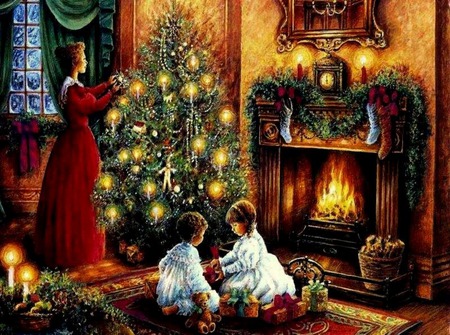
Pagans used to decorate fir trees in their winter festivals but the traditional of the Christmas tree began when Prince Albert got one for Queen Victoria. The Illustrated London News published a drawing in 1848 of the prince and Queen and all their children surrounding an elaborate Christmas tree decorated with candles, home made decorations and sweets. After seeing the drawing, the public followed suit.
You can go traditional by choosing a real Christmas tree and decorating it with handmade paper ornaments and sweets you can hang from the branches. If you want to go all out, you could even try real candles.

1. Get clip candle holders so you can safely attach your real candle to your tree
2. Don’t place any other decorations above your real candles
3. Always light your candles from those at the top of the tree down, so you don’t accidentally set fire to your clothes
4. Make sure you count the number of candles you place on your tree and what position they are in
5. Have candle snuffs and a fire extinguisher in case of an emergency
6. Only have your candles lit for short periods of time and never leave your candles unattended
7. For a safer option, you could use LED tea lights in your clip on candle holder – while not strictly Victorian, LED’s are a no flame light.

62927fe31c31cccbf5129b56256c08de

Christmas Presents

Macy’s Department store in New York was one of the first to create a Christmas toy display in their window in 1897, the first time themed displays had been tried.  However, as toys were handmade they were expensive and out of the reach of most parents so the average Victorian child received a stocking containing fruit, nuts and if they were lucky, sweets.  You could try this by choosing a traditional knitted stocking (or knitting your own) and adding fruit and nut selections and some sugared bon bon’s.  You might want to include some back up presents too and diffuse any Christmas drama.

How To Properly Decorate Your Front Door

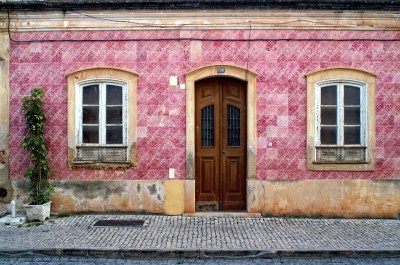
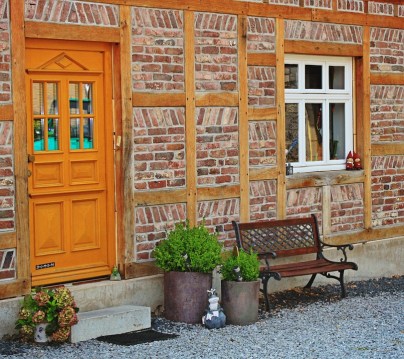
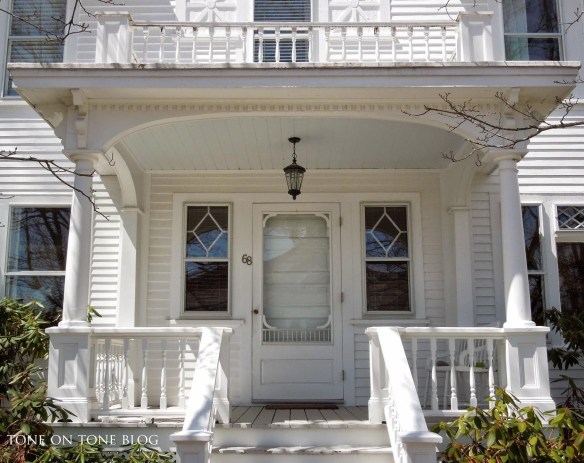
The gateway to your home deserves a lot of attention. Regardless of how much time and money you’ve invested into remodeling your entire home, without proper front door decorations, the entire impression of your house is compromised. Here is a list of interesting front door décor ideas.

image-3Letter Monograms

The traditional family name is best left on your post box; your front door fits perfectly with a giant letter monogram. This trend has been around for 5 years, but it is still very popular and for a reason – the fonts, colors and letter styling ideas are countless. Although you can buy large letters, of have them engraved onto a piece of metal, making this a DIY project is a completely viable and, above all, fun option. Purchase an oversized letter from a craft store, or simply cut one out using a pattern, a jigsaw and a piece of hardboard or foam board.

Chalkboard

The blackboard has long ago transcended its use in a classroom – the majority of schools are into whiteboards now. However, the chalkboard has found its new calling in restaurants and cafes, where they are usually used to specify what is on menu during happy hours or display offers on discount. A great idea, however, is to put a chalkboard onto your front door, where you can write something new anytime you want. This fun and interesting idea can spell out your apartment number, the welcome sign, whether or not you are present or to be disturbed, and even something funny to welcome the people you invite over.

image-5Flower Basket(s)

There is nothing more gorgeous than having flowers decorate the pathway to your home, but why stop there? Putting flower baskets onto the very front door can turn it into something absolutely beautiful. The easy way to get there is getting faux flowers, owing to the fact that they don’t really need tending to, but these may compromise the realistic look you might be aiming for. Of course, this largely depends on the climate your place of residence is in (harsh winters can present huge problems). Faux flowering branches are a smart way to go, seeing as how they look more realistic. Additionally, keep in mind that fake flowers are becoming cool again.

Go Plain

The minimalistic trend is always on the rise – many people strive towards looking professional and, just as there is absolutely nothing wrong with going chic, there is nothing wrong with turning towards minimalism. The upshot of this is outlined in the fact that the vast majority of plain and “cold” doors is significantly safer than their “lively” counterparts and the experts from locksmith Ryde advise that safety should always be put in front of aesthetics. If you want to add details to the appearance of your plain door, you can always opt for minimalist painting!

image-2

Wood Cutout Door Décor

Back to livelier designs, wood cutout décor can look amazing! The limits here are endless – you can go with regular flower design, but also with quirkier stuff, such as a wood-carved shoe, an animal or even nametags. The best part here is that you can make these on your own and DIY projects are quite fulfilling. Simply come up with a pattern, grab a piece of cardboard, a jigsaw and, depending on your preference, some paint and get down to business. This is extremely easy and with some sandpaper, you can create a real piece of art!

image-4

Not everyone abides to what’s currently trending, so going a bit wild with your front door can often turn out perfect. These ideas are great on their own, but nothing is stopping you from using them to come up with those of your own – going original is always the right way!


Greening Up A Historic Home By Zoe Clark

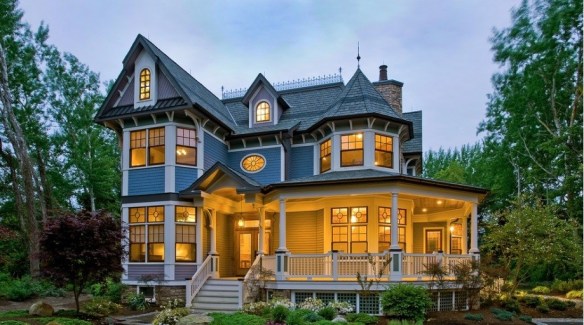
1Victorian homes are the most romantic and elegant properties to live in. There is so much history and enchantment hiding in their every cranny, nook and secret compartment. They are built in the distant period between the 1837 and 1901, so you see why it may be difficult for these houses to keep track of all the challenges the present day is placing in front of them. Although Victorian homes surely aren’t lacking a thing when it comes to refines of their architecture, there are some room for improvements in the area of energy-efficiency, which is something the architects didn’t have to worry about during the reign of Queen Victoria. So, if you are living in one of these old beauties, here are a few things that might help you with lowering your energy bills and reducing your carbon footprint.

Insulate the “Old Lady”

2

Has anyone ever told you your house is breathing? If your old home is older than a century, you can probably expect a lot of gaps between boards in walls and ceiling, as well as a few around the doors and windows. Seal them to prevent warmth from leaving your apartment (and coming in if we are talking about hot summer days). Later, you should add insulation to the attic. In most cases, you don’t even have to remove the existing layer before applying the new one. Examine the HVAC system to see if there is a need for sealing them.

Making Your Windows Greener

If you want to get more efficient windows in a new house, you should install double or triple glazed windows. With historic homes, the situation is a bit different. Removing the old windows and replacing them with the new ones would affect the historic appearance of the building. A neat alternative is to supplement your old windows with storm windows, so you can save energy without affecting the historic character of your property.

3

Use Energy-Efficient Light Bulbs

If there is one change you can make that is affordable and doesn’t harm the historic appearance of your house in any way, that is replacing your old incandescent light bulbs with compact fluorescent variety (CFL).

Replace Old Appliances

Just because your house is built in 19th century doesn’t mean you have to use an icebox instead of a modern refrigerator. On the contrary, because of the growing popularity of “vintage” you will find a lot of historically-looking appliances with modern features. Still, the most important thing to look for when searching through appliance stores are the Energy Star rated devices.

4

Control the Heating

Old homes are designed in times when each room was heated separately using open fires, which was more efficient than heating each room separately. The transition to a modern heating system did no good to historic homes and their heating bills. Address this issue by manually controlling the valves in each room, or by getting a programmable Wi-Fi radiator or installing a smart thermostat.

Reduce Your Water Consumption

Electricity is not the only resource that is being wasted in a non-energy-efficient home. Water can also be a great chunk of the monthly bills, especially if you are dealing with problems typical for older houses, such as water-guzzling showerheads and toilets, and leaky faucets. Replace them all with low-flow models, which are energy-efficient and can save you up to 77 percent of the water usage.

So you see, old houses can learn new tricks, but only when the owners are willing to invest time, money and effort in them. Sure, Victorian houses are a habitat to wish for, but that doesn’t mean they too don’t have their flaws. Do your best to improve them, so that they are bringing you more joy while taking less money from you.

Five Ways To Increase The Value Of A Victorian House By Mackenzie Fox

victorian houseIn today’s world, most homeowners cycle through a number of different properties throughout their lifetimes. That’s because a person’s needs can vary greatly according to age, income bracket and the total number of people in their household. It therefore becomes paramount for any homeowner to be able to maximize the value of their property at any given time. When it comes to period homes such those dating back to the Victorian era, the benefits of owning such charming abodes are offset by certain time-specific quirks and particularities that can really drive down a house’s selling price if left unresolved. To that end, here’s a list of suggestions that should help you increase the value of your Victorian home as well as improve your living conditions on the whole:

Restore the house’s original Victorian features instead of replacing them

A common mistake that many people make when purchasing period homes is assuming that an older house needs to compete with all the amenities offered by a new one. While older properties do indeed stand to benefit from being technologically up-to-date, this should never come at the expense of their own particular charms. Things like cast-iron fireplaces, sash windows and old-fashioned radiators are a plus in this situation, so take steps to restore or replace them with similar models instead of simply substituting them with contemporary items that are destined to look out of place in this environment.

Convert your loft into a livable space

Converting a formerly unused loft is one of the best ways to significantly increase the value of your period home. It adds an entirely new space that can be utilized by prospective homebuyers, which definitely makes it worth investing in. If your space up there is too cramped to add another bedroom, try converting it into a workout or hobby room instead.

Eliminate outdated plumbing and electrical systems

No matter how sturdy and well-built they are, most period homes will invariably show their age when it comes to plumbing and electrics. From old wiring to lead pipes and a general lack of electrical outlets, there are a number of problems in older homes that can drastically affect their overall livability. Eliminate them for good by hiring quality contractors who can handle the delicate rewiring and pipe replacement procedures that will have to be tackled. This step can be quite costly and time-consuming, but it’s an absolute must if you want to bring your Victorian house into the 21st century.

Spruce up the property’s exterior

First impressions are crucial when it comes to determining the value of pretty much any property, which is why it pays to make some timely investments in your house’s exterior. Some of them, such as repainting your windowsills or tending to the garden, will be cosmetic in nature, but others will have a direct impact on the house’s utility bill. To give just one example, properly insulating your walls and roof can prevent heat from leaking out during the winter, and thus save you a considerable amount of money in the process. As always, be sure to respect the house’s Victorian heritage. For instance, replacing traditional sash windows with modern UPVC windows will only serve to muck up your property’s image and therefore reduce its overall value.

Invest in appropriate furnishings

Finally, no period home would be complete without some truly appropriate pieces of furniture. Luckily, good quality period furniture can be found at relatively low prices if you know where to look and generally tends to enjoy a longer lifespan than most modern furnishings. This doesn’t meant that you have to stick exclusively to one style of furniture, but you’d do well to only look for pieces that fit well together and refrain from modern minimalist items that would stick out like a sore thumb.

As you can see, it doesn’t take much to transform a Victorian house into the home of your dreams. By simply applying all of the aforementioned tips and tricks, you’ll be restoring your property to its former glory and helping maximize its market value at the same time. Thus, anyone who ends up staying in it will get to enjoy all the benefits of living in a unique environment with none of the drawbacks usually associated with such places.

~Written by Mackenzie Fox – All Rights Reserved