Victorian Valentines Day Cards PHOTOS
Reply

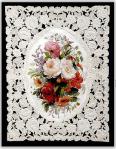
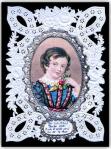


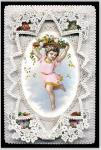


Hanging a Christmas stocking is a tradition that has been followed since times immemorial. It is believed that St. Nicholas would fill the stockings with gifts, on the eve of Christmas. Small kids eagerly wait for his arrival and the gifts that he would bring along with him. They decorate their stockings beautifully and hang them nearby fireplace. Although there are no written records of the origin of Christmas stockings, there are some popular stories that have been believed since generations. One of the most popular legend talks about the history of Christmas. In the article, we have provided interesting information on the origin and history of Christmas stockings.
Origin Of Christmas Stocking
Many centuries back, there lived a poor man in a village. He had three beautiful daughters. His wife had passed away due to some illness and he had spent all his money to cure his wife. Thus, he was left with no money to marry off his daughters. The three daughters were very kind and strong and this is what worried their father even more. He was concerned what would happen to them after his death. One fine day, St. Nicholas was passing through the village, when he overheard the discussion of some villagers talking about the pitiable condition of the three girls. St. Nicholas wanted to help the poor father, but he knew that the old man wouldn’t accept money from him.
St. Nicholas decided to help the family secretly, without letting anybody else know about it. He waited until it was night and stealthily sneaked into their house, through the chimney. He had three bags of gold coins with him, one for each girl. As he was looking for a place to keep those three bags, he noticed stockings of the three girls that were hung over the mantelpiece for drying. He put each bag in each stocking and then went away. When the girls and their father woke up the next morning, they were thrilled to find the bags of gold coins. He happily married off his daughters, one after the other, and they remained happy for the rest of their lives. The story about St. Nicholas being so generous spread throughout the village and then all over the land. Since then, it has been a tradition to hang stocking on Christmas in the hope that St. Nicholas would bring a present
.
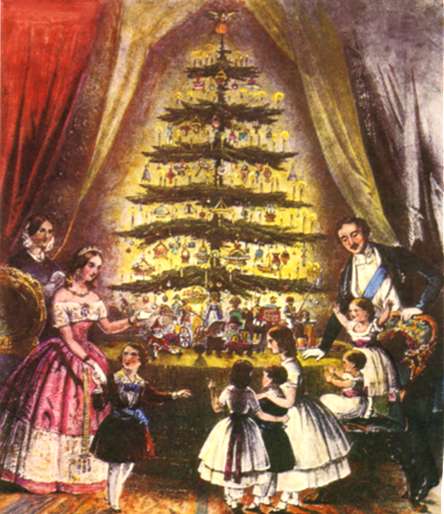
The Victorians loved their Christmas trees, and decorated them lavishly. Much time was spent in the weeks leading up to Christmas Eve making homemade ornaments to suspend on the tree branches.
Today store bought decorations have largely replaced homemade ornaments. But if you would like to have Victorian Christmas tree of your own, consider making your own authentic ornaments to hang on the branches of your tree.
Victorians lit their trees with candlelight, which isn’t practical or safe today, but you can now find some stores that carry replica electric lights that mimic candlelight and clip to your tree’s branches to get you started. From there, you can complete the look with these hand-made decorations:
* String popcorn and cranberries for garland. Do every other one or design a particular pattern of your own (three cranberries, two popcorn, five cranberries, etc.) depending on how much of each color you want.
* Dip small cookies cut like snowflakes into glue and then glitter for sparking accents on your tree. To preserve them, spray lightly with either craft preservative or hairspray.
* Paint walnuts (still in the shell) with gold or silver paint. Attach a thin ribbon bow to the top with a thumbtack and hang on the tree.
* Curl small paper doilies into cones and fill with hard candies, nuts or potpourri. Attach ribbon and tie to tree branches. You can find the doilies in a variety of pretty colors.
* Recycle old Christmas cards to decorate your Victorian Christmas tree. Cut out pictures you like and glue to cardboard, then highlight with glitter or metallic fabric paint. Attach colorful ribbons and hang.
You’ll be amazed at how your Victorian Christmas tree glitters and shines with its assortment of genuine period ornaments. Now sit back with a cup of mulled cider and enjoy!
 Children in Victorian England had the task of writing greetings to their parents in their very best handwriting. Sometimes adults wrote Christmas letters to each other, but this could take up a great deal of time. The printed Christmas card solved the problem. The custom of sending printed cards was started in England by Henry Cole, who did not have time to write letters to each of his relatives. He asked an artist, John Calcott Horsley, to design a card for him. About 1,000 of these cards were printed, and those not used by Sir Henry were sold by the printer for one shilling. This was not cheap, which may be why they did not sell very well. With the introduction of the “penny post” in 1840, it became cheaper to send mail, and as a result of color printing and the invention of printing machines, cards could be printed faster and cheaper. The first company to print and sell Christmas cards on a large scale was Charles Goodall & Sons of London in 1862. The first charity card was produced in 1949 by UNICEF. Richard H. Pease, a printer from Albany, New York, is credited with sending the first specially printed Christmas card in America, in 1851. It managed to make the first mistake in Christmas card history. The card showed a building on which was hung a banner proclaiming “Pease’s Great Variety Store.”


 The first illustration of a Christmas cracker appeared in The Illustrated London News in 1847, but there is some argument as to who invented them. Two London sweet makers, Tom Smith, and James Hovell, both claim to have invented the cracker. In 1840s Paris, sweets called “bon-bons” were wrapped in twists of brightly colored paper. Tom Smith (or James Hovell) brought back the idea but added a little slip of paper with a message on it, called “kiss mottoes.” Later, other attractions were added, such as little paper hats, tokens and small toys, plus the “crack.” It is said that Tom (or James) was sitting in front of his Christmas fire where the yule logs were crackling, which gave him the idea of putting a cracker strip inside his bon-bons. The crackers were also made to look like tiny yule logs, as they still do today.
 Country & Victorian Times