Purple Corm – A Non-GM Food

165408_449729031783187_485848608_n

Know About PURPLE CORN (a non GM Variety of Corn) –

The magic of Mother Nature…

 
This magical variety of corn hails from both the high altitudes and low valleys of the Peruvian Andes. The intriguing purple pigments you see here are some of the healthiest in terms of antioxidant power and also hold cancer-fighting abilities, specifically with tumors and colon cancer.

 
Research is showing that the antioxidant pigments of the purple variety increases circulation, contain anti-aging properties, regenerate connective tissues, inhibit and fight cancer, boost the immune system, inhibit obesity, and increase mental performance (among many other health benefits) by simply adding it to one’s regular diet.

 
The Peruvians used purple corn to prepare an ancient drink called Chicha Morada, which consists of boiling purple corn in water with pineapple, cinnamon, and clove to flavor the healthy beverage. This beverage is still made and served in many places around the world to this day.


You can easily find purple corn in Peru and other South American regions when visiting the local merchant stands. You can also find purple corn powder from online “superfood” stores to get these powerful benefits for yourself or simply to experience the memorable & exotic wonders of Purple Corn in your daily smoothies, juices, sauces, or meal.

Home Made Mosquito Trap

gModern technology has brought us many benefits, including mosquito traps that cost hundreds of dollars, but sometimes we overlook simple solutions to difficult challenges such as mosquito control. When it comes to controlling pests, research tends to focus on chemicals or concepts that can be patented. Unless someone can make a profit from an idea, the public may never become aware of it.

HOMEMADE MOSQUITO TRAP:

Items needed:

200 ml water
50 grams of brown sugar
1 gram of yeast
2-liter plastic bottle

Or US conversion:
1 cup of water
1/4 cup of brown sugar

HOW:
1. Cut the plastic bottle in half.
2. Mix brown sugar with hot water. Let cool. When cold, pour in the bottom half of the bottle.
3. Add the yeast. No need to mix. It creates carbon dioxide, which attracts mosquitoes.
4. Place the funnel part, upside down, into the other half of the bottle, taping them together if desired.
5. Wrap the bottle with something black, leaving the top uncovered, and place it outside in an area away from your normal gathering area. (Mosquitoes are also drawn to the color black.)

Change the solution every 2 weeks for continuous control.

The Lawn Enthusiast – Philip Brown

We are honored to have a new Guest Writer Philip Brown who blogs over at The Lawn Enthusiast! Philip Brown is a lover of green, healthy lawns. A former lawn care professional, Philip now spends his time sharing what he knows with others and blogging about it at The Lawn Enthusiast. I have spent some time at his website and found some incredible information that I am sure you will enjoy. Please check him out – and I look forward to sharing more from him in the near future.

lawn

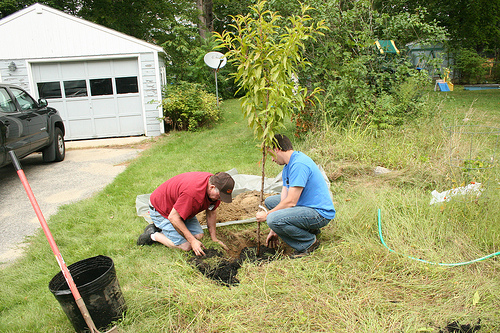
How To Plant A Tree In Your Yard by Guest Writer Philip Brown

How To Plant A Tree In Your Yard

Planting a tree is not just a matter of digging a hole and dropping it in. If you want your tree to have healthy growth, then that will require patience and careful preparation. Take a look at these steps for how to grow a strong and healthy tree in your yard.

  • Choose the species carefully and plant at the right time of year. Select a species that is native to the area. Plant your tree during its dormant phase, which is usually over the winter, somewhere between late autumn and early spring. This will allow it to establish itself in time for the growing season.medium_4975718208
  • Choose a site for your tree. Make sure to avoid any cables or pipes and to choose a sunny area. Dig a hole that is about 5 times the width of the tree’s root ball so that it has plenty of space to spread its roots. Dig the hole with a raised section in the center for the root ball to sit on – this will keep it out of any water that may collect and in turn stop the tree from drowning. Loosen the dirt around the edges of the hole to allow the roots to spread out more easily.
  • Remove the tree from its container by gently tipping it out of the pot or cutting the side of the bag from the roots. You can leave a mesh container on as the roots will grow through the holes and it will help keep the soil together. Remember, you want to keep as much of the existing soil on the root ball as possible. As you are handling the tree, be sure not to leave the roots exposed to the sun or wind as they may get dried out and damaged.
  • Plant the tree. Place the tree in the hole and check the height. All of the roots should be covered, but the trunk should remain fully exposed. Add some manure into the hole to feed the tree as it grows, and add water. Mulch around the tree to keep weeds away and moisture in, but take care not to touch the tree trunk with the mulching or it could rot. Water again after an hour or so. Then water regularly until the tree is fully established.

With a little bit of planning and some care, you will have a tree that will last for many years.

About the Author: Philip Brown is a lover of green, healthy lawns. A former lawn care professional, Philip now spends his time sharing what he knows with others and blogging about it at The Lawn Enthusiast.

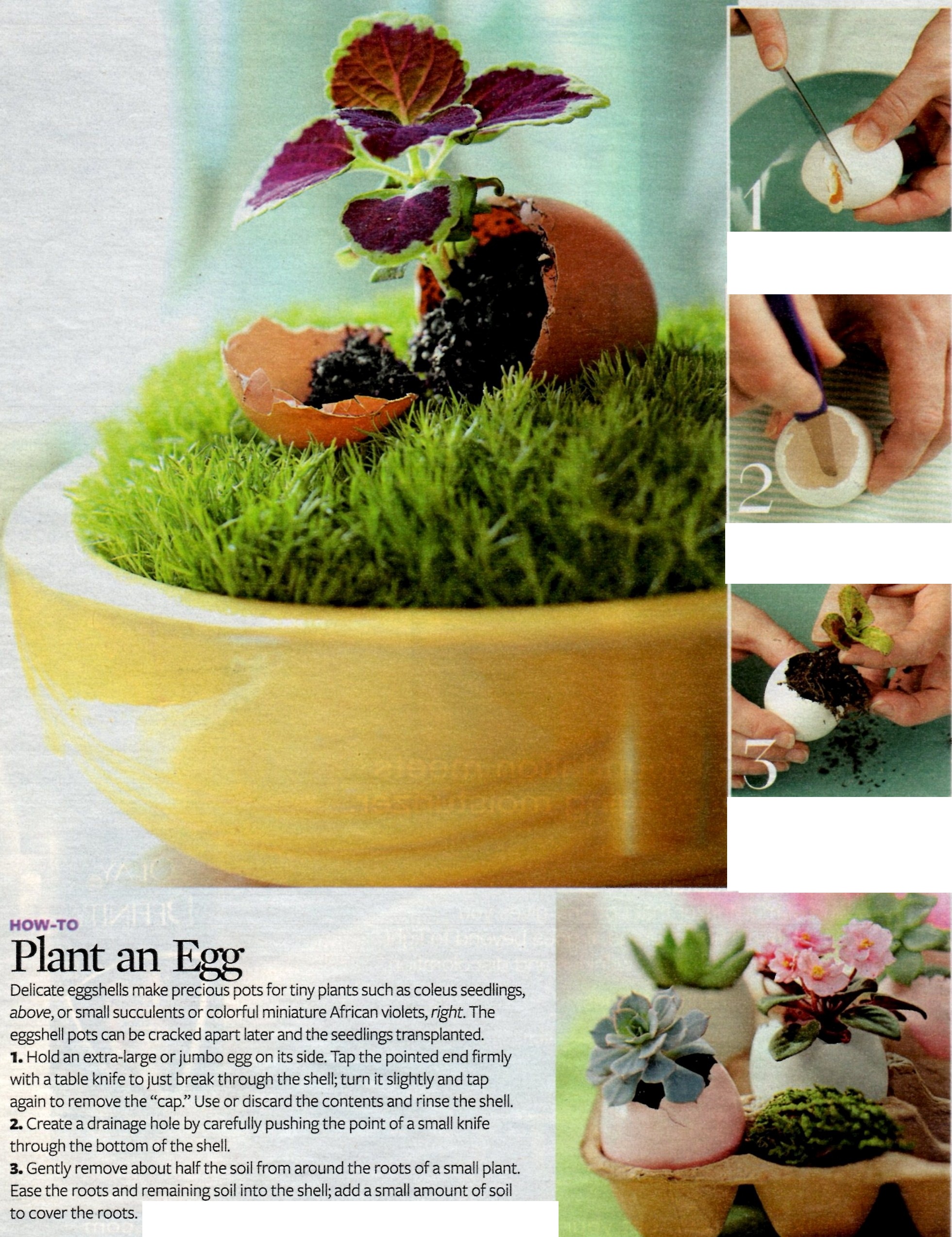
Using An Eggshell For A Tiny Pot

Image

Jeffrey Scott Thomas 117