
Buying A House VS Renting It – Which One Is More Profitable?

There’s a widely held belief that buying a home is preferable to renting. You’ve probably heard your parents or even friends say that as long as you are renting, you just throw the money away, into a landlord’s pockets. Contrary to this popular belief, fewer and fewer Americans decide to own a house, claiming it is a liability at best, and a problem at worst.

Which one then is a better, safer, and more profitable option? This article examines the benefits of both buying and renting and tries to determine the answer to this question.

Benefits of Buying

You can Make Money from your Home

When you own your home, you can make money from it in a variety of ways. Renting out a room or even just car parking space could deliver a steady stream of income.

And if you have the right kind of mortgage, you can rent your house out whilst living somewhere else. Check out this rental property calculator to find out how much you’d stand to make.

House Value May Increase

When you buy a home, particularly if you have a considerable deposit, you can look at it as an investment. As long as you’re not planning to move any time soon, chances are its value will increase by the time you come to sell.

This, of course, depends upon the area in which you buy and the general economic climate. But if you sell your home 20 or 30 years down the line, you probably stand to make a profit.

Making Home Improvements Usually Reaps Rewards

When it comes to putting your home back on the market, you could find that improvements you’ve made to the property have increased your home’s value.

Often, well-executed home improvements pay for themselves and then some at the time of a sale.

Benefits of Renting

No Additional Costs

People like to say that renting a property is just like throwing money away. But whilst buying a home can be an investment, there are plenty of other costs involved.

If you buy a home with a mortgage, you’re spending a huge amount of money on interest payments over the course of that mortgage.

And that’s before you even get started on maintenance costs, insurance, the fees associated with buying and your utilities. By renting you avoid all of these additional costs.

The Current Economic Climate is Less Relevant

The economic climate has much less impact on your rental than it would on a bought home. Whilst rental prices may rise and fall, chances are they generally stay in line with wage patterns.

However, buy a home with a large mortgage and you’re more susceptible to changes in the economy and the housing market. 23% of Americans owe more on their mortgages than their home is actually worth.

This is called negative equity and unless house prices increase dramatically or these people hold on to their homes for a long time, they’ll struggle to sell their homes any kind of profit.

You Won’t Be Stuck Paying a Rate you Can’t Afford

Sometimes landlords choose to raise the rent. If this happens and you can’t afford the new figure, you have the opportunity to give your notice, pack up and find somewhere new.

When you have a mortgage, payments can rise with interest rates. But if your mortgage suddenly becomes unaffordable, you don’t have the same flexibility to reduce costs. You may end up having to organise a costly move to downsize or even lose your home if you fail to make mortgage payments.

Renting Frees Up Money for Other Investments

You may find that renting is actually a cheaper option for the moment. But that doesn’t mean you can’t invest in your future. The money you save renting rather than buying can be used to make investments in areas other than property.

Time to Ask Yourself Some Questions

Whether you choose to rent or buy will depend largely on your current circumstances. Ask yourself a few questions.

  • Do you like the flexibility of renting? Or would you like to settle down in one place to raise a family?
  • Do you have a big enough deposit to buy a home? And are current interest rates favourable?
  • How much are monthly rental costs? How do they compare to the costs of buying a home, maintaining it and paying a mortgage?

Predicting how much profit you stand to make from buying a home is impossible. It’s always something of a gamble. What you can do is work out the current affordability of both renting and buying and decide which option fits best with your life.


Sienna’s bio:

Sienna Walker is a self-growth and lifelong-learning enthusiast who enjoys seeking out new and unique ways of saving and earning money. She is also an active blogger and might often be found online, sharing her tips with others and participating in online discussions.
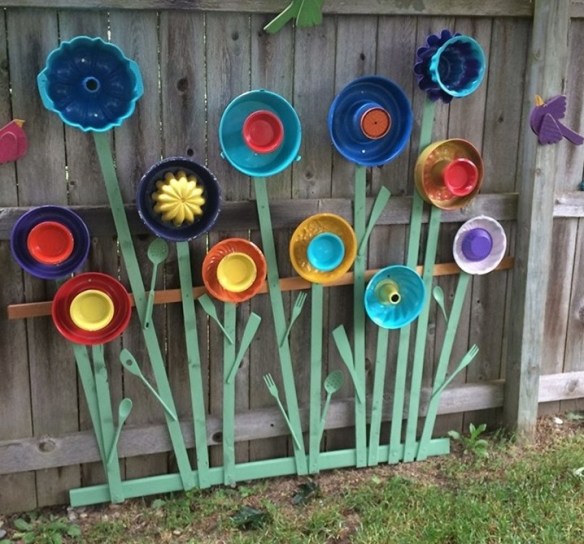


Garden Art using Old Pots And Pants And Utensils

We all have old pots and pans sitting around that we don’t want to get rid of or don’t know what to do with them. Here is a simple solution using a combination of these to make a flower garden with wooden cheap wood. Using 1″ x 1″ by whatever length you desire piece of cheap molding as a base with the same cut into 2′ and 3′ sections for the flower stalk use the example in the picture to create the base and stems of the flowers. Paint green. Here the flowers are screwed to the fence but you can make them free standing by using two foot sections of rebar. Pound into ground and wire to garden structure. Paint metal pots and pans in a color scheme that fits your like using Krylon outdoor paint that is designed to adhere to plastic and metal an dis designed to be outside. Spray well with two coats. You can leave them like this or can use small paintbrushes to paint tiny designs on them. Drill through the metal pans to make a hole. Screw on to wood stems. E6000 or liquid nails can be used to attach small pans inside others.

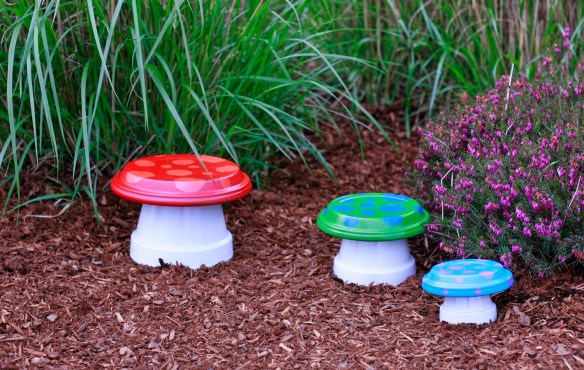
Terra Cotta Saucer And Pot – Make Mushrooms For Your Garden

We all know all the cool project you can make with Terra cotta pots and saucers. These are cool and very easy to make. Use any combination of sizes to make a non-unified look. Paint with your own style using acrylic pain. It will soak a bit into the saucer/pot so a second coat might be needed. You can certainly just set them on top of each other or glue them together with liquid nails or E6000. Carry this project further by adding little miniature figures of elves and fairies on top and make it look like this is their own secret world. This project is cheap and using existing items you already have increases your savings.

7 Steps To Take Before Your First Renovation


House renovation is a great way to get a ‘new house’ without moving to a different place. But planning your first renovation can be complicated because there are so many elements to consider. You can’t just focus on what you’d like your home to look like, it’s important to remember about the practicality of such changes. To achieve the best possible results, there are a few simple steps you have to take before any work starts.

Consider the location

Depending on the area you live in certain changes, like house extensions, may not be possible. If you are still looking for a new house, which you’ll want to renovate before moving into, it’s also important to consider the neighbourhood when deciding on a purchase. For people planning on removals to Chelsea, going there and having a look at the other buildings in the area may not be a bad choice. It’ll give you an idea of what to expect.

Set a budget

Calculate how much money you are willing to spend on a renovation. Some changes may just be too expensive and will have to be discarded. Focus on the most pressing matters at first, smaller alterations can be implemented further along the line. You should also count in a contingency of around 20%, which will let you avoid stress in case of any unexpected expenses. Knowing exactly how big your budget is will help you plan the renovation.

Plan the changes

When you think about what your dream house would look like, there are definitely elements that are more important to you than others. But your expectations may not always fit in nicely with the rest of the project. Consider what will work within the space you have. A glass stairs design is great for modern interiors, while wood floors will help in achieving a cosy atmosphere. Figure out what you’d like to change, this way, you’ll be able to ask contractors for exact quotes.

Find contractors

Price should never be the deciding factor when choosing a contractor. The cheapest one will not necessarily be bad, but there’s no guarantee that the most expensive one will be the best as well. Try to find good contractors through the recommendations from people you know. If this doesn’t help, at least try to look for reviews online. Renovations can get messy and time-consuming even at the best of times, and hiring inexperienced contractors will not help the matter in any way.

Get the necessary permits

Some parts of your renovation, especially if you plan on changing the structure of the building, may require planning permissions. You need to apply for those before starting any construction works, so make sure to find out what is necessary in your case. If you’re still unsure whether you need one or not, it’s advisable to check with your local authority. Having a house that is listed or located in a Conservation Area can limit your options, but even if you don’t need any permits, you’ll still need to comply with building regulations.

Check the insurance

You may already have your property insured, but does the insurance cover eventual damages sustained during building work? Will your insurance still be valid even if you move out of the house during the renovation? You need to carefully consider all the aspects to avoid unpleasant surprises later on. It may be a good idea to consult a specialist on the matter. Another important thing to check is whether the contractors working on your renovation are insured. Accidents can happen during construction works, so it’s better to be safe than sorry.

Schedule the renovation

Some parts of your renovation have to be finished before the others can start. It’s especially important in situations when you have hired different contractors to perform different tasks. You’ll need to schedule the works carefully. Make a list of all the changes in the order they have to be completed in. This way you’ll make sure that the whole renovation will go smoothly and you’ll avoid unnecessary damages and additional expenses.

The properly planned renovation will allow you to avoid unpleasant surprises during construction works. If you follow the steps listed above, you’ll get a house that’s, if not perfect, then at least close to your dream one. And after all the building work is done, you’ll be able to focus on the more enjoyable task of decorating your newly acquired space.

My Cluttered Life – Part 2

I can’t tell you the number of items I find around the house that were purchased and either weren’t what I was looking for, didn’t fit just right, or just decided I really didn’t want anymore. They get put down with the intention to return.

Sometime attempts get made to do the return but where is the receipt? If I can’t find the receipt you get store credit and, well, I really want my money back. So it sits, in a pile, until its too late to return. Now what do I do with it? Sigh….

If it really can’t be used it either needs to go to the trash or in a container to be donated. It can be given to a friend or family member, as long as it goes out of your home. A big rule: No holding or storing items for others who do not live with you.

Lots of money is waited this way. I wonder if you took one popular store and added all the sales of product from that store that were never used and had had intention to be returned but ended up in a death pile in someones home would tally up to. Shivers…

So not much can be done for these items once they have been in your possession for a period of time but to donate, five away or trash. But, what can I do to prevent this from happening again in the future. Here is an approach I have developed to keep this from happening.

Get a zippered pouch and keep it in your car and get in habit of putting receipts in the zippered pouch so returns are easy. If you find you need to return something put the item back in the store bag with the receipt taped to the item so it does not get lost and put it in your car. Next time you go to that store or drive by that store do the return.

Make sure you regularly purge your zippered pouch of receipts after a certain time goes by when you can’t usually return, like 90 days, unless you need the receipt for a warranty.

Since I have got this habit it makers returns easy, it keeps a pile from developing and I have not once had to dig through the trash to find a receipt.