Outdoor Elegance: How to Create a Tranquil Garden Retreat with Classic Elements

Image: https://unsplash.com/photos/a-statue-of-a-woman-in-a-garden-o61TbwSW2m0

Classic gardens have always been the epitome of elegance and timeless charm. Rooted in European traditions, particularly the French formal gardens, this style is all about symmetry, order, and balance.

Classical architectural elements often feature prominently in American homes, so it makes sense to extend that elegance into outdoor spaces. And while you might picture sprawling estates with expansive lawns and shimmering ponds, classic garden design elements can be scaled down for small gardens and even beautifully integrated with contemporary styles.

Here are the key elements you can use to bring the elegance and tranquility of a classic garden to your own outdoor space.

1. Simple Geometry and Symmetry

At the heart of classic garden design is the principle of imposing order on nature, which is achieved through simple geometry and symmetry. Think straight lines, clean right angles, and circles to form a well-organized layout.

Instead of being randomly scattered, your plant and flower beds should be deliberately demarcated by paving, creating clear paths that guide visitors through your garden. This structured approach also creates a sense of harmony and balance.

A key aspect of the classic garden is bilateral symmetry. To achieve this, imagine dividing your garden down the middle with the shapes and forms on one side mirrored on the other.

This mirroring creates the pleasing and calming effect that’s the hallmark of classic garden tranquility.

2. Lush Greenery

Plants play a supporting role in a classic garden, enhancing the overall structure and symmetry rather than taking center stage with a riot of colors or varying heights and sizes.

The key here is restraint. Stick to a foundation of lush greens, with one or two carefully chosen flowering colors for each season. This will make your garden feel elegant and timeless rather than busy or chaotic.

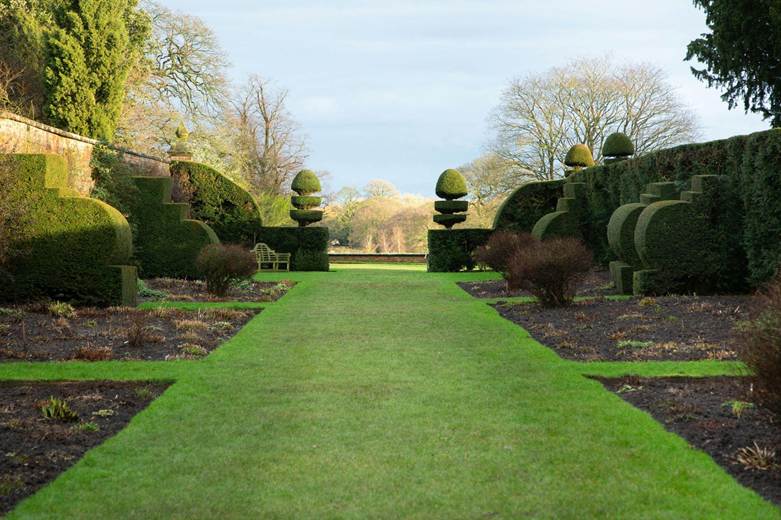
To achieve the classic, sculpted look, choose plants suited for topiary like boxwood, privet, or yew—their bushes can be shaped into clean, geometric forms like spheres and cones. You can even do playful animal designs if you’d like to add a little whimsy to your garden.

Evergreens are another essential. Varieties like junipers, olives, or holly not only thrive in dry or coastal climates but also retain their structure year-round. These will help maintain your garden’s refined aesthetic in any season.

3. Well-Defined Edges

Image: https://unsplash.com/photos/a-long-green-lawn-lined-with-trees-and-bushes-JMWqAmRnXUg

By now you can probably tell that clean lines are a non-negotiable in the classic garden aesthetic. They provide the frame that holds the entire design together and keep your garden looking polished and intentional. Even the most carefully curated plants and pathways will feel untamed without them.

Start by defining your garden’s boundaries, using thick, neatly trimmed hedges to enclose spaces or frame sections. Boxwood hedges are a timeless favorite for classic gardens, but other dense, evergreen shrubs work beautifully, too. Remember, regular trimming is key to maintaining that crisp, tailored look.

Stone or brick edging is another elegant option you can use to mark pathways, flower beds, or lawns. What’s more, it makes maintenance easier by keeping grass and gravel where it belongs.

Natural materials like red brick add a subtle traditional feel and are extremely durable. But if you’re going for a more contemporary look, try concrete or metal edging, just don’t overdo it otherwise you’ll lose the classic vibe.

Decking is another aesthetic, yet practical, way to define edges. For example, a raised wooden deck pairs beautifully with manicured lawns and sculpted shrubs.

4. Ornaments and Formal Features

No classic garden is complete without these timeless elements. They act as a focal point, which is necessary for giving the space structure while also adding a touch of sophistication.

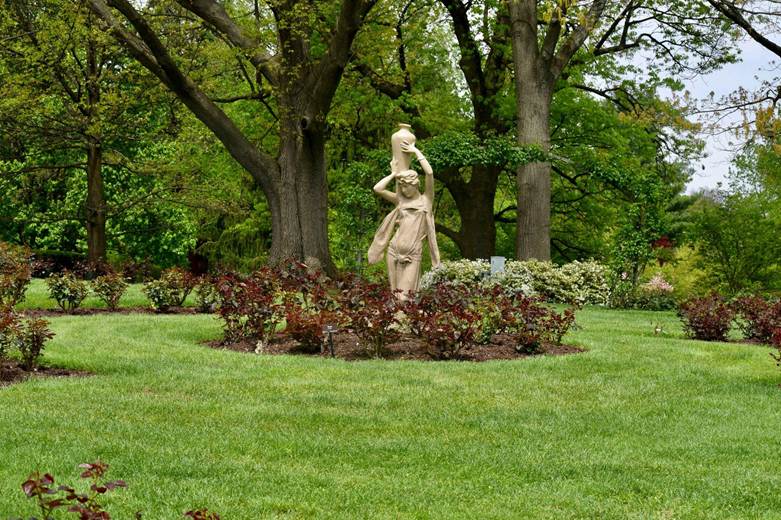
Start with a centerpiece. Consider a classic fountain, a sculpted statue, or a birdbath—anything that can act as the visual anchor of your garden. A key principle here is placement: position it along the axis of bilateral symmetry you’ve established or at the “crossroads” of your paths where the eye is naturally drawn.

Ornaments can also function as “punctuation marks” throughout the garden. Some good examples are large planters, urns, or topiary trees flanking pathways, your garden’s entrance, or the seating area. Use identical pairs to enhance the symmetry and order of your design.

Finally, don’t overlook the importance of furniture. Elegant outdoor lounge chairs that complement the classic aesthetic will give you and your visitors an inviting space to relax and enjoy your tranquil surroundings.

5. Water

In traditional European gardens, grand fountains, reflecting pools, and serene ponds were the stars of the landscape. While your garden may not have the space for sweeping water features, smaller options can still make a big impact.

A classic fountain is a popular and easy-to-incorporate choice. It’s an elegant focal point and adds movement and calming sounds to your space.

But don’t feel limited to just fountains. Other water elements like a swimming pool or even a small, decorative pond can also work beautifully. A pool spa, for example, adds a contemporary element while still complementing the classic garden aesthetic.

Align your water feature with your garden’s symmetry—this could be at the center of a pathway, at the end of your visual axis, or surrounded by manicured hedges.

Bringing It All Together

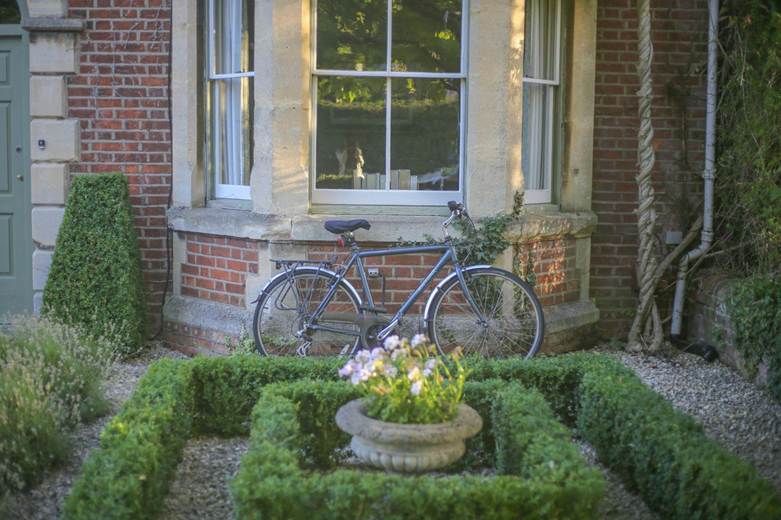
Image: https://www.pexels.com/photo/grey-mountain-bike-leaning-on-brown-wall-brick-in-garden-163647/

The true beauty of the classic garden style is its versatility. The above principles can be adapted to fit a modest courtyard just as well as a sprawling backyard.

Remember, symmetry, clean lines, and keen attention to detail are what bring the charm and serenity of a classic garden oasis to life. Plan your classic garden on paper first to ensure you have the right symmetry, and then get to work!

Exploring the Versatility of PVC Pipes in Modern Architecture and Design

Polyvinyl chloride (PVC) pipes and PVC pipes fittings have been an integral part of the construction industry for decades. They are a favorite among contractors looking for a cost-efficient piping solution for water transport, drainage, and sewer systems. The total cost of ownership of PVC pipes in these use-case contexts (including purchase, installation, operation, maintenance, and dismantling costs) is lower than non-plastic alternatives.

However, the usefulness of PVC pipes is not limited to plumbing, drainage, and sewage. PVC pipes have numerous potential architectural applications. Their long service life of 100+ years, low cost, and easy installation make them an appealing choice for architects, artists, builders, and do-it-yourself (DIY) enthusiasts alike.

Below are eight various architectural and innovative uses of PVC pipes and fittings.

1.    Structural Framework

PVC pipes are a good option if you require a structural framework for temporary structures. Do you need an event pavilion, an exhibition stand, or an aesthetic plastic pipe tunnel? PVC pipes are ideal for these use cases because they are easy to transport, install, and dismantle. They also have a variety of accessories and fittings that ensure you can form them into various structural shapes to realize your design vision.

2.    Furniture and Interior Design

PVC pipes are easy to cut, bend, and shape. The wide range of pipe accessories and fittings also means you can join PVC pipes in many creative ways. Additionally, PVC pipes can be painted in any number of colors. For these reasons, PVC pipes are a material you can use to create unique pieces of furniture.

Designers and DIY enthusiasts have used PVC pipes to create chairs, tables, bookshelves, and bed frames. You can put PVC pipes together to create a divan and, using steel cables or wire rope, hang the completed structure from the roof to make a hanging daybed. You can make a PVC pipe table frame and finish it with a glass table top or make a chair entirely out of PVC pipes and upholster it or top it with a chair pad or seat cushions.

PVC pipes are particularly ideal as patio furniture material. They can get wet and won’t rust. They can get exposed to the sun without elasticity and tensile strength degradation. The sun might degrade their impact strength over time, but as long as you don’t throw, kick, or hit it, this should not be a problem.

The possibilities for PVC furniture and furnishings are virtually endless. You can use it to build a wine rack, a shoe rack, a tool organizer, a bed for your pets, wardrobe rods, indoor planters for your succulents and ornamental plants, and original table lamps.

3.    Greenhouses and Garden Structures

PVC pipes are an excellent choice for constructing greenhouses and other garden structures due to their weather resistance, affordability, and ease of assembly.

You can easily create a PVC pipe frame for your greenhouse. The shell, you can make out of pre-bent PVC pipes; you can also buy straight pipes and bend them yourself. Once your frame is built and stable, you can cover it with greenhouse plastic.

You can also build yourself a garden gazebo. How about a garden PVC pipe outdoor shower? Your kids are sure to love that. You can also use PVC pipes to create trellises, planters, irrigation systems, bird feeders, birdhouses, outdoor clothes drying racks, and many others, providing endless possibilities for garden enthusiasts.

4.    Playground Equipment and Recreational Spaces

PVC pipes are durable and flexible, so you can use them to build playground equipment and outfit recreational spaces.

How about a PVC pipe water and sand table? That will make great entertainment at home when you can’t drive out to the beach. You can also build a rolling pipe slide, ball pit, PVC swing set, play climber, and other playground and recreational equipment. You can also use PVC pipes to build park benches and shade structures.

5.    Architectural and Art Installations

PVC pipes have also found a place in the world of art installations. Artists and architects have used PVC pipes to create stunning sculptures, interactive installations, and even sound-generating devices. They can be painted, bent, and molded into various shapes and forms, allowing for endless creative possibilities indoors and outdoors.

You can cut differently-sized PVC pipes to the same length, glue them together, and create a beautiful, eggshell-like structure you can put up as an art installation at home or in your office. You can do the same thing, but this time cutting the pipes thinner to create interestingly patterned PVC panels you can use as the walls and roof of a pavilion. You can also combine the panels in various interesting ways to create unique installation art. PVC pipe sculptures especially suit hotels in Dubai and other similar, tropical-desert-climate locations.

Kang Duk Bong is an artist who has created outstanding artwork using only PVC pipes and urethane paint. Among his pieces is a 70x10x91 cm sculpture of a man on a motorbike. His PVC pipe works of art also include a running man, a man on a unicycle, and a man on a bicycle.

6.    Canopies and Shade Structures

PVC pipes and fittings are an excellent choice for creating awnings, canopies and other types of shade structures. You can use them to create a structural frame for your patio and deck shade. They can also be used in public spaces like parks and outdoor dining areas.

7.    Tiny Houses and Emergency Shelters

The affordability, durability, and ease of assembly of PVC pipes make them ideal for constructing tiny houses and emergency shelters. Does your organization need to provide emergency shelters in conflict- or disaster-stricken areas? You can build such shelters using a PVC structural frame.

You can create hundreds of such temporary shelters using PVC pipes. Moreover, since PVC pipes are lightweight, they are easy to transport and assemble.

8.    Soundproofing Acoustic Panels

You can also use PVC pipes to create a sound absorption panel. This entails creating two PVC pipe frames, one for the bottom and another for the top.

After putting them together using PVC vertical posts to create a box frame, wrap the bottom and the sides with an acoustically transparent fabric (e.g., weed blocker fabric, woven or non-woven), pack the inside with a sound-absorbent filler, and seal the uncovered side with the same fabric you used initially until the entire PVC box is completely wrapped.

At this point, you must add PVC pipe spacers on the long sides of the bottom frame, where the corner connectors begin, and add short pieces of pipe to these spacers to give the acoustic panel at least a three-inch separation from the wall. An air gap between an acoustic panel and the wall makes it more efficient at absorbing sound.

When you’re done adding spacers, you can install the acoustic panel by hanging it on the wall.

PVC Pipes: Beyond Plumbing, Drainage, and Sewer Systems

The usefulness of PVC pipes extends far beyond their traditional applications in plumbing, drainage, and sewer systems. With their durability, low cost, and ease of installation, PVC pipes have become a versatile material that architects, designers, artists, and DIY enthusiasts continue to explore in making innovative and original furniture, furnishings, structures, decorative elements, and artistic installations.

How To Reconnect With Nature And Its Immersive Benefits

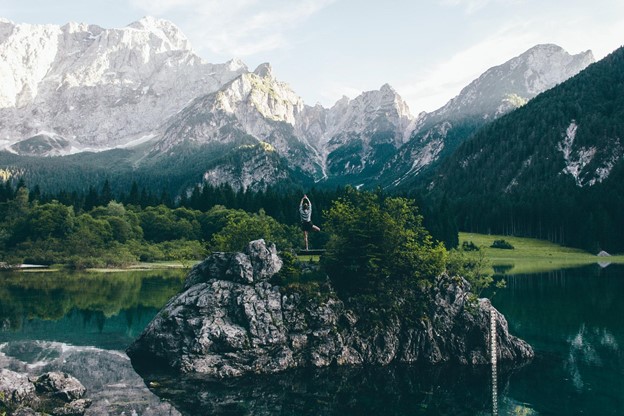
https://unsplash.com/photos/mMzVTy2V1Do

These days, it’s not uncommon to be so overwhelmed with various work assignments and chores around the house that we simply don’t have any time for ourselves. While pampering can come in all sorts of shapes and forms, spending time in nature can do wonders for the body, mind, and soul. So, if you’ve lost touch with the great outdoors, here are several ways how you can reconnect with it and experience all the wonderful benefits it comes with.

Spend more time outdoors

One simple thing you can do, regardless of how much time you have, is spend a little bit of time outside. Just 20 minutes a day outdoors can have many perks. You will get plenty of fresh air and your body will get a chance to produce more vitamin D, which is vital in fighting depression and having quality sleep. So, if nothing else, consider walking to work if it’s not too far or cycling to a friend’s house – it will do you good.

Bring the outdoors in

Something else that can be very beneficial is adding houseplants to your living area. Not only will this bring you closer to nature, but it can also purify the air in your home. No matter the gardening skills you might possess, there is a plant for you. So, for example, some low-maintenance plants you can consider include the snake plant, pothos, and ZZ plant. They don’t require much care so you’ll be able to enjoy some nature even if you’re a bit forgetful.

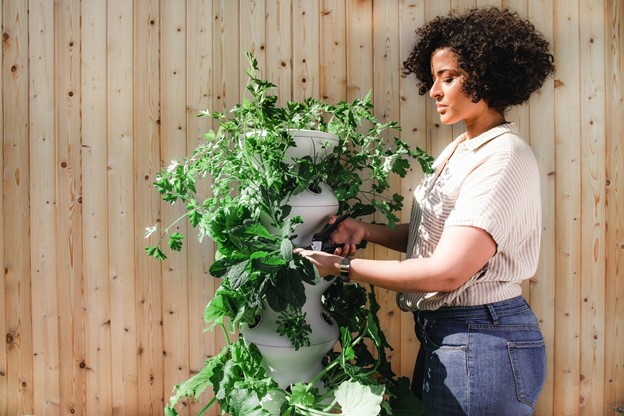
https://unsplash.com/photos/z4S0MYNYT08

Start a garden

As your gardening skills improve, you can also consider starting your own garden. While you can have one indoors as well, it might be better to start an outdoor one if you have the space. That way, you will have a reason to go outside every day, as you will need to check on your plants’ progress, water, feed, and weed them. In time, you can start producing your own food too, which will certainly give you a sense of accomplishment. Furthermore, gardening will provide you with a great workout.

Go on a great outdoor adventure

If you have the time, consider going on a longer outdoor adventure. Find a camping site that’s safe and enjoy being surrounded by the trees or gazing at the moon. If you love the beach, just visit a local one and sunbathe while listening to the sound of water. Try mountain biking if that’s something that’s always interested you – it can be great for your mental health. With a bigger budget, you can think about some international trips as well. For example, forest zip-lining in Chiang Mai in Thailand or mountain climbing in Oman will certainly help you feel at one with nature. Opportunities abound if you keep your mind open and are willing to explore new things that will help you reconnect with the planet.

Connect with interesting wildlife

A big part of connecting with nature is also feeling connected to all parts of the environment, such as the animals that have been on this planet for thousands of years. With that in mind, you can consider adopting a pet that will always be by your side and help cheer you up if you’re feeling down. Then, you can also consider volunteering in a local shelter that is in need of assistance. Regardless of whether you have experience or not, a helping hand is always appreciated. On the other hand, spotting and encountering animals during your travels is another possibility. For instance, if you travel to Western Australia, you can look for interesting whale watching tours where you can see humpback whales, blue whales, killer whales, and southern right whales. In Africa, you can find eco-conscious safaris where you can see and learn more about lions, elephants, and wild dogs.

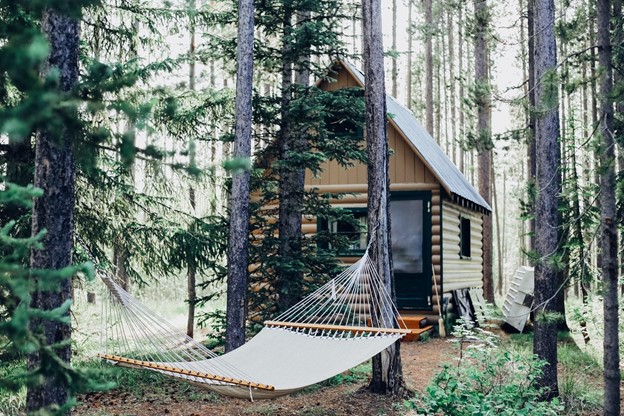
https://unsplash.com/photos/BeHRkALwXIw

Escape to a retreat

Another option to consider is going to a quiet and secluded retreat. If you’re not about that adrenaline and prefer something a bit more tranquil while enjoying nature, you’ll be glad to hear that there are countless options to choose from, no matter where you’re from. Whether you prefer to find a cabin in the woods that you can rent for a few days or travel to a spa that comes with various treatments while surrounded by gorgeous vistas, this is an amazing way to escape the everyday hustle and bustle. Moreover, you can also think about having a digital detox while there, to prevent negativity from the news and social media from ruining your experience.

Make your fitness routine green

In case you’re a big fan of fitness, you should not have any problems incorporating nature into your workouts. For example, simply walking and jogging outdoors is beneficial. If you want to take it up a notch, consider hiking, mountain climbing, and cycling. However, you might prefer exercising at home. If you have a yard, why not do it there? A HIIT session, stretching, and yoga can all be done outside as well.

Learn to slow down

In the wake of COVID-19, people are reconsidering what is most important to them. They often realize that learning to slow down and take in the world around them helps them feel better in countless ways. With that in mind, don’t let work overwhelm you. Set some time aside for yourself and do what makes you happy. Live in the present moment and really immerse yourself in your environment.

In conclusion, no matter if you prefer working with animals, exploring the wilderness on a mountain bike, or relaxing on a beautiful beach, there are countless ways that can help you feel connected to nature once again. Find what makes you feel good.

Gardening Mistakes to Avoid

Gardening is an amazing and fun way to provide produce for your family. But when you don’t know what to look out for it can be quite frustrating. For those who don’t want to be frustrated and grow their gardens with nothing but love, here are some mistakes you must avoid.

Don’t Plant too Early

Different types of seeds will have their own optimum temperature at which they will sprout. For example, if you plant a seed that sprouts at warm temperatures in earth spring, it will either not sprout or freeze over and die. Another possibility is that your seeds go dormant, which means that you can store them and replant them later because they can be in that state for a very long time. The most important thing is to determine when your seeds need to be planted. Once you have done that, get a soil thermometer so you know what temperature the soil is at that period. Never plant them if it is too cold nor too warm.

Don’t Plant too Late

Just like you shouldn’t plant your seeds too early you shouldn’t plant them too late either. Every plant that you are growing in your garden will have its maturation point which is the number between its planting and first harvest. If you do things too late in the season they will freeze over before the plants mature. But if you have a garden that has a steady temperature or you can cover them by floating covers, your plants can either freeze or get burned.

Not Correcting Your Soil

Not a lot of people have been blessed with having loam soil in their yard. Loam soil is a well-balanced mix of silt, sand, clay and other organic matter. That is why you will need to know what your soil type is. The next thing you will need to do is ask yourself how to improve it. If you have soil that is heavy in clay you will need to balance it out and add sand and organic matter.

Don’t Plant Your Plants Too Close To Each Other

As you can probably see for yourself seeds are much smaller than transplants. So that makes it really easy to plant them too close to each other. When you plant your seeds too close to each other they will have poor air circulation, suffer from nutrient deficiency as well as have to compete for sunlight and moisture. The best option if you don’t want to risk anything is to have vertical gardens. They are much easier to maintain and if you combine it with a hydroponic farming kit you will create the best version of a garden.

Never Let the Weeds Get Out of Control

One of the worst beginner mistakes you can make is letting your weeds go out of control. It doesn’t have to be intentional, all you need to do is not have a plan of attack up and ready. Let’s face it no one wants their garden full of weeds.

Don’t Choose the Wrong Plants

The faster you accept that some plants will simply not grow in your area the easier it will be. Different types of plants will thrive in different zones. If you live in a drought-prone area, plants that require a lot of moisture won’t be able to survive. Another thing to think about is how long the seasons are where you live. Luckily, we live in such an advanced world that nearly every type of vegetables and fruits are developed so they thrive under almost every condition.

Improper Watering

Another very common mistake that we often see, is overwatering or underwatering their plants. Even though most people tend to over water their plants because they are scared that they will dry out, some will have the opposite fear. Plants need to have a lot of oxygen so if you have soil that is not draining well because you are overwatering it will suffocate the plants. But if you are underwater in them, they will dry out. The best way to check if they are watered property is to dig down a bit to check if it is wet enough or if you are flooding them. 

Don’t Add Too Many Chemicals

Especially if you are growing your own produce you want your soil to be healthy and fertile. But in the process of making them healthy people can add to much pesticides, fungicides as well as other chemicals. If you are looking for protecting them maybe try using natural ways. They are just as good and they won’t kill your plants.

Gardening is something that will take time and experience in order to become something extravagant. It is not hard, but as a garden owner, you need to be aware that plants can be quite unpredictable and uncooperative.

Beautify Your Flower Garden with These 7 Tips

A garden is a constant job as well as a source of beauty and peace in your yard. Flower gardens are a beautiful addition to any landscape design. It is also a great way to help your local flora and fauna, as well as bees that keep the flora alive. Bees love native flowers, and they are most attracted to them. It’s very easy to beautify your flower garden, so read on to see our 7 tips.

1. Plan out your garden design

If you are starting fresh, it’s best to make a plan of action first. Planning the look of your flower garden will help you make the best use of your space. It is also a perfect time to research which flowers and plants are native to your area. Native plants are the easiest to grow and take care of, as they don’t need special treatment to survive in the native climate and soil. If you are planning to have exotic and non-native flowers, take your time learning how to take care of them and make them thrive. Mismanagement can make them wilt, or never grow at all.

2. Decide on the shape and size

If you are dealing with a large plot of land, you will have more room to make a garden of your dreams, but at the same time, you may feel overwhelmed with the possibilities. Flowers and flowers beds can be arranged in many different shapes and sizes. You can sketch out how your garden is going to look. A more practical approach is to take a long rope and outline the shapes and size of your flowerbeds. This way you can check if every part of your garden is the right size and accessible.

3. Choose the flowers

This is the fun part. A good idea is to choose your favourite flowers – you will want to spend a lot of time in your garden this way. Some of the flowers may be either difficult to obtain or they are not suited for specific climates. Try to create a balance between the flower you like and the ones that can actually thrive in your garden. If you are not confident in your gardening skills, choose flowers that are easy to maintain or that are native to your area.

4. Focal points and show-stoppers

A flower garden that has flowers of only one height or colour can look plain or as a flower field. A variety of shapes, colours, and heights is what will create interest and focal points in the garden. Choose show-stopping flowers that will become a focal point in the garden. They can be tall shrubs that will tower over other flowers or a bright colour that stands out. Consider blooming times of every flower, and seasons in which they look the best.

5. Check blooming times

Since you are paying a lot of attention to the visual aspect of your garden, you don’t want your efforts to go to waste because of bloom times. This can include flowers that only bloom in the summer and are bare the rest of the year, or flowers that have different blooming times but are planted in the same flowerbed. It creates an uneven and unpleasant look. It’s best to choose flowers that are in bloom for a longer period of time, as well as look good when not in bloom.

6. Watering and taking care of your garden

Besides choosing beautiful flowers and foliage, it’s important to properly take care of your garden for it to look its best in the long run. Some flowers are only annual, and some have a longer life. Every flower has different needs to thrive and look its best. Make sure to water your garden when it’s not too hot outside, in the morning or evening, or they can burn in the sun. For easier watering, installing hose reels will help you keep your hose neat and easily accessible. Make sure you can provide needed supplements for your flowers so they can grow healthy and beautiful.

7. Add garden decoration

You can spice up your garden with decorations that can also act as focal points. Birdbaths can have a simple or intricate design and add interest to your garden. Lighting is necessary, and you can place hanging lights from trees or solar lamps on the sides of pathways. Arbours can be decorated with wines and act as a small resting area.

The combination and diversity of a flower garden are endless, with many variations of colours, fragrance, and types of flowers and plants. Remember to enjoy the process and that your garden can be ever-evolving and you can change it up with seasons. Take proper care of your garden to enjoy it for a long time.

————————————————————————————————————————

Bio: Patrick Adams is a freelance writer and rock-blues fan. When he is not writing about home improvement, he loves to play chess, watch basketball, and play his guitar. More than anything, he loves to spend his time in his garage, repairing appliances and creating stuff from wood.

————————————————————————————————————————-