Victorian Valentines Day Cards PHOTOS
Reply

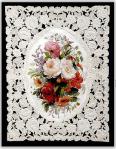
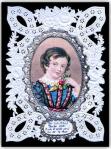


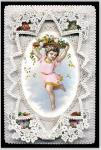

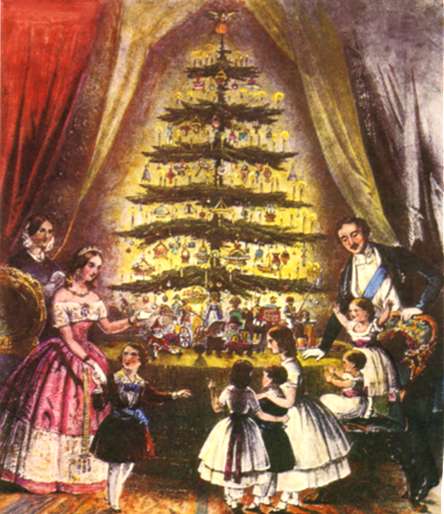
The Victorians loved their Christmas trees, and decorated them lavishly. Much time was spent in the weeks leading up to Christmas Eve making homemade ornaments to suspend on the tree branches.
Today store bought decorations have largely replaced homemade ornaments. But if you would like to have Victorian Christmas tree of your own, consider making your own authentic ornaments to hang on the branches of your tree.
Victorians lit their trees with candlelight, which isn’t practical or safe today, but you can now find some stores that carry replica electric lights that mimic candlelight and clip to your tree’s branches to get you started. From there, you can complete the look with these hand-made decorations:
* String popcorn and cranberries for garland. Do every other one or design a particular pattern of your own (three cranberries, two popcorn, five cranberries, etc.) depending on how much of each color you want.
* Dip small cookies cut like snowflakes into glue and then glitter for sparking accents on your tree. To preserve them, spray lightly with either craft preservative or hairspray.
* Paint walnuts (still in the shell) with gold or silver paint. Attach a thin ribbon bow to the top with a thumbtack and hang on the tree.
* Curl small paper doilies into cones and fill with hard candies, nuts or potpourri. Attach ribbon and tie to tree branches. You can find the doilies in a variety of pretty colors.
* Recycle old Christmas cards to decorate your Victorian Christmas tree. Cut out pictures you like and glue to cardboard, then highlight with glitter or metallic fabric paint. Attach colorful ribbons and hang.
You’ll be amazed at how your Victorian Christmas tree glitters and shines with its assortment of genuine period ornaments. Now sit back with a cup of mulled cider and enjoy!
THESE BOOTS ARE MADE NOT ONLY FOR WALKING but for working in all kinds of weather—and looking smart, too. They were introduced in 1817 by Hoby of St. James’s Street, London, the personal shoemaker of Arthur Wellesley, the first Duke of Wellington, famous for defeating Napoleon at Waterloo. Wellingtons were initially designed to look good with the newfangled men’s fashion of wearing long trousers instead of knee breeches.
The boot’s predecessor, the Hessian, had a curvy folded-down top and heavy braid.The duke wanted something simpler, made from soft calfskin and cut closer to the leg. Sturdy enough to be battle-hardy yet stylish enough to be worn in the evening, the Wellington allowed the British gentry to look like their favorite war hero while standing tall in polished boots.
 However, it was an American named Henry Lee Norris who came up with the idea of producing the Wellington in rubber. (Charles Goodyear had recently patented the process of vulcanizing.) The British Isles had a wet, muddy climate, so Norris headed to Scotland and, in 1856, founded the North British Rubber Company to produce the weather-resistant boots that were to become famous.
The Wellington has gone through many changes since its schizoid days as a foppish combat boot. In the 1860s, it was worn by soldiers in the American Civil War. And the cowboy boot was modeled after the full V- Wellington, so called because the whole front and whole Q£ back are each made from a single piece.
Production took off during both World Wars, when the military requested sturdy rubber footwear that would keep soldiers’ feet dry in the flooded trenches and provide civilians with long-lasting boots during wartime rationing. Introduced to Wellingtons in a time of great hardship, British men, women, and children have never given them up, and their appeal has spread far beyond the home turf.
In New Zealand,Wellies—or gumboots, as they’re known Down Under—come in white for doctors and nurses in rural hospitals. Green is a favorite with the Brits (Lady Diana Spencer was a green girl long before she married her prince), while black ones with brick-red soles can often be seen on fishermen up and down the U.S. East Coast and into Canada’s Maritime Provinces.
Today, children the world over splash through puddles in Wellies styled to look like ladybugs, ducks, and frogs. And, thanks to designers such as Paul Smith and Karl Lagerfeld, the streets of many a rainy fashion capital are a riot of Wellies decorated in candy colors, wild stripes, and funky prints.
The Victorian era spanned the years from the 1830s to 1900, when Queen Victoria was on the British throne. Interior design styles focused on the ornate and the historical, drawing on revivals of past eras of design. Furniture was considered a status symbol, and rooms were filled with many pieces, often not all the same design style.
 English
Read more: Victorian Furniture Styles | eHow.com http://www.ehow.com/about_5382010_victorian-furniture-styles.html#ixzz0qemZMTOS
Storage
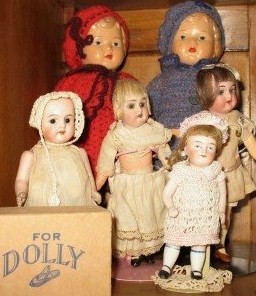
Some people make the mistake of storing antique dolls in plastic boxes. This can lead to problems if moisture finds its way into the box and causes mold to grow on the doll’s clothes. The best place to store antique dolls is in a chest or cupboard. For added protection, you should wrap acid free paper around each doll. Also, you should never lay dolls down on their back for lengthy periods of time. Lay them face down to prevent their eyes from falling out.
Cleaning
Wooden antique dolls should never be exposed to water as this can leave a stain on them. For other types of dolls, you should only use distilled water and a soft cloth to to clean them. If you make the mistake of using soap, the residue can cause the doll to become discolored. Antique dolls made of cloth can be vacuumed safely by putting a layer of nylon netting on the end of the vacuum hose.
 Decorations
Many people choose to display their antique dolls around their homes for decorations. If you do this, you should be sure to dust them whenever you dust your home. You should never put them in a place where they are exposed to excessive sunlight. Prolonged exposure to sunlight can fade the paint on the doll and also fade the colors of the clothes.
Insects
If you have wooden antique dolls, you should check them occasionally for insects. Insects can easily destroy wooden dolls. Once they have infected one of the dolls, they can quickly move on to the other dolls in your collection.
Temperature
It is common for people to leave their antique dolls in the basement or attic. This is not the ideal place for these dolls because of the fluctuating temperatures from season to season. Antique dolls should be stored at a constant room temperature.
Antique dolls should always be taken care of properly, especially when they may be sold in the future. If you take good care of them, you can be assured that your investment will pay off in the future.
 Country & Victorian Times