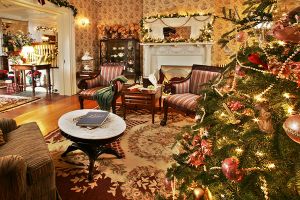
 The Victorians decorated their homes in bold wallpaper, ornate furnishings, lace, and richly-colored draperies, and this love for decorating carried right over into the way they decorated for the holidays, as well. Although many of the Victorians had very little money to spend on extravagant decorations, they were enthusiastic in their celebration of the Christmas season. They turned to nature for inspiration and found fresh, rich greenery, flowers, pinecones, berries, and fruit which were all used to create colorful displays. Early in December the Victorian household began to decorate, covering every available inch of the house with greenery. Spruce, balsam, laurel, cedar, ivy, mistletoe, and holly graced tables, banniesters, chandeliers, archways, columns, and woodwork. Mistletoe dangled from the ceiling of the entry hall. Even picture frames and mirrors were wrapped with evergreen rope. Wreaths could be found hung on doors or behind windowpanes.
The Victorian parlor played an important role for the holiday season. The parlor was transformed into an enchanted winter wonderland filled with decorations such as garlands of cranberries and popcorn, tinsel and paper chains, paper and lace ornaments, tissue-paper snowflakes, glittering glass balls, angels, fairies and Santas. The candles on a glittering tree adorned with an angel or star on the treetop became the centerpiece of the room. Under the Christmas tree sat the tempting gifts, wrapped in colorful paper and tied with taffeta ribbons. Some were lavishly garnished with the addition of fine flowers and greenery. Colored glass lamps and candles throughout the room cast a festive glow. The fire blazed merrily, and stockings dangled from the fireplace filled to bulging with gifts and treats. An army of toy soldiers marched on the mantel above. The fragrance of cedar boughs drifted throughout the house, and arrangements of holly and ivy brought the peace of the winter woods indoors.
If you like this post and want to share it then click the service!

 Deck the halls with boughs of holly, but why not try trimming a wreath with dozens of festive ribbons instead.

 Country & Victorian Times