 2 tablespoons cream of tartar
1 tablespoon vegetable oil
1 cup flour
2 teaspoons food coloring
1 cup water
1/2 cup salt
Cook on stovetop over medium heat for 4 minutes.

2 tablespoons cream of tartar
1 tablespoon vegetable oil
1 cup flour
2 teaspoons food coloring
1 cup water
1/2 cup salt
Cook on stovetop over medium heat for 4 minutes.
 WHAT YOU NEED
From the supermarket:
• One package Knox plain gelatin
• 1/2 cup cornstarch
• Joy dishwashing liquid
• Six clean, empty 4-ounce baby food jars
• Food coloring From the kitchen:
• Two mixing bowls
• Spoon
• Measuring cup
• Pot From the tap:
• Water
WHAT TO DO
In a mixing bowl and using a spoon, mix the packet of powdered gelatin mix with V4 cup water until dissolved. Set aside.
In a pot, mix the cornstarch with 3A cup water. Add 2 cups hot water and mix well. Heat the pot on a stove, bring-
ing the mixture to a boil while stirring constantly. When the mixture becomes clear and thick (after one to two minutes), remove the pot from the heat. Pour in the gelatin mixture. Mix well, then pour equal amounts of the mixture into the six baby food jars. Add one drop of Joy dishwashing liquid to each jar.
In the first jar, add five drops of yellow food coloring and mix well. In the second jar, add five drops of red food coloring and mix well. In the third jar, add five drops of green food coloring and mix well. In the fourth jar, add five drops of blue food coloring and mix well. In the fifth jar, add four drops of yellow food coloring and one drop red food coloring, and mix well. In the sixth jar, add three drops red food coloring and two drops blue food coloring, and mix well. Let cool.
You’ve created finger paints that can be used on heavy white paper. To store, seal the lids on the jars.
Rid your home of pesky ants and roaches without the use of dangerous pesticides!
 How do you keep pests out of your home and what do you do if they manage to find their way in?
There is sufficient evidence to support the fact that adults shouldn’t unnecessarily be exposed to pesticides anymore than children should. In 2004, Pesticide Action Network North America (PANNA) presented an analysis of pesticide related data collected by the Centers for Disease Control and Prevention (CDC). The results showed that many U.S. residents carry toxic pesticides in their bodies at levels above the government’s “acceptable” thresholds. Many of the pesticides found in the test subjects have been linked to serious short- and long-term health effects, including infertility, birth defects, and childhood and adult cancers. Parkinson’s Disease has been linked to pesticide exposure.
Obviously, pesticides are much more dangerous than the industry admits to. Many people in the business will say they use “safe” pesticides. There is no such thing as a safe pesticide and it is actually against the law to say so.
How do you combat pests?
Never use routine spraying of pesticides in your home. If ants find their way into your home or are making a nuisance of themselves in your yard, there are several non-toxic options you can use to control them.
If you know where the ants are coming in from, you can repel them with such products as food-grade diatomaceous earth (DE), baking soda, talcum powder, medicated body powder, damp coffee grounds, salt, cayenne, garlic powder, Comet Cleaner or Tide laundry soap. Place any of these materials in corners, under baseboards or in any cracks and crevices where you see ants emerging.
These products are mostly powders and won’t work around the perimeter of your home as they will be blown away or washed away. Diatomaceous earth is available at feed stores.
If you can find the ants’ entrance on the outside, you can block it with Vaseline Petroleum Jelly, any toothpaste or duct tape. You can also squeeze lemon juice into the opening and leave the lemon peel there.
You can spray the ants themselves with a mixture of 40 percent water, 40 percent alcohol and 20 percent dish soap (these proportions don’t have to be exact).
You can also spray them with Fantastic or WD40. You can spray around your foundation with a mixture of 2 ounce table salt and one ounce, white pepper in one pint water.
If you have ants making mounds in your yard you can flood the nests with club soda, a dilution of orange juice, Lemon Joy and peppermint or with white vinegar or food-grade DE.
If you use the DE, mix four tablespoons per gallon of water. You can also use one gallon of orange juice diluted with two gallons of water and a dash of soap. If you prefer, you can also spread dry instant grits on the mound. The ants will eat it and not be able to digest it and die.
Once ants are in the house, you can usually eradicate them with a non-toxic bait. However, whether it is non-toxic or not, I always recommend placing baits where children and/or pets cannot get to them.
When you use baits, the ants will take it back to the colony and kill the queen. If you are
seeing dead ants around the bait they aren’t taking it back and the problem won’t be solved. You may want to change baits if this is a problem.
You can mix apple sauce, Kara syrup, Crisco shortening, sugar water, canned cat food (fish flavored), creamy peanut butter, honey or jelly with boric acid or borax. Mix about 2 percent boric acid or borax into the bait. You can also use food-grade DE at a rate of 5 percent, or a packet of Equal, which contains aspartame (which you probably shouldn’t be putting in your coffee).
If cockroaches become a nuisance, here are some tips:
Combine half cup powdered sugar and quarter cup shortening or bacon drippings. Add half cup onions, half cup flour and eight oz. baking soda. Add enough water to make a dough-like consistency. Make balls of bait and put them wherever you see roaches.
Also you can mix one clove garlic, one onion, one tablespoon of cayenne pepper and 1 quart water. Steep for one hour, strain, add a tablespoon of liquid soap and spray it around the house for ant and/or roach control.
You can mix one cup borax and fourth cup black pepper and fourth cup shredded bay leaves and place them in areas to repel roaches. Keep all of these baits away from kids and pets.
Spraying the baseboards in a house or commercial building was never intended to kill bugs. It was intended to kill time in the customer’s house or business in order to instill “perceived value” It’s never necessary. If your exterminator wants to spray baseboards, find another one who only uses pesticides around the outside of your home.
 Dogs are one thing. But come on, can you really train a cat?
True, it’s a lot easier to train a dog. But you can walk cats on a harness outdoors and you can teach them to do basic things, like sit or come, using food rewards. You just have to be more patient.
Okay, let’s start with scratching up the furniture. How do you get your cat to cut it out?
Scratching is a natural behavior for cats—they do it to remove the dead outer layer of their claws, to mark territory with the scent glands in their paws and just to get exercise. Since you can’t stop the behavior you need to give your cat something that’s okay to scratch. Cats like the feel of rough, irregular surfaces, which is why most scratching posts are carpeted. Put one right beside the piece of furniture your cat has been using and encourage it to scratch that instead.
What about a cat that suddenly stops using the litter box?
First, check with your vet to see if there’s an underlying medical condition such as a urinary tract infection. Then it’s time to play detective. Is the litter box near its food or water? They don’t like that. Is the litter clean? Has the arrival of a new baby or animal in the household upset the cat? Sometimes cats don’t like a particular brand of litter, so if you decided to change it recently, switch back.
So many cats insist on drinking out of faucets. What’s up with that?
Cats love running water, probably because it’s cool and fresh. You can buy a water fountain that’s made specifically for cats. It’s basically a plug-in water bowl with a reservoir. The device recirculates water, so it’s always running. Put the fountain next to the faucet the cat has been drinking from and gradually move it from there to wherever you want it.
How do I keep my cat off the kitchen counter tops? Give it something more interesting to do. Put a climbing tree right in the kitchen and buy new cat toys. Also, cut clutter. The more stuff on the counter, the more appealing it is to a cat.

I mentioned to my family that I’m collecting toilet paper tubes for use on some projects that were bouncing around in my head. And an odd thing happened. At every family function, every dinner party, every chance meeting since then, I have been inundated with toilet paper tubes. They hand them to me when I least expect them, neatly packaged in Kroger bags, fully confident that whatever I have in mind for them is worth the extra effort. At Christmas, I was given a bag of them along with my Christmas present. Kinda nice, but apparently when folks look at me right now, they think of toilet paper tubes. Not sure if that is a good thing or not.


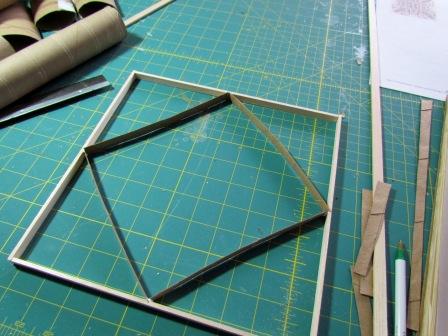
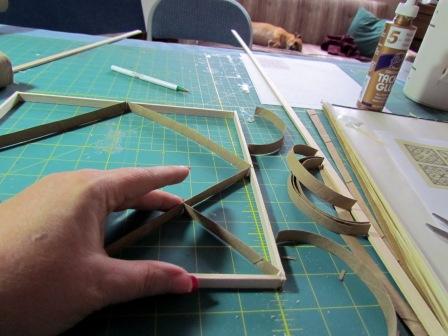

I curled the cardboard with the end of a paintbrush where I wanted curls and used the tacky glue to glue it as I went.
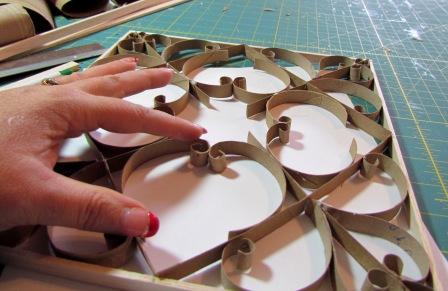


With these squares, I started by dividing it into four equal parts and then creating the same pattern in each part. I simply created as I went and used the end of the paintbrush to make any curls needed.





I now have fancy looking wall art and spent next to nothing to make it. In fact, my toilet paper loving family actually provided most of the materials. You can’t beat that!
 Country & Victorian Times