
Valentines Day Fun Facts

Traditionally, spring begins on St Valentine’s Day (February 14th), the day on which birds chose their mates. In parts of Sussex Valentines Day was called ‘the Birds’ Wedding Day’.

There are many other traditions and superstitions associated with romance activities on Valentine’s day including:

  • the first man an unmarried woman saw on 14th February would be her future husband;
  • if the names of all a girl’s suitors were written on paper and wrapped in clay and the clay put into water, the piece that rose to the surface first would contain the name of her husband-to-be.
  • if a woman saw a robin flying overhead on Valentine’s Day, it meant she would marry a sailor. If she saw a sparrow, she would marry a poor man and be very happy. If she saw a goldfinch, she would marry a rich person.
  • In the Middle Ages, young men and women drew names from a bowl to see who their valentines would be. They would wear these names on their sleeves for one week.
  • In Wales wooden love spoons were carved and given as gifts on February 14th. Hearts, keys and keyholes were favourite decorations on the spoons. The decoration meant, “You unlock my heart!”
Sweet Dreams for Valentines Day

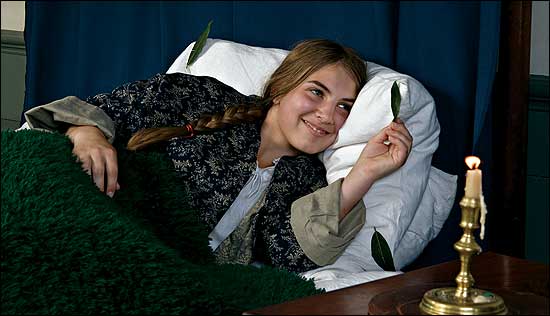
Sweet dreams that told of ones true love on Valentines Day: In the 1700s, rural Englishwomen would pin five bay leaves to their pillows—four on the corners, one in the middle—on the evening before Valentine’s Day. By doing so, it was said, they would see their future husbands in their dreams.

A variation of this tradition called for women to sprinkle bay leaves with rosewater and lay them across their pillows. “When you go to bed put on a clean nightgown turned wrong side outwards,” reads one folkloric account, “and, lying down, say these words softly to yourself: ‘Good Valentine, be kind to me, In dreams let me my true love see.’ ”

Valentines Day Gift Of Gloves

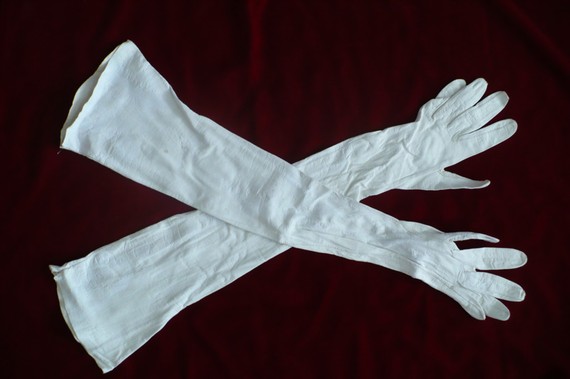
A Valentines Day historical tradition: Just prior to the Elizabethan era, gloves were worn almost exclusively by men. But, by the late 16th century, gloves became a traditional Valentine’s Day gift for women.

In fact, it became custom for a young woman to approach her man of choice and utter the verse  “Good-morrow Valentine, I go today; To wear for you, what you must pay; A pair of gloves next Easter Day.” Having thus been ambushed, the man was expected to send the woman a gift of gloves to wear on Easter Sunday. Sometimes men sent women gloves without an invitation. If the lady wore the gloves on Easter, it was a sign that she favored the gentleman’s romantic overtures.

Victorian Era Lovers


VICTORIAN ERA LOVERS is a place for all who feel true passion for Victoriana: the history, art and customs of that splendid period which went from 1837 up to 1901, where Victoria (1819-1901) was the Queen of Great Britain and Ireland.I highly recommend this site as it is full of Victoriana information as well as great links to other websites that cover information on the Victorian era.

Victorian Purse History

It is hard to understand Victorian era purses without first understanding Queen Victoria and her long rein over England. Her influence was so pronounced that it greatly affected styles and her middle class attitude was reflected in fashion.
Queen Victoria reined from 1837 to 1901 and took over control of England at the age of 18. She was very headstrong and began rejecting the advice of her equally headstrong mother, who had a great deal of control over her life up to this point.
Prime Minister Lord Melbourne began to exert influence on her views until 1840, when Queen Victoria married her cousin Prince Albert. They proceeded to have 9 children.
The Queen’s values were reflected in the Victorian purse of this era. Life was relatively stable and England enjoyed expanding prosperity. Of course there was a wide discrepancy between the upper middle class and the poor and fashion was important to the “haves” as opposed to the “have nots”.
There was a large variety of victorian purses popular during the rein of Queen Victoria so generalizations are needed. Needle skills were valued and this was reflected in decorative designs in beadwork and ribbonwork. Magazines that gave instructions on how to make these bags were very popular.
Knitted bags and chatelaine bags became the rage around 1870 and melded beautifully with women’s fashionable dresses at that time which were slim fitting. The chatelaine bag was hung either from the wrist or the waist.
When women traveled, a large bag with a metal frames called the Gladstone bag after Queen Victoria’s Prime Minister William Gladstone was used. This was an example of a specialized bag for a special need and some popular Victorian purses were used exclusively for going to the opera as well as traveling toilet bags.
The Victorian purse encompassed many different styles over Queen Victoria’s long rein but her own personality was incorporated in the fashion of her day. Her sensibilities gave England it’s own direction in design as this prosperous country enjoyed it’s rule over the empire of style.