Here is a good tutorial on how to paint your cabinets!
Click here for more information:

Here is a good tutorial on how to paint your cabinets!
Click here for more information:
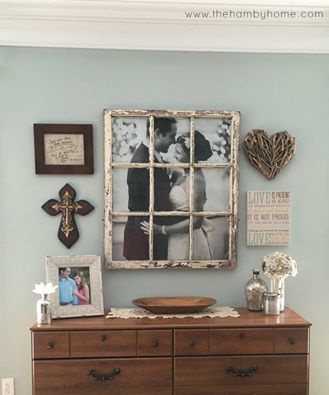 Use an old frame and have a picture enlarged to the size of the frame. Hang picture and then hang frame over to look like you are looking through the window at the photo. Very cool idea!
 It comes a time in a person’s life when the house they currently live in is just not big enough for all their needs. You might need some extra space for the children or a home office, or simply feel that it’s time to invest in a bigger home. Two obvious options are presented here – should you buy a new house or extend the one you live in now? The answer is not an easy one and you definitely have to consider all the pros and cons before you make your final decision that would be best for both you and your family.
 Buying a new house
Pros
Buying a new home is always an exciting process and it feels encouraging when you picture your new life there. New houses often have better installations and outlets as well. Fresh paint and sparkly clean floors are always something to look forward to. It also signifies a turn of a new page. By carefully choosing your new home, your desires regarding both interior and exterior can be fully met if you’re patient with your search. You can go for a better neighborhood and a place that’s close to schools, supermarkets and other commercial buildings necessary for your comfort.
Cons
As much as it is fun and exciting, looking for a new house to buy can also be very exhausting and stressful, especially since you have to deal with selling your old house. Selling a home is a lot more difficult than buying one, not to mention all the paperwork that you have to go through. Of course, if you’re looking to buy a bigger house than the one you currently own, you have to be prepared for spending more money on it, both on the purchase of the house and monthly expenses. What’s more, if the house you want to buy is pretty far from your old place, you’ll have to deal with separation from your friends and neighbors, which is especially difficult for children.
 Extending your own house
Pros
There are many advantages of extending your home as well. You definitely won’t have to think about any disturbance in your settled family life in the specific neighborhood. Your daily schedules and activities will remain unchanged during the extension progress. In some cases, extending your home can be done a lot quicker than waiting for a buyer and looking for a perfect new house that’s on sale. Of course, the most obvious advantage of extending your home is the fact that it can be a lot cheaper than actually buying a new property. Moreover, house extensions in Sydney are on high demand since the service can provide you with the best possible realization of your own idea.
Cons
When you decide to extend your current house there’s always a possibility of something going wrong and adding to the cost of your extension plans. You can have the misfortune to hire a shady contractor and have a lot of troubles with obtaining all the permits necessary for construction work in the neighborhood. Unfortunately, this is not all there is to it. While in most cases, the cost of extension is lower than the one of buying a new house, sometimes it can happen that the cost is higher, especially when you include cleaning and landscaping services after the extension work. Another thing to keep in mind is the fact that you and your family won’t be able to use one part of the house during the construction work.
There is no one perfect answer when it comes to the choice between buying a new house or extending the one that you currently own. With all the pros and cons available for your own research, you should carefully analyze what seems like the best investment for your own position and needs. When it comes to the cost calculations, remember to always check the extra money that you’d be spending after selling and buying a new house and compare it with the price of extension as well as added 20% because some additional costs will always be necessary. Of course, you don’t have to make this kind of a decision on your own. Make sure to include all of your family members in the discussion so that you can work out a plan that suits you the best.

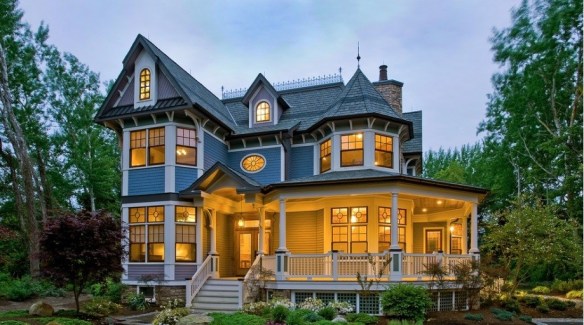 Victorian homes are the most romantic and elegant properties to live in. There is so much history and enchantment hiding in their every cranny, nook and secret compartment. They are built in the distant period between the 1837 and 1901, so you see why it may be difficult for these houses to keep track of all the challenges the present day is placing in front of them. Although Victorian homes surely aren’t lacking a thing when it comes to refines of their architecture, there are some room for improvements in the area of energy-efficiency, which is something the architects didn’t have to worry about during the reign of Queen Victoria. So, if you are living in one of these old beauties, here are a few things that might help you with lowering your energy bills and reducing your carbon footprint.

Has anyone ever told you your house is breathing? If your old home is older than a century, you can probably expect a lot of gaps between boards in walls and ceiling, as well as a few around the doors and windows. Seal them to prevent warmth from leaving your apartment (and coming in if we are talking about hot summer days). Later, you should add insulation to the attic. In most cases, you don’t even have to remove the existing layer before applying the new one. Examine the HVAC system to see if there is a need for sealing them.
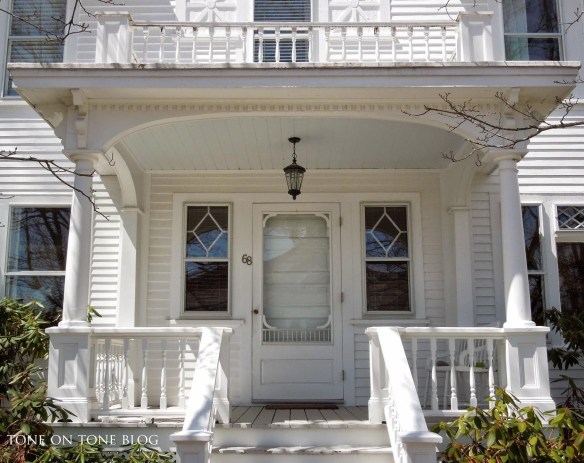
If you want to get more efficient windows in a new house, you should install double or triple glazed windows. With historic homes, the situation is a bit different. Removing the old windows and replacing them with the new ones would affect the historic appearance of the building. A neat alternative is to supplement your old windows with storm windows, so you can save energy without affecting the historic character of your property.
If there is one change you can make that is affordable and doesn’t harm the historic appearance of your house in any way, that is replacing your old incandescent light bulbs with compact fluorescent variety (CFL).
Just because your house is built in 19th century doesn’t mean you have to use an icebox instead of a modern refrigerator. On the contrary, because of the growing popularity of “vintage” you will find a lot of historically-looking appliances with modern features. Still, the most important thing to look for when searching through appliance stores are the Energy Star rated devices.
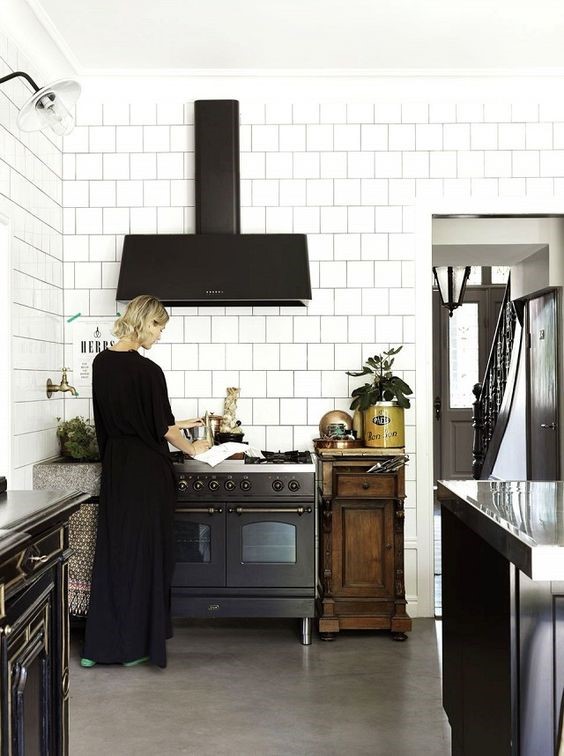
Old homes are designed in times when each room was heated separately using open fires, which was more efficient than heating each room separately. The transition to a modern heating system did no good to historic homes and their heating bills. Address this issue by manually controlling the valves in each room, or by getting a programmable Wi-Fi radiator or installing a smart thermostat.
Electricity is not the only resource that is being wasted in a non-energy-efficient home. Water can also be a great chunk of the monthly bills, especially if you are dealing with problems typical for older houses, such as water-guzzling showerheads and toilets, and leaky faucets. Replace them all with low-flow models, which are energy-efficient and can save you up to 77 percent of the water usage.
So you see, old houses can learn new tricks, but only when the owners are willing to invest time, money and effort in them. Sure, Victorian houses are a habitat to wish for, but that doesn’t mean they too don’t have their flaws. Do your best to improve them, so that they are bringing you more joy while taking less money from you.
 In today’s world, most homeowners cycle through a number of different properties throughout their lifetimes. That’s because a person’s needs can vary greatly according to age, income bracket and the total number of people in their household. It therefore becomes paramount for any homeowner to be able to maximize the value of their property at any given time. When it comes to period homes such those dating back to the Victorian era, the benefits of owning such charming abodes are offset by certain time-specific quirks and particularities that can really drive down a house’s selling price if left unresolved. To that end, here’s a list of suggestions that should help you increase the value of your Victorian home as well as improve your living conditions on the whole:
Restore the house’s original Victorian features instead of replacing them
A common mistake that many people make when purchasing period homes is assuming that an older house needs to compete with all the amenities offered by a new one. While older properties do indeed stand to benefit from being technologically up-to-date, this should never come at the expense of their own particular charms. Things like cast-iron fireplaces, sash windows and old-fashioned radiators are a plus in this situation, so take steps to restore or replace them with similar models instead of simply substituting them with contemporary items that are destined to look out of place in this environment.
Convert your loft into a livable space
Converting a formerly unused loft is one of the best ways to significantly increase the value of your period home. It adds an entirely new space that can be utilized by prospective homebuyers, which definitely makes it worth investing in. If your space up there is too cramped to add another bedroom, try converting it into a workout or hobby room instead.
Eliminate outdated plumbing and electrical systems
No matter how sturdy and well-built they are, most period homes will invariably show their age when it comes to plumbing and electrics. From old wiring to lead pipes and a general lack of electrical outlets, there are a number of problems in older homes that can drastically affect their overall livability. Eliminate them for good by hiring quality contractors who can handle the delicate rewiring and pipe replacement procedures that will have to be tackled. This step can be quite costly and time-consuming, but it’s an absolute must if you want to bring your Victorian house into the 21st century.
Spruce up the property’s exterior
First impressions are crucial when it comes to determining the value of pretty much any property, which is why it pays to make some timely investments in your house’s exterior. Some of them, such as repainting your windowsills or tending to the garden, will be cosmetic in nature, but others will have a direct impact on the house’s utility bill. To give just one example, properly insulating your walls and roof can prevent heat from leaking out during the winter, and thus save you a considerable amount of money in the process. As always, be sure to respect the house’s Victorian heritage. For instance, replacing traditional sash windows with modern UPVC windows will only serve to muck up your property’s image and therefore reduce its overall value.
Invest in appropriate furnishings
Finally, no period home would be complete without some truly appropriate pieces of furniture. Luckily, good quality period furniture can be found at relatively low prices if you know where to look and generally tends to enjoy a longer lifespan than most modern furnishings. This doesn’t meant that you have to stick exclusively to one style of furniture, but you’d do well to only look for pieces that fit well together and refrain from modern minimalist items that would stick out like a sore thumb.
As you can see, it doesn’t take much to transform a Victorian house into the home of your dreams. By simply applying all of the aforementioned tips and tricks, you’ll be restoring your property to its former glory and helping maximize its market value at the same time. Thus, anyone who ends up staying in it will get to enjoy all the benefits of living in a unique environment with none of the drawbacks usually associated with such places.
~Written by Mackenzie Fox – All Rights Reserved
 Country & Victorian Times