Lamp & Bowl Art For Your Garden

I found this great idea on the internet and wanted to share. These are mushrooms made from bowls and candlesticks and the larger ones are made from lamps. They are so unique and would be a great spruce up for recycled art in your garden. The best thing is you can source the materials from your old items or cheaply at any thrift or yard sale.

There are a variety of methods to make these and vary on the items you are using. The easiest is to drill a pilot hole through the bowl and into the candlestick or lamp post. Screw a large heavy duty screw through bowl and into lamp post or candlestick. You need to use a drill bit designed for the metal you are using. If you have a smooth surface between the inside of your bowl and the stem then you can use epoxy.

To paint you will need a spray paint like Krylon that is designed to adhere to metal. You can paint them traditional type colors or get really funky with the color choice.

Make them yours. You can also glue little accessories on them like little gnomes or fairies. Moss and pebbles glued on the the base where it sits in your garden will make them loo like they have been there for a long time.


6 Tips to Master Home Appliance Repair

Sometimes you just gotta take matters into your own hands. Whether it’s because you want to develop your skills, or if you just want to save some extra money, DIY repair is a great choice. You will be able to extend the lifetime of your appliances considerably, and you won’t have to rely on unreliable repairmen who will charge you a fortune.

However, this is not an easy task. Without the proper training, you may be at risk of hurting yourself, or, at the very least, have the risk of making things worse. So, safety first, get some protective gear and read about our top six tips to master home appliance repair below.

Get the basics down

No matter how obvious or banal this piece of advice is, we still expect people to read it. Too many wannabe DIY repairmen end up getting hurt or just destroying their appliances because they didn’t start with the obvious. So, first of all, always unplug the appliance before you start working on it. Furthermore, once you’re done, keep an eye on the said appliance and make sure everything is going well. The last thing you need is to have your microwave catch fire while you’re on the other side of the room.

Next, actually check to see if there are any obvious problems before you start disassembling the entire thing. So, double check the power settings, or whether the thing is actually plugged in. Maybe the problem isn’t in the appliance, but in the outlet. Maybe there are some issues, like a simple filter being clogged. Or, on the other hand, maybe the appliance isn’t working due to a standard operational characteristic it has (like not working when placed on an uneven surface).

Check the moving parts

Moving parts tend to be the most likely culprit when it comes to home appliance repair. We suggest you start with them when you are repairing your appliance because of their tendency to wear and malfunction quickly. So, take a look at the fans and the motor of the appliance. You can often check this by the noise the appliance makes. Since you are fixing appliances that you yourself own, and have probably owned for a long time, you are probably accustomed to the noise they make. Anything different is a tell-tale sign of what’s actually wrong. Now, as far as fans and belts are concerned, get the right appliance spare parts at any specialized store, and get it done. On the other hand, motors are a bit more problematic and may require professional assistance.

Stick to the 50% rule

The 50% rule goes as follow: if your appliance is older than 50% of its expected lifespan, and if the cost of repairs and replacement parts is more than 50% of the price of buying a new one, you shouldn’t bother. The most financially sound decision here is to simply replace it. Of course, you can always disassemble it for your own enjoyment if you’re gonna replace it soon.

Get the right tools
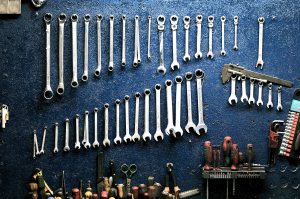
Now, we are not saying you should buy the newest, most expensive and advanced toolkit on the market. But, you need to understand that often a screwdriver will not be enough. Something middle of the line will definitely be enough. Besides, if you want to continue with your DIY home repair efforts, you need a good toolkit anyway.

Now, one specific, important tool that you should get is a nice multimeter. One of the more annoying things when doing home repairs is that it’s hard to figure out if the problem can be found with the wiring. With a multimeter, you can measure voltage, and figure out which wires are ok, and which are not.

Check the ignition systems

For most gas-powered appliances, the most common problem is the ignition process. This goes for appliances that have electric starters and pilot lights as well, however. The point being is that stoves, for example, are very durable appliances that rarely break down completely. The most likely culprit tends to be their ignition system. So, we suggest you start there, check if there is any soot, or if the entire thing is properly aligned.

Check pipes and hoses

Dishwashers, washing machines, and basically any other water-based appliances depend on pipes and hoses to use water. The most likely culprit here tends to be these same hoses. We suggest you check them, and the surrounding valves, first when you want to repair appliances like these.

Conclusion

If you really want to get better at home appliance repair, we suggest you take the above advice to heart. Work on getting the basics down, get the right tools and stick to the 50% rule. Check your moving parts first, figure out where your hoses are, and get familiar with the ignition processes on your stoves.

Easy & Cheap Way To Child Proof Your Door Handles

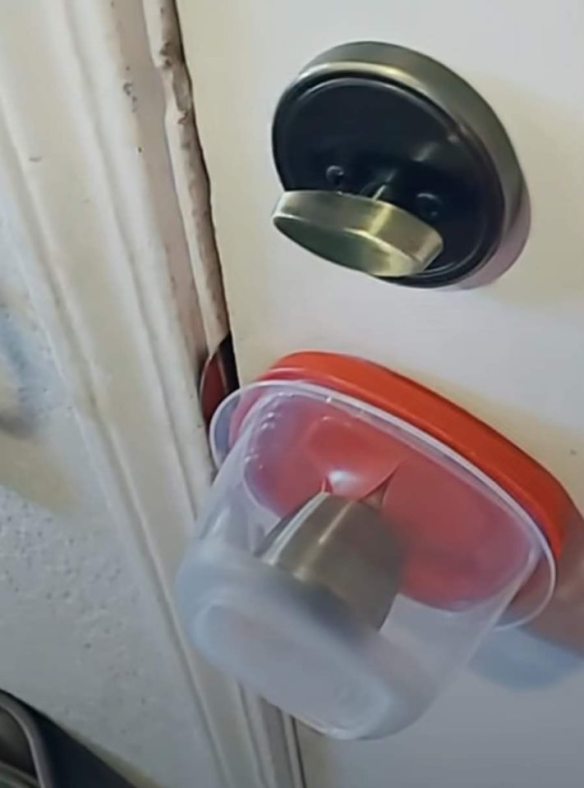
This is not my setup but it was where I got the idea from. Credit to the original owner of the photo.

We recently ran into a problem with our young daughter. We went to visit relatives and she found her way out of the front door and was playing with the neighbors children. To think of the nightmare that could have happened. I get sick thinking about it.

I couldn’t very well ask the relatives to add child protective locks on their doors. So we had to come up with a simple cheap and effective solution to keep her safe.

We went to the dollar store and bought a rubber main salad bowl. We cut an X in the lid just big enough to force the door handle through. This lid screwed on to bowl tight. So we pushed the lid onto the handle and screwed the bowl on when we went to sleep. For a dollar it was a bit more protection – although not fool proof.

My Cluttered Life – Part 1

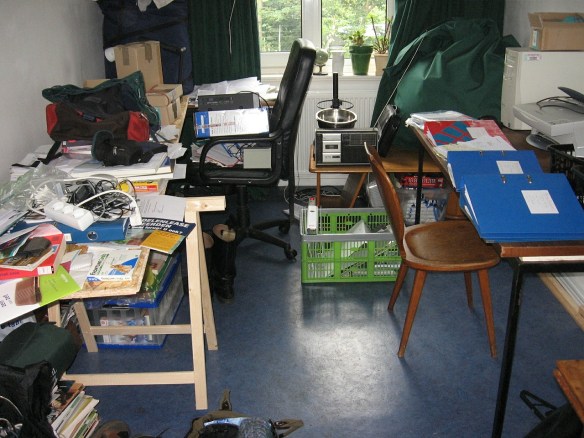
It has come to a time in my life that I have had an epiphany to the fact I hate clutter. I hate to move it around, to look for certain items and I certainly hate it to move from one place to another. I have started a quest to rid my life of excess. Don’t get me wrong I do like my stuff, but there has to be a line drawn in the sand.

So I am going to start writing a series of articles about clutter and for some of us hoarding. I will also talk about purging and cleaning and freeing yourself of the burdens ‘stuff’ brings to your life. You can follow these articles under the category ‘My Cluttered Life’ on the side panel of this blog. I will write every now and then. Some will be short and sweet with tips and tricks. Some will be an accounting of my goals and I want you to use them to help make your life a bit more free.

So, I just moved. Not far away but we moved from a temporary townhouse into a house so everything is now in one place. We moved from Rio Rancho, NM to West Jordan, UT (think Albuquerque to Salt Lake City areas). We moved from a house to a townhouse until we got established and figured out exactly where we wanted to live and where work would be. It took us two years. Yes, that temporary housing didn’t end up being so temporary. That caused a problem.

When I moved up here thinking it was a temporary move I packed accordingly. I packed stuff for a storage unit and packed stuff to live with for a few months. I figured I would keep things to a minimum that we were living with and I would handle it. So, most of everything went into storage. But when you live in a home for two years you need stuff (Yes, that temporary thin ended up to be two years). So, instead of digging through a three car garage packed very tight we just bought new. Now everything is in one place we have duplicates and lots of them.

This was the first step to make in my series of articles I am writing. I do not need two of most items. So out went ten good sized boxes that were just literally picked up by Big Brothers Big Sisters. It feels good to pass on items that were perfectly good to someone who could use it while it benefiting a worthwhile charity and in turn freeing up space in my home. I am sure I will find more duplicates as I move through the house but that is alright. I can make another large load to donate or take a box at a time to a local thrift store.

My strategy now is to go to one tote to another. Discard things that are no longer in working condition, broken or just not wanted anymore. I am also using labeled totes to put things that are ‘I don’t knows’. When I am done going through the house I will take one of these totes at a time and everything in the tote will find a home in my home or it will go to the trash or donate. Will write another article on the flip side of doing this. See you all then.

5 Actionable Steps to Get Online Quickly When Moving Home

Internet connection is a necessity in the modern age. Some people use internet in lieu of other services, cutting the cable and streaming their favorite TV shows. Many households rely on the internet for their accounting and paying the bills. The idea of being stuck in a new home without an internet connection likely doesn’t sit well. Here’s what you can do to avoid that frustration and get online as quickly as possible after moving home.

  1. See Who Services Your New Area

Your current provider may not offer service in your new area. Some internet companies have more infrastructure in certain areas, making it difficult for smaller or newer providers to find their footing. Before moving, be sure to check your current provider’s coverage areas. If you can use the same provider, things will likely be easier. If not, you’ll have to determine which available provider offers the best service in your new neighborhood. Checking all the internet providers in your new area before you actually pack and move will save you a lot of stress. Don’t forget to do it.

  1. Transfer Your Existing Service if Possible

If your current provider serves your new neighborhood, you can begin to process of transferring the service. Service availability might mean you need to switch your plan with your provider. If they offer better coverage near your new home, that’s great. You can improve the quality of your service. If they play a limited role in the new market, you might have to settle for something less than what you previously had. A representative for your internet company will let you know what they can do for you.

Be sure to given them enough notice. As soon as you know your move-in date, let your internet service provider know. Although you shouldn’t count on it, some providers might be able to accommodate a last-minute move. They’ll typically attempt to schedule installation as soon as possible, but they might not be able to get you online right away if they only have a few days’ notice.

  1. Review Your Current Contract

Since internet is a monthly service, it typically comes with a contract. Very few internet service providers offer month-to-month service without one. If your provider utilizes contracts, be sure to review the one you’ve signed. Some providers require you to make a commitment to use their service for a prolonged period of time in exchange for a lower rate or sign-up special. If you’re going with a different provider after you move, there many be penalties for discontinuing your service before your contract runs out.

  1. Negotiate If You’re Using a New Provider

New providers are eager to pick up business. If there’s a cancellation penalty for leaving your old provider, your new one might be willing to pay the fees on your behalf in exchange for a lengthy commitment with them.

Even if you’re not dealing with any cancellation penalties, you still may be able to negotiate. Many providers are eager to outshine their competitors. You might be able to score a lower monthly rate if you ask around. Some providers will lower their asking price or add more value to a bundle package, like including home phone or increasing maximum speeds. Don’t accept the sticker price if you don’t have to – a little negotiation now can save you a lot of money over time.

  1. Plan Ahead for Installation

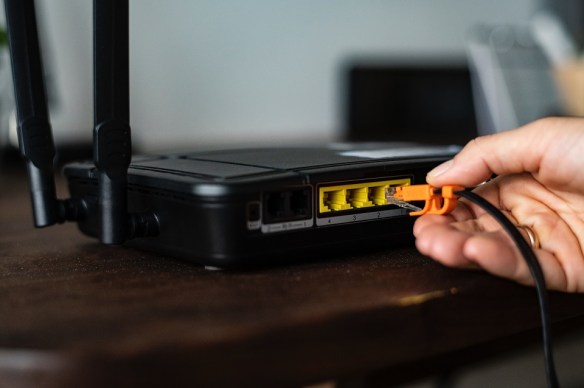
Some providers will give customers a quick install kit. They can hook up their own internet connection in a matter of a few minutes if the home is already equipped with the necessary co-ax cables and necessary infrastructure for connection. If you don’t want to install the internet yourself or if more extensive work needs to be done, prepare for your installer by picking an ideal spot for the equipment and a nearby electrical outlet.

Once your internet is installed, make sure you receive the necessary documents with your passwords and important equipment information. You may also want to test your internet speed to assure you’re getting the rate you were promised. If everything checks out, you’re good to go.

As long as you’re treating internet connection as an important priority and thinking ahead, you’ll be back to normal browsing in no time. Just make sure to log off once in a while to enjoy your new home.

Bio:

Ariana Williams is a pedagogy graduate with a huge love for teaching children. She is also an avid writer and, whenever not spending time with her family, she enjoys writing for blogs and newspaper from her quiet apartment. Feel free to visit Ariana on @AriWilliamsAri and say “hi”.