A DIY Guide To Cleaning Your Chimney

https://unsplash.com/photos/74GjpiGHEGA

Fireplaces bring old charm and cozy warmth to homes. These beautiful additions create a comforting ambiance, but they require a certain level of care—especially the chimney. Cleaning a fireplace is relatively easy, but effectively cleaning your chimney can be a big job.

It’s crucial to stay on top of your chimney’s cleanliness for optimal functioning and to prevent severe fire hazards. To effectively care for your chimney and your home, follow these steps.

Step 1: Determine if You Can DIY

Before you start, you first need to determine if you can clean your chimney without professional help. Chimney cleaning is a tedious task, and it can take professionals anywhere from 45 minutes to two hours to finish the job.

Your goal in chimney cleaning is to rid the chimney shaft of creosote and soot build-up. If the build-up is too large, you need to call a professional to take care of it. However, if you find the build-up is less than 1/8th of an inch deep, you may be able to tackle it on your own. In addition, you’ll need to access your chimney crown, located on your roof, to complete the job. If you’re unable to get to the crown safely, you’ll need to call in a professional to complete the task.

Step 2: Gather the Right Tools

If you determine you can safely access the chimney crown, you’ll need the right tools to get there. These include a ladder, safety harness, safety helmet, and an additional person or persons to supervise. Never attempt to work on your roof without the supervision of another capable individual.

Once on the roof, you’ll need a high-power flashlight, metal bristle brush, and enough rods to handle the height of your chimney. You’ll use these tools to determine the depth of your build-up. Note that each chimney is different, so you’ll need to measure the size of your chimney and its flue to get the right brush size.

https://unsplash.com/photos/k8YvyMzI200

Use your flashlight and a fireplace poker to scratch the smoke chamber and flue to determine the buildup. If the soot has a black matte finish and is 1/8th an inch deep or less, you know you’re okay to clean yourself. If you see a shiny or tar-like appearance or the build-up is more than 1/8th an inch deep, you should call a professional to take on the job.

Step 4: Set Up Your Area

If you are moving ahead with cleaning yourself, your next step is to protect your home’s interior. Lay your canvas tarp over the fireplace and spread it throughout the surrounding room. Secure the tarp over the fireplace opening with tape and insert the shop vac hose through the tarp. Seal everything with duct tape to keep soot from pushing into the room.

After setting up your shop vac outside, connect sections to the hose so it can reach. You’ll run the vacuum while you brush the area, keeping an eye on the filter and replacing or cleaning it when it clogs. Close the windows and doors near your shop vac to prevent any fine soot from reentering your home.

Step 5: Begin Cleaning

Start at your fireplace and ram your cleaning brush up and down several times around the flue section to remove any hardened soot. Use your flashlight to check your work before moving to the next section, ensuring you clean as much soot as possible from the flue area. Once cleared, start your shop vac and move to the roof.

Before cleaning, make sure you are safely equipped with your harness and have supervision from an individual on the ground. Again, you should only clean out your chimney with proper supervision, on a stable rooftop, and with a safety harness and a hard hat. Those without experience working on rooftops should strongly consider hiring a professional.

Once you are secured on the rooftop, add rods to your cleaning brush, moving it down the fireplace till you no longer feel resistance. At this point, you pushed down the soot to the smoke chamber. Climb down from the roof and start to work inside at the firebox. Use a long-handled brush to clean the smoke chamber and a flue brush to remove soot from the smoke shelf. Switch back to the long-handled brush to clean the sides of the firebox.

Vacuum out the firebox and fold up the canvas when you have cleared as much soot and debris as possible. Take the canvas outside and shake out any residue. Fold up the sheets to use again for your next cleaning.

Step 6: Schedule an Inspection

Your fireplace isn’t safe until you’ve scheduled your annual chimney inspection. Even the best DIY job can’t handle creosote build-up, and you need to be sure you didn’t miss any build-up during your cleaning. Have a chimney repair and cleaning professional inspect your chimney once a year to assure you don’t have additional build-up and or repair needs.


9 Tips For Sustainable Living

What do you picture when you think of sustainable living? Maybe it’s dramatic changes like ocean conservation work or switching to wind power. While big efforts are important, sustainable living is an aspect of daily life that can be implemented in small ways. You may be surprised at how small of a change you can make for a real improvement in sustainability, especially when that effort is sustained over time. Here are our nine tips for sustainable living.

https://unsplash.com/photos/0w-uTa0Xz7w

Alt text: A sun setting behind windmills and a grass field

File name: sun-setting-behind-windmills-grass-field

Tip #1: Turn Off the Light

The average annual electricity consumption for a US household in 2018 averaged over 28 kilowatt-hours per day. A kilowatt-hour is equal to one 100-watt light bulb left on for 10 hours. And we’re averaging more than 28 of those a day in our households! Most of this energy usage comes from lights being left on all day.

Turn off your lights when you leave the room. Conserving the light might mean opening the curtains and letting natural light in. Maybe all you need is a small lamp. We tend to overuse electrical lights unnecessarily.

There are also ways to cultivate sustainability in home decor with your lighting options. What are the materials of your light fixtures made from? Take into consideration how your lights are shipped or provided to you. Sustainable packaging can make all the difference. Sources that prioritize sustainability will help you be sustainable too.

Tip #2: Invest in the Reusable Options

A big part of living sustainably is reusing what you can. We have a lot of daily-use items in our lives that are disposable. But, there are also reusable options available like straws, plates, water bottles, towels, and grocery bags. Don’t be afraid to get creative with your reusable materials, and explore all the new items that are being created every week.

https://unsplash.com/photos/EU1R18L1Kb4

Alt text: A marble kitchen counter with reusable straws and fresh fruit

File name: marble-counter-reusable-straws-fresh-fruit

Tip #3: Conserve Your Water

Watching your water usage is an oft-repeated eco-friendly measure, but there might be some specific tips you haven’t considered. We’ve all heard about the importance of taking shorter showers, but have you thought about getting a water-saving showerhead or a shower timer? You may not be aware of how much water you’re using or saving until you start to keep track of it.

Tip #4: Rethink Your Commute

Commuting is a necessity for many people, but you can make your commute a part of your sustainability commitment. If you work close to your home, try walking or biking to work. Taking public transportation is better than taking your vehicle. If you have to drive a car, consider getting an electric one, and carpool as much as possible. If you fly on planes frequently, make sure you find an airline that utilizes zero-waste practices.

Your sustainable commuting routine can also be more basic: take the stairs instead of the elevator. It’s the little things like this that add up.

Tip #5: Dress with the Environment in Mind

A sustainable lifestyle includes supporting sustainable fashion. Sustainable shopping isn’t to be confused with thrift shopping — although getting secondhand clothes is more sustainable than buying new ones. When you decide to buy new clothes, it is better to buy “slow” fashion rather than fast fashion — meaning you choose higher quality items that last longer.

Better quality also often means brands are more environmentally conscious. Plus, in addition to choosing the styles that last longer, you can also make your clothes last longer by doing simple repairs yourself.

Tip #6: Take a Closer Look at Your Bedding

A sustainable life looks at the little details, especially for items you use every day. There are plenty of ways to be more sustainable with your bedding.

You want to choose products from a company that utilizes sustainable practices and uses good materials. Bamboo fabric is beneficial for the environment. Sourcing sustainable fabrics is a great way to institute an eco-friendly lifestyle all across your household.

Tip #7: Ditch the Printer

Today’s world is digital. You don’t need a home printer. If you have to print something, you can seek one out. But not having a printer on hand will save you from printing items you don’t need to print. Practice storing files and information digitally to promote a more sustainable lifestyle.

Tell your bank you want electronic statements. Get receipts emailed instead of printed. Take notes on an electronic device instead of on a pad of paper. Go paperless and then encourage your peers to do the same.

Tip #8: Donate Your Belongings

Just because you’re done with something doesn’t mean no one else can use it. When you donate items you don’t use anymore, you help the environment by keeping them out of the landfill. Donate what doesn’t bring you joy and give it to someone who can reuse those items for a win-win!

Tip #9: Save Gift Bags and Wrappings

This is a small tip, but it can have a big impact. Whenever you get gift bags, save them instead of throwing them away. You can do the same with tissue paper or other wrappings that don’t get ripped or damaged when you open the present. This will not only save you some money but it will help the environment.

Encourage Working Together

Sustainable living works best when everyone makes the same commitments. It doesn’t do much good if you take short 4-minute showers and everyone else still takes long 30-minute showers.

And it won’t matter as much if you are the only one taking public transport to work. If everyone else in the office drives their car separately try to address the opportunity to increase sustainability. Encourage your coworkers to brainstorm together and try to coordinate carpooling times. Together you can make a much larger positive impact by organizing carpool groups.

The possibilities for sustainability are endless. And when you work together to achieve your sustainable living dreams you can make the world a lot better. All it takes are small meaningful changes to make a world of difference.


Incorporating Cottagecore Elements Into Any Home

https://unsplash.com/photos/NqeB4q6KOFg

Cottagecore is a popular trend that has gained popularity across all social media platforms. As a style of interior design, cottagecore blends traditional country-style aesthetics with coziness and practicality.

However, cottagecore also weaves a hint of enchantment into its aesthetic. You can almost imagine a fairy settling down on the windowsill in a cottagecore home, and cottagecore designers make great use of the natural world to create a hobbity style in contemporary homes.

Even though most of us don’t live in a hobbit-hole or countryside cottage, that doesn’t mean you have to abandon your aspirations to create a cottagecore home — you just have to get a little creative. So, here’s a guide to help you incorporate cottagecore elements into any home.

Finding Inspiration

Transforming a home from sleek modern design to cozy cottagecore takes time and effort. Fortunately, you won’t be without inspiration on your journey to convert your home into the cottage of your dreams — even if your cottage is really an apartment in a large urban city.

You can find inspiration for cottagecore through social media pages like thehouseofcottagecore and Rachel Maksy. These pages will give you inspiration and often highlight other cottagecore influencers so you can take a deeper dive into the aesthetic. You can also find practical tips to help you do some cottagecore DIY on a budget and cover up elements of your home that don’t align with the cottagecore style.

It is worth remembering that cottagecore is more than a trend on social media. Inspiration for cottagacore can be found in the real world by visiting places like Monk’s House in the south of England or the Dyckman House on Manhattan Island. Visiting historical houses can help you notice little interior design choices and may help you spot vintage appliances that suit your dream style.

Vintage Appliances

Cottagecore exists at an imaginary juncture between traditional and modern life. This means that ultra-modern appliances like stainless-steel fridges and microwaves will likely stick out and look a little odd when juxtaposed with handwoven baskets and vintage tea sets.

The next time you go thrifting, try to look for vintage appliances that compliment your current style. You’d be surprised by how easy it is to fix or renovate old appliances, as most folks throw away outdated appliances even if they’re in perfect working condition.

You can even help old appliances like fridges last longer by treating them with some TLC. Avoid overburdening older appliances, and treat them with the same care that you show to interior decore. If you do use older appliances, just be sure to check your energy usage, as old appliances may demand massive amounts of energy compared to newer models. This will help ensure you live a sustainable, vintage-inspired life that is good for your soul and the planet.

Making Use of Space

The cottagecore influencers you see on social media usually have plenty of space and financial resources to achieve their dream aesthetic. However, it’s entirely possible to incorporate cottagecore elements into your home, even if you’re living in a small rental apartment.

Start making space for cottagecore elements by reassessing your use of storage space. Most folks make poor use of closets and cabinets, and could easily cut down on clutter by utilizing space-saving hacks like track shelves, compression bags, and over-the-door organizers. This will make it easier to reclaim space in your home for cottagecore elements.

It’s worth bearing in mind that cottagecore suits smaller spaces. You’re going for a “cozy” aesthetic, so filling a space with knick-knacks and cushions is perfectly acceptable. If you’re on a budget, you can still lean into cottagecore elements by handmaking your own statement pieces. You might, for example, follow simple crochet patterns to make your own throws and pillows.

DIY and Staging

One of the joys of cottagecore is that it is seldom perfect. Unlike other modern interior design styles like Scandinavian and mid-century design, cottagecore elements can be made with your own two hands and thrive off the character inherent in dropped stitches and frayed rugs.

When creating a cottagecore aesthetic, remember that staging is just as important as the actual furnishing you have in your home. Start with a simple space like your living room. When someone walks in, what kind of scene should they find? Perhaps you’ll stage the area by storing a ball of yarn in a wicker basket beside your armchair. Maybe you’ll leave flower cuttings to dry beside the windowsill. The idea is to create a space that makes use of your DIY both for practicality and for impromptu stylizing.  

Conclusion

Cottagecore is all about making the most of what you already have. But, if you do need to add some statement pieces, consider heading to the local thrift store and picking vintage goods that suit a dreamy cottage vibe. Once you’ve gathered your cottagecore decore, try your hand at staging, and make use of DIY’d materials to invoke a cozy, enchanting feel.

How To Set Your Room According To Your Personality

https://unsplash.com/photos/nEtpvJjnPVo

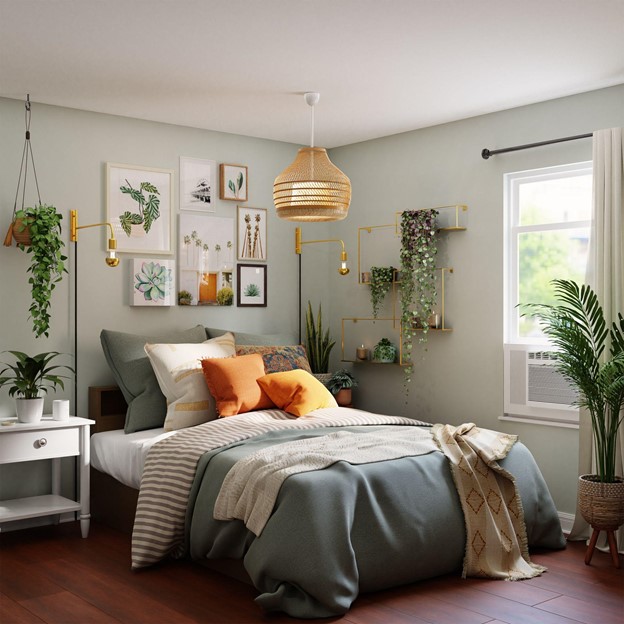
Your bedroom should be a reflection of you—your personal tastes, your favorite colors, and the moments that have mattered most. It should also be a comfortable sanctuary designed to promote rest and relaxation after a long day. But of course, a soothing space looks different for everyone. By choosing decor and following design techniques that fit in with your own unique personality, you’ll be sure to create a bedroom that will always feel like yours.

Find out how to style a bedroom that’s unique, stylish, and totally you.

Choose a Color Scheme That Represents You

https://unsplash.com/photos/vOa-PSimwg4

Color scheme is probably the easiest way to design a space according to your personality, and it’s essential to tie your design together.

Consider the mood you want to create in your room—do you want it to reflect your boldness and big personality, or would prefer a room that mirrors how bright and cheerful you are? If you’re the former, don’t be afraid to play around with big patterns and bold colors—an accent wall behind your bed frame would be a great place to add a patterned wallpaper. If you’d like your space to be more zen, consider using a calming color palette and adding in a soft blanket in a warm neutral tone for a soothing space that’s completely your own.

 Create Vignettes that Show Off Your Style

https://unsplash.com/photos/v4bCFqVM9Gs

You can also show off your personality in your space by creating vignettes, or groupings of decor items, to showcase what matters most to you in your room.

If you’re a more natural, earthy person, consider building a small vignette on top of your dresser with a bowl for your favorite jewelry, a collection of gemstones, and a small vase for your favorite florals and blooms. If you love the look of modern, avante-garde spaces, consider adding a stack of unique decorative books, a plant, and clock to your favorite shelf to add dimension and interest to your space.

Switch up Your Bedding

https://unsplash.com/photos/Sh22mtTd2GA

If you want to decorate your room with your unique style but aren’t sure where to start, you can change your bedding to give your room a complete refresh without spending too much time in the home decor aisle.

If you’re spontaneous and cheerful and want your space to match, consider a bright yellow bedding to add a bit of your sunny disposition into your room, you could also consider adding personalized or customized items. If you consider yourself to be more serious and self-confident, consider a deep navy or patterned onyx bedding set to match your sure-footed style.

 Make It Functional

https://unsplash.com/photos/HD7QBx2Yfa4

Comfort is essential—after all, you’ll spend a lot of time in your room!

One of the easiest ways to make sure your bedroom is functional while still being decorated in your unique style is to make sure you can move. It can be tempting to fill up your space with all of your favorite things– but you’ll want to avoid making it too cluttered. After all, who wants to be tripping over their bookshelf or squeezing past a bronze coat rack to get in bed? Consider adding in storage under your bed or adding in a dresser with lots of drawers to hold your things if you’re feeling low on space.

 A Space That’s Just for You

https://unsplash.com/photos/RnAo-ha4bpM

However you choose to decorate, make sure you’re choosing pieces that speak to you. Layer texture and dimension in a way that you like—after all, it’s your space!

Your room will reflect your personality if it’s filled with the things you love the most. Have faith in the little things, and your space will come together as a comfy sanctuary that is a perfect reflection of who you are.

5 Common Hot Water Heater Problems

https://www.pexels.com/photo/water-flows-from-the-tap-to-sink-6256/

While it isn’t something you may think about on a daily basis, a hot water heater is one of the most valuable appliances in your home, as it supplies your taps and appliances with hot water every single day. However, if you ignore even the small problems with your water heater, you’ll not only end up with freezing cold water but also with expensive cleanup and repair work. By becoming familiar with these hot water heater issues, you’ll be more competent to adequately identify them and take proper actions to solve them. Here are a few of the most common hot water heater problems to help you know what you should do to get them repaired and to get your hot water back.

Not enough hot water

When the water from your tank takes longer than usual to heat up or when no hot water is showing up at all, then there’s certainly a problem, possibly related to your heat source. For electric water heaters, the heating parts could have failed or their electrical connection could have been damaged. When it comes to gas water heaters, the issue may be related to a bad pilot light or malfunctioning gas connection. In case your pilot light is lit but the gas doesn’t flare up, that could be caused by your burner as a whole, which might be in need of repairing. However, if you have a newer heater that has an electronic ignition system, you should examine your breaker box to determine if the circuit of your water heater has been broken. In that case, you should reset it and you’ll be free of problems when it comes to getting your heater to ignite once more.

Leaking water heater

When noticing a decline in the water temperature, there’s a high chance that there may be a leak in your water heater. That’s why it’s essential you discover the origin and cause of the leak in order to fix it. There are several primary causes of leaks such as their age, low maintenance, the tank’s pressure, bad plumbing installation, and loose drain valve, to name a few. A leak can be very evident from pools of water near the appliance, which could be dripping from the unit or from the pipes connected to it. Don’t underestimate the danger of a leaking water heater, as it can lead to a flood. For example, when looking for professionals to help you in Australia, in particular in the outskirts of Sydney, don’t hesitate to search for experts for hot water maintenance in Wollongong to help you with an emergency repair. 

Smelly and dirty water

Water that’s smelly and dirty might indicate there’s some contamination in the water tank. A solution to this problem may be to flush the tank once or twice a year to manage a healthy water heater. On the other hand, if the water has a cloudy color or is dirty, then the most likely cause would be a build-up of sedimentation and mineralization inside the tank. Any build-up inside the tank can reduce its efficiency, so asking a professional would be the best solution. 

Strange noise coming from the water tank

Hearing unusual noises coming from the water tank can be an indicator of different potential issues, and identifying a specific problem may be challenging to do alone. When it comes to gas water heaters, noises like popping, hissing, and banging can either be a clue that the heating elements of the tank are burning sediment on the inside or it can be that the parts themselves are burning out and need to be replaced. In this case, it’s highly suggested to flush the tank.

Damaged gas control or burner assembly

Another common problem with hot water heaters is a damaged gas control or burner. If the burner is dirty or out of function, a water heater cannot operate adequately. In order to solve this problem, you should replace the damaged gas control or burner assembly, which is also known as a thermocouple. If you want to replace the thermocouple on your own, then you first have to turn off the gas and the water to make sure it wouldn’t lead to further damage.

Hopefully, this article has given you some insight into the most common hot water heater problems to help you know what to do and get your water heater to its best condition.