Cake In A Jar

Ingredients

  • 1 (18.25 ounce) package yellow cake mix
  • 8 straight-sided wide-mouth pint canning jars with lids and rings
  • Icing

Directions

  1. Prepare the cake according to package instructions, or use any cake recipe.
  2. In pint size, straight-sided wide-mouth jars, put 1 cup of batter in each greased jar. Make sure to keep the rims of the jars clean. Put in preheated oven 350 degrees F (175 degrees C). Place jars on a cookie sheet to keep from tipping over while baking.
  3. Bake for 30 to 35 minutes, or until a toothpick inserted into cake comes out clean.
  4. While they are baking, have your jar lids boiling in a pan of water. When the cake is done, take one jar out at a time and add the hot lid and screw on your jar ring and let set and cool.
  5. It will seal as it cools. Place the jars on the counter and listen for them to ‘ping’ as they seal. If you miss the ‘ping’, wait until they are completely cool and press on the top of the lid. If it doesn’t move at all, it’s sealed.
  6. After it cools it will pull away from the jar and when you are ready to eat, open and pop out the cake and enjoy.
  7. Unsealed jars should be stored in the refrigerator and eaten within 2 weeks. Sealed jars may be stored in a freezer.


Icing: If sending this to a loved one include a small amount of icing in a can. If you give this to someone in person you can top the jar with icing right before you give it to them.

If mailing these wrap securely with bubble wrap!

When giving as a gift, top with a ten inch square fabric tied on with a ribbon and tag. You can also attach a little baggie with sprinkles, chocolate chips etc.

Valentines Day Fun Facts

Traditionally, spring begins on St Valentine’s Day (February 14th), the day on which birds chose their mates. In parts of Sussex Valentines Day was called ‘the Birds’ Wedding Day’.

There are many other traditions and superstitions associated with romance activities on Valentine’s day including:

  • the first man an unmarried woman saw on 14th February would be her future husband;
  • if the names of all a girl’s suitors were written on paper and wrapped in clay and the clay put into water, the piece that rose to the surface first would contain the name of her husband-to-be.
  • if a woman saw a robin flying overhead on Valentine’s Day, it meant she would marry a sailor. If she saw a sparrow, she would marry a poor man and be very happy. If she saw a goldfinch, she would marry a rich person.
  • In the Middle Ages, young men and women drew names from a bowl to see who their valentines would be. They would wear these names on their sleeves for one week.
  • In Wales wooden love spoons were carved and given as gifts on February 14th. Hearts, keys and keyholes were favourite decorations on the spoons. The decoration meant, “You unlock my heart!”

Valentines Day Gift Of Gloves

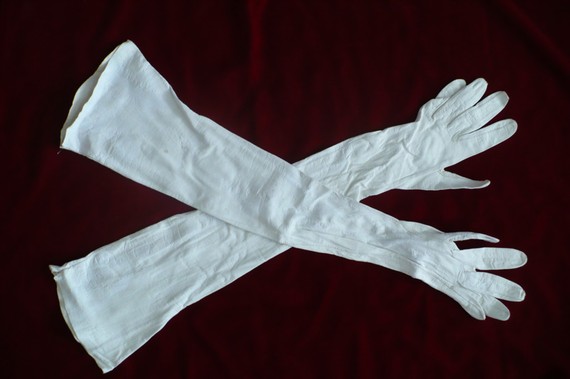
A Valentines Day historical tradition: Just prior to the Elizabethan era, gloves were worn almost exclusively by men. But, by the late 16th century, gloves became a traditional Valentine’s Day gift for women.

In fact, it became custom for a young woman to approach her man of choice and utter the verse  “Good-morrow Valentine, I go today; To wear for you, what you must pay; A pair of gloves next Easter Day.” Having thus been ambushed, the man was expected to send the woman a gift of gloves to wear on Easter Sunday. Sometimes men sent women gloves without an invitation. If the lady wore the gloves on Easter, it was a sign that she favored the gentleman’s romantic overtures.

Posies Made From Tissue Paper

1. Layer 5-by-15-inch sheets of tissue paper, alternating colors. Make 1-inch-wide accordion folds.

2. Wrap 1 end of a pipe cleaner around the center of the folded paper, and twist to secure. Round the edges of the folded paper with scissors.

3. Fan out folds, and gently pull apart each layer of tissue paper to create petals.

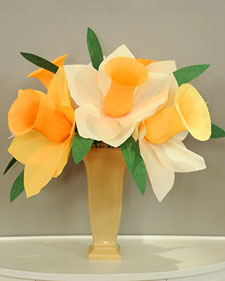
Daffodil Crepe Paper Flowers


Tools and Materials

  • Daffodil template
  • Florist crepe paper
  • Paper clips
  • Scissors
  • Pinking shears
  • 18-gauge paper-wrapped floral wire
  • Floral tape
  • Fabri-Tac adhesive
  • 20-gauge plain floral wire

Crepe Paper Daffodil How-To
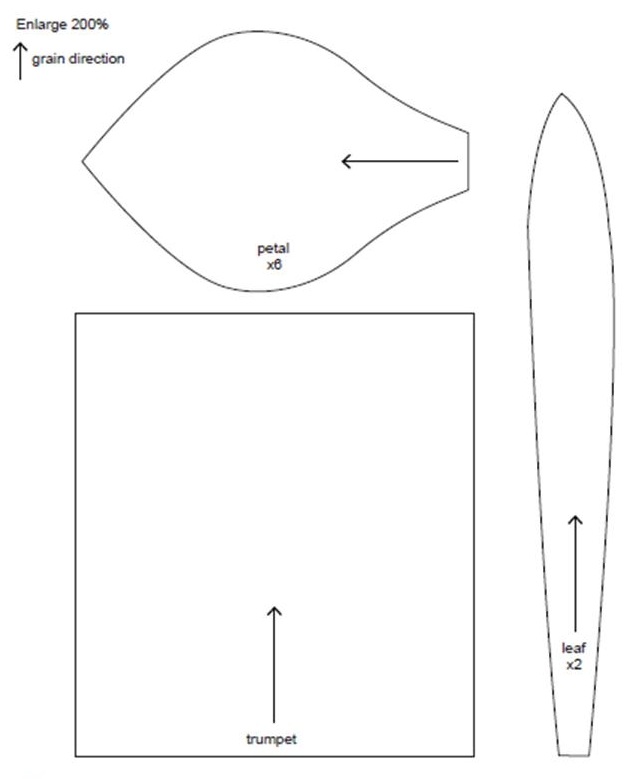
1. Download daffodil template, enlarge 200 percent, print, and cut out.

2. With paper clips, secure each element of the template to an appropriate shade of crepe paper, aligning the arrows with the grain of the paper. Cut out with scissors in the quantity indicated and trim top of trumpet piece with pinking shears.

3. To create stem, wrap together three 18-inch pieces of 18-gauge paper-wrapped floral wire with floral tape.

4. To create the bulbous bottom portion of the trumpet, place thumbs and forefingers together in the center of the trumpet piece, 3 inches from the bottom. Applying light pressure and moving outward, pull toward either edge, stretching the crepe paper as you go.

5. Run a bead of Fabri-Tac adhesive down one long edge of the trumpet, and bring edges together to make a cylinder.

6. Fold and pinch bottom of cylinder to top of stem, and secure in place with floral tape.

7. Insert hand into cylinder, and use fingers to shape the base of the trumpet.

8. Stretch pinked edge of trumpet against the grain of the crepe paper, and curl down with fingers.

9. Evenly space three petals around the base of the trumpet and secure in place with floral tape. Repeat with the remaining three petals.

10. With floral tape, attach each leaf to a 15-inch length of 20-gauge plain floral wire. Use more floral tape to secure each leaf to the daffodil stem.

PATTERN: