Common Problems In Victorian Homes: House Of Haute Style Or Horrors By Zoe Clark

1Ominous yet romantic, Victorian homes are a living example of timeless elegance and longevity, which is one of the main reasons why houses dating to this era are extremely popular among homeowner hopefuls. Still, every piece of property has its perks and downsides, and the same is true of Victorian homes. Underneath their beauty and complex trims, houses built in the second half of the 19th century can hide serious hardware issues, which is why home buyers need to be extra careful when inspecting their home-to-be with over 100 years under its belt. Here’s a brief list of the most common problems lurking beneath lavish Victorian frills to help you tell a money pit from the real value deal.

1. Weak-legged Victorians

Foundation issues are all too real a problem in old houses. However solid, the base of many a Victorian home can shift due to land subsidence, resulting in further structural hitches such as cracked or bulging walls, door and window defects, and even plumbing and wiring problems.

When inspecting your future love nest, look for floor and wall flaws, door and window latching problems, and foundation chipping or flaking. In case you detect signs of foundation glitches, a structural engineer may need to step in and see whether, where, and how the damage can be repaired.

2. It never rains but it pours

2Roof defects are a chronic problem of old property, and Victorian homes are not an exception. Leaks, faulty flashing, missing shingles or tiles, and poor insulation upstairs are red flags which you shouldn’t ignore when looking for a place to settle down.

During preliminary home viewing, check the walls and ceiling for signs of staining and peeling paint that may point to water intrusion. Broken or damaged roofing material can be replaced, insulation can be upgraded, and flashing flaws can be taken care of, but you’ll need to be aware of the total repair costs before you can call the property a home-sweet-home.

3. Budgeting down the drains

If the basement of your Victorian property find is smelling a bit worse for old age, it may be a good idea to check it for signs of mildew infestations. Mold and musty odor below ground level can point to plumbing faults, perimeter and underfloor drainage issues, or even foundation waterproofing hitches, which you’ll need to tend to and upgrade to contemporary standards before you move in.

In case you smell trouble in the basement, hire a professional to conduct a thorough inspection and estimate the upgrade scope and cost. This will help you get a better image of the post-move repair and upgrade expenses which play an important role in initial capital required to make the place livable.

34. Marrow-chilling prospects

Victorian doors and windows do look spectacular, but unless they’ve been updated in the past decade, you’ll probably need to have them checked, replaced, or repaired before you drop your gear on the floor.

When inspecting your future Victorian-age property, take a quick look at the frames, panes, and surrounding insulation: stains, cracks, mold, and other forms of damage can add a few figures to the post-purchase update bill. Also, be aware that certain features of an old home can’t be remedied due to their historical value – which is a real deal breaker.

5. Looming layout layovers

4Victorian homes usually have narrow hallways, tiny kitchens, tight and steep staircases, and modestly sized bedrooms, which can be problematic if you’re set on buying property for house flipping projects that promise a big bang for your buck. Modernizing a true-blue Victorian home will probably require extensive layout redrawing, and such endeavors are by far the costliest update in the fix-ad-flip lot.

For this reason, be very careful when selecting old houses to flip: Victorian charm is an asset only if the renovation doesn’t involve comprehensive floor plan changes and wall relocations.

Modern Victorian style is in – but the fact that antique houses are currently in high demand on the real estate market doesn’t mean that just about every old place is worth your cash. Double-check the critical property points before you sign the contract: a little extra care and inspection can save you thousands in the post-purchase update process. Good luck!

Author bio:

Zoe Clark is a journalist, freelance stylist and blogger. She is a visual storyteller and aesthetician by heart who often writes about decorating and DIY ideas. She loves sparking creativity in people and giving them ideas for their own spaces.
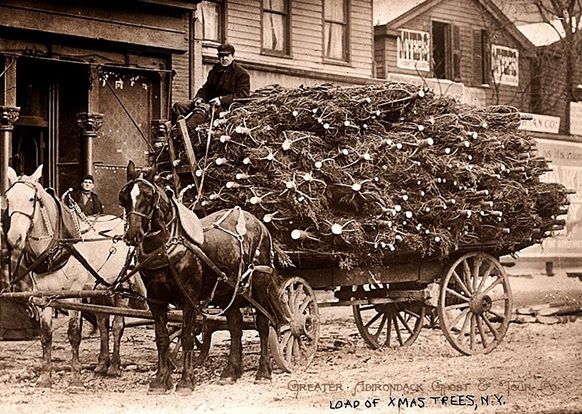


Victorian Christmas Tree Delivery

10405424_838602956199213_7251348291463915835_nWhat a sight it would have been to see – the commotion of seeing Christmas trees brought in by horse and wagon.

Winter Wedding Flower Arrangements and Flowers Used

People who prepare to get married in winter should obtain information on the types of flower arrangements predominant in the winter season, and especially on the colour of flowers for bridal bouquets and other wedding floral arrangements. There are also typical flowers suitable for wedding floral designs. For a special winter wedding ceremony you should find which flowers suit most the occasion and the white season when everything is covered with sparkling snow.

First of all, there are amaryllis flowers, available in a number of colors, and even a single stem, with its typical three to six large flower, can be the centerpiece for any table arrangements, surrounded in greenery. Anemone flowers also come in different colors, and they are fitting centers of table centerpieces; the dark centers of anemones give a stylish black accent to each arrangement comprising them. Bells of Ireland have also become popular recently, with the increasing trend for using green flowers in wedding floral arrangements. Bridal bouquets which contain Bells of Ireland should be stored upright, as the flowers will bend towards any nearest light source. Camellias are a beloved sentimental choice for wedding flower arrangements, especially for bridal bouquets, not only because of their beauty but also because these flowers feature great longevity.
Winter Wedding Flower Arrangements and Flowers Used
Furthermore, the wonderful waxy camellia leaves are a wonderful complement to each wedding floral arrangement, even without the flowers.

Poinsettias, most popular as Christmas flowers seen in pots, can also be gorgeous elements of bridal and bridesmaids’ bouquets. They typical pointsettia colour is red, but there are also other colours in which pointsettias are available. If people decide to make their own flower arrangements using poinsettias, they should take care to seal the stems well, as they can leak milky sap which can cause stains.

Ranunculus flowers are also known as buttercups; they enjoy their peak from January to May, and they are available in different colors. The Star of Bethlehem flowers are mostly used as fillers, as they tend to grow in clusters around long stems, and they also feature outstanding longevity in vases, of up to three weeks. The Star of Bethlehem flowers bend in the direction of any light sources, and that is why it is necessary to keep flower arrangements containing them in upright position.
Winter Wedding Flower Arrangements and Flowers Used
Carnations are available throughout the year, but they are welcome in winter because of their enticing scent, as well as owing to the variety of colors, and finally on account of their low cost. Carnation centerpieces are also favorite choices for wedding decorations. For outstanding scent, sweet pea flowers are also favorites, coming in different colors and featuring exquisiteness, especially in wedding corsages.

Tulips are universally known as popular elements of all flower arrangements, and because they come not only in one, but also in bi-color varieties, as well as in fringed and frilled options, they are truly dainty elements for wedding flower arrangements.

Finally, wax flowers, with their abundant foliage, are worth including in wedding arrangements; the leaves give out a fresh citrus aroma, which is another advantage. Originating from Australia, wax flower plants are widespread evergreen shrubs, but they can feature as wedding floral arrangement elements everywhere.

Read more helpful tips at: http://www.endoftenancycleaninglondon.com/blog/-should-you-hire-an-end-of-tenancy-cleaner.html

DIY – Save Money by Making Your Own Furnishings

There are plenty of creative ways in which you can use DIY in the home to ensure that you are not splashing out on expensive furnishings. If you are a student, or you just want to do things a little more cheaply, it can make very little sense to be spending hundreds of pounds on things, when you could be ‘upcycling’ old furniture or making new stuff! Many people now go in for a certain style that is called ‘Shabby Chic’ which uses lots of reclaimed wood, battered antiques and repainted items, to make a feeling of carefully curated casualness throughout the home, a sort of run down affair that has been painstakingly achieved in many cases! Of course this style comes from seeing houses where people have decked out their rooms in a way that showed them to be indifferent to trends and luxury brands, but rather more interested in how things go together, and showing their own personality through it. Much of this style comes from doing things cheaply and for yourself, and if you are creative and think carefully about such things, then you too can achieve this.
DIY - save money by making your own furnishings
Have a think about what you need for your room. Say you need a coffee table, what kind of material would suit the room, and what size do you need? Many styles now use discreetly modern surfaces, shiny, and dark colored, rather than expensive wood veneers. You should have a look around local car boot sales, and on gum tree to see if anyone is giving away a nice old desk, or an interesting looking door, that you could make a table surface from. For instance, a dilapidated old desk could have the surface removed, sanded, and re varnished to look like a beautifully conditioned table top. You could then place it on a railway sleeper or two and make a perfect coffee table. Think about the juxtaposition of materials – painting a railway sleeper a deep lacquered black, or even a bright color could make it sit strangely but stylishly with the table top, giving you the kind of intriguing coffee table that prompts people to ask of the designer’s name! Of course the main fun in all of this is telling them that you made it!
DIY - save money by making your own furnishings2
Try finding old scaffold boards for various uses. You can use them as is for interesting shelves, or cut them to size and nail them to wooden palettes to make an interesting looking platform bed! Again, if you wanted something a little less shabby, then you can sand and paint them any color you want. Try a glossy white for that beautiful french look, or matte black for a more modern, tactile feel. The most important thing is that you match it with the room. If your room is a fully carpeted living room with white walls, then you want something simple that won’t clash. If your room is old fashioned, then why not think about going a little more modern to offset the antique furnishings? Modern houses look great with a couple of antique bits in there, but perhaps try getting them cheaply and refinishing them in a new color to fit your home, and make them you own, as otherwise it may end up looking like a museum of design, rather than a harmonious living space! You can do absolutely anything you want to, but be sure to research all the methods beforehand, and be safe when you are carrying out all of the processes.

Find more helpful information by visiting: http://www.hiremanandvan.org/W4-movers-chiswick/removal-van-mover-chiswick.html

Victorian Behaviors Of Love By Eve Pearce

imagesAntique Romance – Victorian Flirting Techniques

With Valentine’s Day fast approaching, now is perhaps a good time to have a quick look at how our ancestors conducted themselves when it came to flirtation. While we tend to think of the Victorians as a rather severe, staid bunch, they were (of course) just as subject to the tempestuous passions of the heart as we are today – although they had some curious ways of showing it. Try some of these upon the object of your desire if you wish, but do not be surprised if you get odd looks rather than outbursts of affection in return!

Parasol Tilting

A Victorian lady who innocently thought her parasol a utilitarian device for shading her face from the sun may have found herself the object of unsolicited ardor during her perambulation through the park. The manner in which a parasol was held carried a plethora of meanings to the practiced flirt – so much so, in fact, that a parasol could barely be held at all without it conveying some message to amorous onlookers in the know. To carry the parasol aloft in the left hand indicated that you desired to know someone better. To do the same in the right chastised suitors for their eagerness. Letting it rest upon the left or right cheeks meant ‘No’ and ‘Yes’ respectively, while dropping it upon the ground was an out and out declaration of love (which must have led the clumsy into awkward situations). Even those who carried folded parasols were not safe from unintentional flirting – to fold the parasol was an order for a suitor to leave immediately, carrying it over the shoulder accused observers of cruelty, and swinging it at the sides meant either that you were married or engaged (depending upon which side you swung the instrument at). There were a great many different meanings, which one can only imagine caused a great deal of confusion at the time given that one cannot always be aware of the position of one’s parasol. However, the Victorians did not discuss the affairs of the heart openly (to do so was considered vulgar), rendering such secret languages necessary. These became increasingly complex.

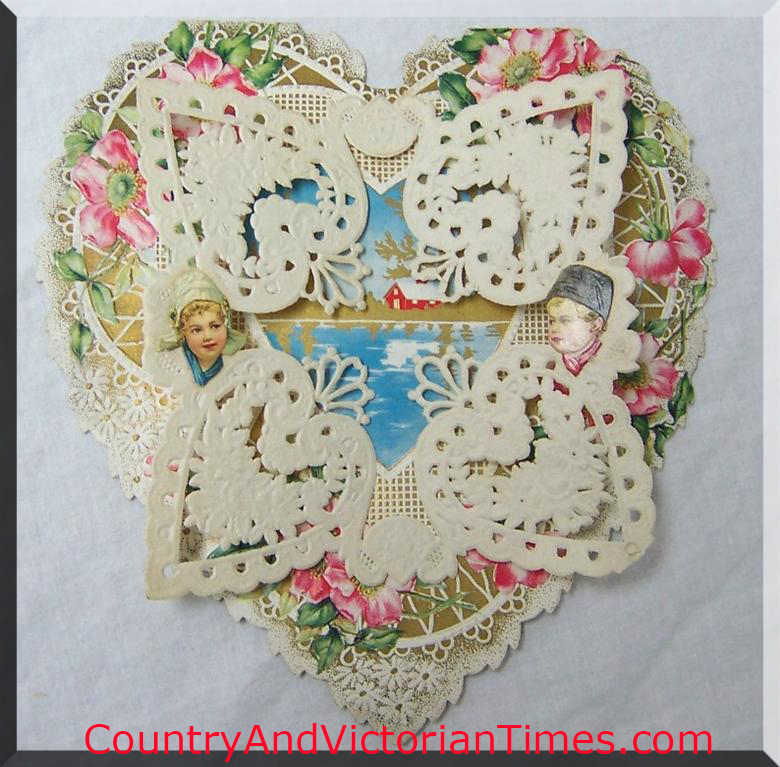
1890-1900-Valentine-DieCutThe Language of Flowers

One of the most detailed and complicated of these secret love-languages was the Language of Flowers. Quite a beautiful idea, this involved flowers being assigned a meaning and presented to the beloved, who would get a delicious sense of secret communication alongside the simple pleasure brought by beautiful blooms. The language grew in popularity, with new flowers and new meanings added until the list was extremely extensive. Some of the meanings were far more risqué than we’d expect of a Victorian device – presenting a lover with pea blossom, for example, was an exhortation for them to meet your for an assignation by moonlight, while Spanish jasmine indicated that you found them headily sensual and aconite told of unbridled sexual lust. However, it must be remembered that the Victorians, although disinclined to discuss matters of the bedroom, were subject to much the same lusts and passions as we are – if not more so. Indeed, Queen Victoria herself wrote feverishly in her diaries of how much she enjoyed her husband’s body, while research done by Dr Clelia Mosher in the Victorian era indicates that, far from being sexually restrained, Victorian women relished and enjoyed sex perhaps more than their modern counterparts. Their men were no different. Notably, it was during the Victorian era that a good many intimately contracted diseases took hold. Those innocent-looking flowers clearly have a lot to answer for.

Eye-Speech

It is said that the eyes speak volumes. The Victorians appear to have taken this rather literally. While a cheeky wink is still seen as flirtatious today, the Victorians had such an extensive repertoire of eyelid-based communication that one cannot help but wonder if their continuous blinking caused them to bump into things. Winking with the right eye indicated love, while the left indicated hate. So far so good. From then on, however, the language becomes complex and, one assumes, likely to put the face of the beloved through such contortions as to render them quite unattractive. For example, raising the eyebrows and placing the right forefinger to the left eye meant ‘You are handsome, kiss me’, while winking first one eye and then the other in rapid succession was a complicated way of issuing a simple ‘Yes’.

Window Posture

After a long day of being chased by amorous parasol-observers through the park, mortally offending a maiden aunt by offering her a seemingly innocent posy of flowers, and accidentally declaring eternal hatred for her fiancé when a speck of dust got into her eye, the beleaguered Victorian lady may have longed to simply lean out of a window and watch the world go by from the peace and security of her home. However, even this act was fraught with meaning. The position in which one held oneself relative to the window and (especially) the way in which one moved one’s hands while at the window cast amorous or scornful judgment upon any who passed. A lady resting with the forefinger of her left hand on her chin informed anyone who happened to glance at her window that she desired an acquaintance, and heaven forfend if she clasped her hands – to do so was to announce her engagement.

Necessary Devices

Victorian flirtation was undeniably complicated and prone to confusion. However, in a world which blushed to hear the word ‘pregnancy’, such subterfuge was necessary. One may even suppose that the element of secrecy added a certain spice to the proceedings which is lacking in the more overt flirtation of modern times. Nonetheless, to our eyes the innumerable Victorian flirt-codes (in addition to the above, hats, scarves, gloves, fans, and even postage stamps to name but a few could convey hidden meanings) seem faintly ridiculous. Having said this, constructing a floral Valentine using the Victorian language of flowers could be a thoughtful, crafty, and romantic way in which to surprise your significant other. Just be sure to choose your blooms carefully…