How Hurricane Responses Have Changed Since The Victorian Era

Image Source: Pexels

Today, people tend to think of hurricanes as horrible natural disasters. And, there’s no denying the damage they cause and the lives they can destroy. But, they also have had a huge impact on our country’s formation and course of history.

Even in the 16th and 17th centuries, strong storms and hurricanes caused problems like capsizing ships and rerouting settlers. As we know it, our country could be vastly different if it weren’t for these storms taking place.

During the Victorian era, hurricanes changed the course of agriculture and slave labor in America. One major hurricane in 1893 was the most damaging to ever strike South Carolina and the second most deadly in the U.S. 

Hurricanes might not be shaping our history as much these days, but they still get a lot of well-deserved attention. So, from Galveston to Katrina, and every major storm in-between, how have hurricane responses changed since the Victorian era?

The Major Hurricanes of the Victorian Era

The largest and most devastating hurricane throughout the Victorian era was undoubtedly Galveston. In fact, it remains the worst hurricane in U.S. history, often referred to as The Great Storm of 1900.

Some of the staggering statistics to come from this catastrophic event are still difficult to believe, including:

  • Over 6,000 deaths
  • $35.4 million in damage costs (over $1 billion today)
  • 15-foot storm surges that flooded the city

One interesting fact about this hurricane is that a seawall was supposed to be built before 1900 to protect the city. But, a respected meteorologist at the time dismissed the idea by saying the city could never be hit by a powerful enough hurricane to do any damage. Had that wall been built, Galveston may not have seen as much damage or flooding.

The biggest problem with this hurricane and other storms in the Victorian era was that people were ill-prepared. The U.S. Weather Bureau (now known as the National Weather Service) was only 10 years old when the Galveston hurricane hit, and its communication policies were lacking. They weren’t able to adequately give people time to evacuate or prepare in any way. Efforts were focused more on cleaning up after the disaster than preparing for before the storm made landfall.

Changes Over the Years

So many advancements have been made over the years to better equip those living in hurricane-heavy areas. Some of the old Victorian homes that have survived can be staged with their original charm, but given upgrades to help them withstand strong winds and rain. More modern houses in those areas are often built with more structural integrity, including features like:

  • Concrete fortification
  • Steel framework
  • Quick-drying construction materials
  • Square or hexagonal roofs that can withstand strong winds

Many homes in hurricane-affected areas also have hurricane windows, which were originally developed in the 1930s. Hurricane windows are strong and durable, meant to withstand harsh winds better than any traditional window. So, you won’t return home to an exposed house and shattered glass everywhere. You’ll also often see people boarding up their windows before a hurricane hits. That isn’t always necessary with hurricane windows. But, it can provide greater peace of mind if you’re going to be gone from your house for a while.

The most important change over the years is the use of technology. Obviously, it has come a long way since the 1800s-1900s. But, it’s being used to give people plenty of time to get to safety and take care of their homes. Hurricanes will always be devastating. But, the more you know about them ahead of time, the safer you can be.

The Impact of Hurricanes Today

Studies have shown that the hurricanes of today are more intense than those in the Victorian era. A lot of this has to do with changing weather patterns, and even climate change. But, the general patterns and timeframes of hurricanes have remained the same. Depending on where you live in the country, you know there is a “hurricane season”, from June to November every year.

Thanks to modern technology, we can now better detect hurricanes long before they reach landfall. That gives people in the path of the storm an opportunity to evacuate or prepare their homes.

Still, hurricanes are nothing to take lightly today. We might have better technology and more solutions to keep our homes safe. But, hurricanes are still deadly. Galveston remains the worst in U.S. history. Maria and Katrina aren’t far behind, both occurring in the 2000s and claiming more than 2,000 and 1,000 lives, respectively.

Hurricane season will continue to come to the U.S. every year, leaving destruction in its path. While you can’t prevent it, you can be grateful for the ways you can protect yourself and your home now that simply weren’t available during the Victorian era.
Blending Timeless Victorian Fashion with Modern Trends

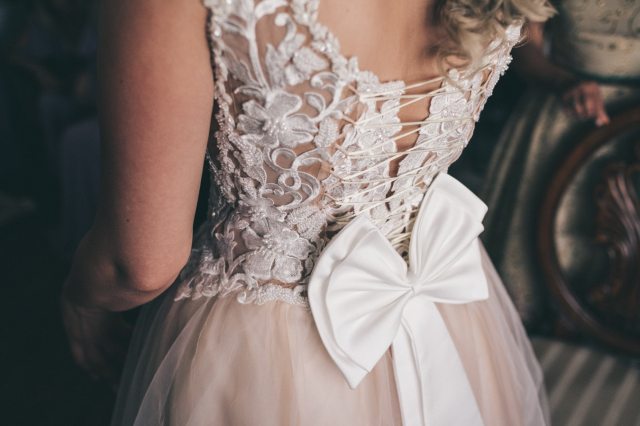
It’s hard to escape the considerable influence of the Victorian era in fashion. Its enduring popularity is visible at Steampunk Festivals around the country where people of all ages enjoy dressing up in full Victorian attire. Fashion has always been inviting to trends from the past and the Victorian age with its depth and range of styles is welcomed more than other eras, not just for elaborate dressing up costumes but as a classic everyday look. Victorian fashion is still popular today and with the basics woven into new modern designs, you can create a timeless look which can be adapted, updated and re-invented to suit any situation.

Updating Victorian Style

Re-invention is what fashion is all about and hints of Victorian style crop up in modern design time and again. If you are looking for dressy wear that makes you look classy and elegant, the combination of modern trends with classic styles is never out of fashion. Victorian fashion lends itself particularly well to the style of older women. Fitted blouses with long sleeves and high necks will flatter your figure while at the same time covering your neck and upper arms. The joy of blending fashion styles from different eras is that in this case you can drop the matching bustle. Instead, you can indulge in Victorian style but with a contemporary twist and wear an embroidered or lace trimmed shirt with a pair of classic straight leg trousers for an elegant and yet modern look..

Cut From the Same Cloth

Victorian clothes were limiting with tight corsets, bustles and cage crinolines. The voluminous skirts, although popular and striking, were uncomfortable, impractical and very restrictive. Thankfully, with the invention of lycra and less rigid ideas of the ideal figure, corsets are no longer necessary (unless you love the Steampunk look, of course!). However, there is no doubt that Victorian fashion still inspires our style today and some of if its most enduring elements, the luxurious materials and intricate decoration, are easily added to a modern wardrobe. A tailored velvet jacket in rich tones will give an ordinary outfit a dramatic Victorian look and even the simple addition of a black lace choker can add an element of Gothic 19th century style.

Inspired by Victorian Classics

At the recent Fashion Weeks in London and Paris, fitted blazers combined masculine and feminine aspects of Victorian fashion and John Galliano’s designs were inspired by the 1900s set novel Picnic at Hanging Rock. The white pinafore dresses decorated with pearl, similar in style to the recently revived prairie dress, are perfect for a hot summer but with the winter approaching, now might be a better time to invest in a long dress coat, soft leather gloves and lace up ankle boots, an enduring, classic Victorian style and perfect for a long country walk in the snow.

Combining Victorian influences with today’s fashion creates classic, timeless style for all ages. The echoes of the past are threaded throughout every era of fashion so by combining them with up to date style and practicality, you can pay tribute to the style of the Victorian era without compromise.

Victorian Behaviors Of Love By Eve Pearce

imagesAntique Romance – Victorian Flirting Techniques

With Valentine’s Day fast approaching, now is perhaps a good time to have a quick look at how our ancestors conducted themselves when it came to flirtation. While we tend to think of the Victorians as a rather severe, staid bunch, they were (of course) just as subject to the tempestuous passions of the heart as we are today – although they had some curious ways of showing it. Try some of these upon the object of your desire if you wish, but do not be surprised if you get odd looks rather than outbursts of affection in return!

Parasol Tilting

A Victorian lady who innocently thought her parasol a utilitarian device for shading her face from the sun may have found herself the object of unsolicited ardor during her perambulation through the park. The manner in which a parasol was held carried a plethora of meanings to the practiced flirt – so much so, in fact, that a parasol could barely be held at all without it conveying some message to amorous onlookers in the know. To carry the parasol aloft in the left hand indicated that you desired to know someone better. To do the same in the right chastised suitors for their eagerness. Letting it rest upon the left or right cheeks meant ‘No’ and ‘Yes’ respectively, while dropping it upon the ground was an out and out declaration of love (which must have led the clumsy into awkward situations). Even those who carried folded parasols were not safe from unintentional flirting – to fold the parasol was an order for a suitor to leave immediately, carrying it over the shoulder accused observers of cruelty, and swinging it at the sides meant either that you were married or engaged (depending upon which side you swung the instrument at). There were a great many different meanings, which one can only imagine caused a great deal of confusion at the time given that one cannot always be aware of the position of one’s parasol. However, the Victorians did not discuss the affairs of the heart openly (to do so was considered vulgar), rendering such secret languages necessary. These became increasingly complex.

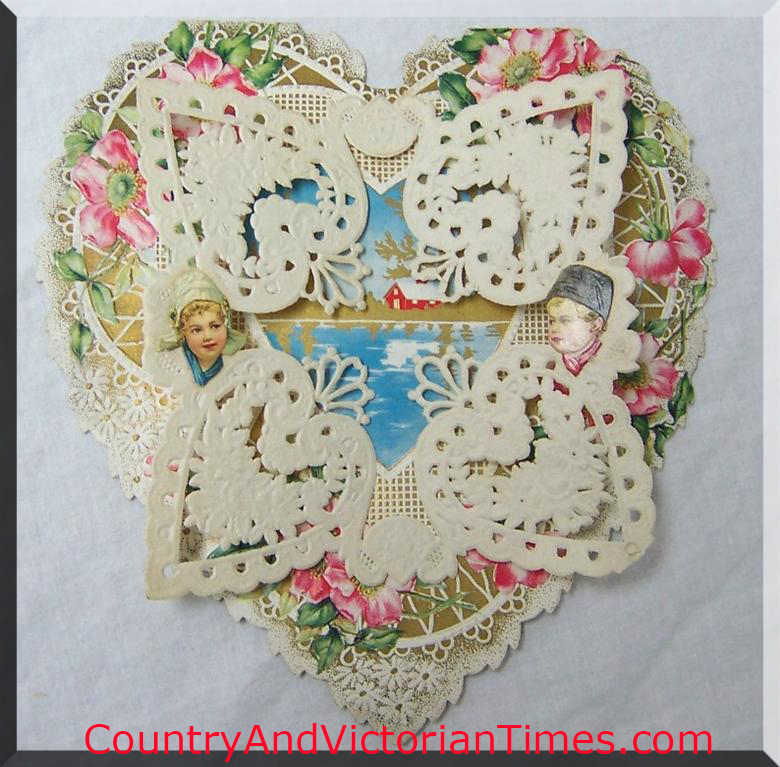
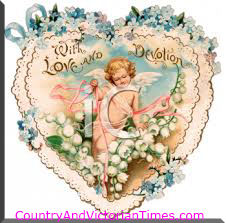
1890-1900-Valentine-DieCutThe Language of Flowers

One of the most detailed and complicated of these secret love-languages was the Language of Flowers. Quite a beautiful idea, this involved flowers being assigned a meaning and presented to the beloved, who would get a delicious sense of secret communication alongside the simple pleasure brought by beautiful blooms. The language grew in popularity, with new flowers and new meanings added until the list was extremely extensive. Some of the meanings were far more risqué than we’d expect of a Victorian device – presenting a lover with pea blossom, for example, was an exhortation for them to meet your for an assignation by moonlight, while Spanish jasmine indicated that you found them headily sensual and aconite told of unbridled sexual lust. However, it must be remembered that the Victorians, although disinclined to discuss matters of the bedroom, were subject to much the same lusts and passions as we are – if not more so. Indeed, Queen Victoria herself wrote feverishly in her diaries of how much she enjoyed her husband’s body, while research done by Dr Clelia Mosher in the Victorian era indicates that, far from being sexually restrained, Victorian women relished and enjoyed sex perhaps more than their modern counterparts. Their men were no different. Notably, it was during the Victorian era that a good many intimately contracted diseases took hold. Those innocent-looking flowers clearly have a lot to answer for.

Eye-Speech

It is said that the eyes speak volumes. The Victorians appear to have taken this rather literally. While a cheeky wink is still seen as flirtatious today, the Victorians had such an extensive repertoire of eyelid-based communication that one cannot help but wonder if their continuous blinking caused them to bump into things. Winking with the right eye indicated love, while the left indicated hate. So far so good. From then on, however, the language becomes complex and, one assumes, likely to put the face of the beloved through such contortions as to render them quite unattractive. For example, raising the eyebrows and placing the right forefinger to the left eye meant ‘You are handsome, kiss me’, while winking first one eye and then the other in rapid succession was a complicated way of issuing a simple ‘Yes’.

Window Posture

After a long day of being chased by amorous parasol-observers through the park, mortally offending a maiden aunt by offering her a seemingly innocent posy of flowers, and accidentally declaring eternal hatred for her fiancé when a speck of dust got into her eye, the beleaguered Victorian lady may have longed to simply lean out of a window and watch the world go by from the peace and security of her home. However, even this act was fraught with meaning. The position in which one held oneself relative to the window and (especially) the way in which one moved one’s hands while at the window cast amorous or scornful judgment upon any who passed. A lady resting with the forefinger of her left hand on her chin informed anyone who happened to glance at her window that she desired an acquaintance, and heaven forfend if she clasped her hands – to do so was to announce her engagement.

Necessary Devices

Victorian flirtation was undeniably complicated and prone to confusion. However, in a world which blushed to hear the word ‘pregnancy’, such subterfuge was necessary. One may even suppose that the element of secrecy added a certain spice to the proceedings which is lacking in the more overt flirtation of modern times. Nonetheless, to our eyes the innumerable Victorian flirt-codes (in addition to the above, hats, scarves, gloves, fans, and even postage stamps to name but a few could convey hidden meanings) seem faintly ridiculous. Having said this, constructing a floral Valentine using the Victorian language of flowers could be a thoughtful, crafty, and romantic way in which to surprise your significant other. Just be sure to choose your blooms carefully…

Victorian Circassian Beauties

Untitled Untitled 2 399444_10152583850495487_174359356_n


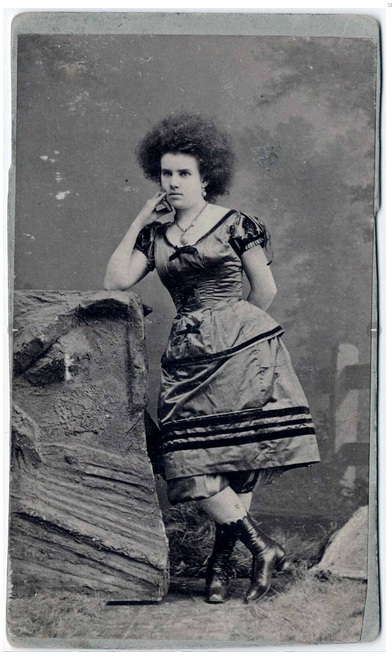
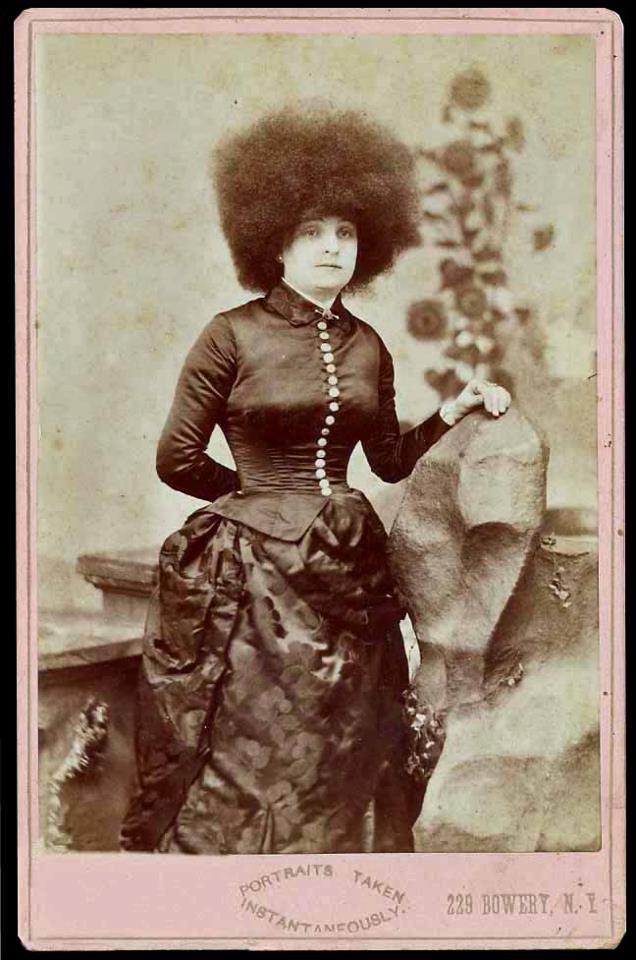
In the 1860s P. T. Barnum exhibited women as Circassian beauties. They wore a distinctive hair style, which had no precedent in earlier portrayals of Circassians, but was soon copied by other performers, known as moss haired girls.

These were typically presented Turkish sexual slaves who had escaped the harem for freedom in America.

Their distinctive hairstyle was held in place by the use of beer.

For some reason I am compelled to share this with you – it is something I have never heard about before and am going to be reading more about it. If I find more information about this I will update this post.


Victorian Caged Grave

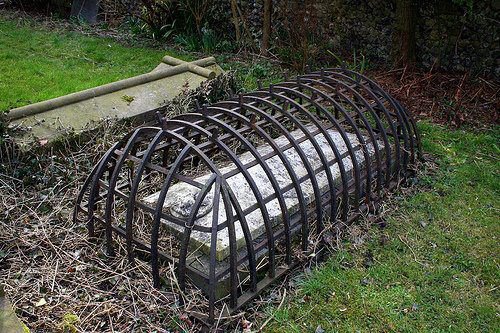
Although this is a bit different from what I usually post, I came upon this picture on the internet and just had to share. I have read and watched a lot on the subject of the undead and vampires, and even read about this cage over graves before. However, I have never actually seen a picture of one before and found it unique. So, I know what your asking, “so what does this have to do with this site and why is it posted?” Well, it has to do with the Victorian era and all of their superstitions and what we now know of as irrational fears.

The caged grave as seen above was used to prevent one of two things. 1: If you were to come back alive and become a walking undead then you wouldn’t be able to remove yourself from this cage and you could be dealt with. 2: If you were a vampire the same situation would apply to you.

I find death during the Victorian era to be fascinating, they seemed to have a love affair with death at least from an onlooker some 100 years in the future. Did you know that many peoples only photograph was taken AFTER they died. Yes, if you came from a poor family and you died, your family could scrape enough money together to have a memorial photo of you by yourself or your body could be “staged” to be in a family photo. This included babies and older folks and these photos were kept in a memorial album.

A memorial album was basically a scrapbook of photos of the deceased. You see, you would have photos of your loved ones, but you would also have memorial cards sent to you with the photos of the deceased person on the front announcing their death. Since everything delivered was delivered very slowly back then from one area of the country to another it might be weeks before you found out someone related to you died. This would announce their death but would give you a keepsake of their death and it would be added to your memorial photo album.

Many of these photos are sought after by collectors and can go for large sums of money. Especially sought after are entire albums, photos that are metal and those of young children and babies.

A good source of these pictures may be found at http://memorialphotosofthedead.wordpress.com/ and if you venture there please be advised as to what you will see. There are photos from the Victorian era as well as posed photos of gunned down armed robbers and pictures of famous people who have died since the Victorian era.

The Victorian era is filled with mysterious ideals and love for long forgotten traditions, still some we are using today.