
Spring Cleaning – The Basics

There are a few tasks you should do in every room, so rather than repeat them in each section, they’re listed here and will be referred to as “The Basics” in future.

Light Fixtures and Ceiling Fans: Remove all light fixtures and clean thoroughly, inside and out. If you have a ceiling fan in your kitchen, you should be able to remove each blade of the fan to clean it with soapy water or whatever the manufacturer’s instructions suggest. If not, dust thoroughly and wipe with a cloth.

Draperies, Curtains and/or Blinds: Remove all window treatments and wash or have dry cleaned according to the manufacturer’s instructions. For blinds, use your feather or furry duster to dust between the slats and a vinegar based cleaner to wash afterwards. If you have cloth blinds, they need to be vacuumed.

Windows: To get that professional look, invest in a squeegee so you can truly have a streak-free shine. Fill your bucket with whichever solution you choose (we have a homemade window cleaner in this E-book.) Use rags to wash the windows down, then squeegee the moisture off and wipe clean with newspapers. Wash windows inside and out for a thorough Spring Cleaning Shine!

Ceilings and Corners: Dust and vacuum all room corners and ceilings.

Vents: Dust and vacuum. Use a ladder if necessary to reach ceiling vents and get on your hands an knees if you have floor vents.

Art or other Wall Decorations: Dust and or clean framed pictures or other wall décor you might have hanging around your home. When cleaning framed pictures, don’t spray glass cleaner directly onto the glass surface because the liquid could seep under the frame and damage your picture. Spray the cleaner onto a rag and wipe the surface clean.

Floors: A few times a year, we recommend getting on your hands and knees and really scrubbing those floors to achieve a deep clean. This is one of those times. Be sure to save the floor for last so you can let it dry while you’re cleaning another room in your house. Don’t forget the baseboards!

Carpets and Rugs: It might be time to rent a steam cleaner if you have a lot of carpets – or a lot of stains. You can also try spot treating a stain and giving it a thorough vacuuming afterwards. Bathroom rugs should all be washed and other area rugs washed or taken outside to be beaten or shaken if they’re made from wool.

Clean it Up & Clean It Out – The Four Bin Method

Clean Up and Clean Out – The Four Bin Method

Before you do spring cleaning, you’ve got to do Clutter Control. Take the opportunity to clean out all of the junk that’s been accumulating in your house and get rid of it!

Choosing what to get rid of and what to keep can be extremely difficult. Entire reality shows have been based on this very struggle. One school of thought is to toss anything you haven’t used in a year – within reason. Grandma’s china can stay, but her costume jewelry might be better served in a yard sale.

To do clutter control, first, find four different large containers and assign them all with four different purposes:

• Trash • Sell/Donate • Store • Put Away

Go through each room and into every drawer, cabinet, closet and cupboard to sift through what belongs and what needs to have the heave-ho. Be vigilant!

Now is the time to get rid of the kitchen utensils you can’t even name, the spaghetti sauce-stained plastic containers, the knick knacks Aunt Sally gave you in 1997, the boots you wear once a year. You don’t necessarily have to trash everything, but you’ll probably find that there are tons of items that you don’t use every day or even once a week that you can re-house.

Three Clutter Control Tips:

If it doesn’t fit, don’t save it: Don’t keep clothing that’s many sizes too small. If you’re hoping to fit into that size again someday, reward yourself then with some new outfits. Keeping those old clothes can actually be depressing and not helpful in losing those extra pounds anyway.

If it’s broken, don’t keep it: Broken items that are missing parts, the ones you said you’d fix ages ago aren’t doing you any good at all, so get rid of them!

If you have more than one – you’re done: No one needs two salad spinners, collendars, footstools – or anything. Go through your house, and where you have duplicates, toss them into the yard sale pile – pronto!

Storing Winter Clothes

Unless you live in a tropical (or at least warm) climate, it’s a great idea to store your winter clothes at the beginning of spring to make room for your warm weather wardrobe. Psychologically, it also helps to look into closets and drawers filled with clothes you can actually wear in the season you’re in, as opposed to looking at rows of wool turtlenecks in the middle of July.

The only challenge is how to best store those beloved winter clothes. To make sure your clothes are as gorgeous coming out of storage as they were going in, follow our tips:

1. Clean Before Packing: Any residue left on your clothes can stain and set in after several months of storage, so be sure any clothing you store is thoroughly washed before storage. Cleaning the clothes also reduce the chance that insects will infect your clothes.

2. Store Safely: Plastic storage containers are subject to dampness and cardboard can attract bugs, so the best boxes for storing clothes are acid-free storage boxes. A cheaper option is to use an unused suitcase and line it with acid tissue paper.

3. Cedar Before Mothballs: Mothballs are incredibly toxic and not the best chemicals to have on or near your clothes (or your kids!) so choose cedar blocks for moth and insect repellant. Another great tip is to use dryer sheets. Your clothes will smell great, and you’ll have another bug repellent built-in.

4. Say No To Plastic: Do not store clothes in any kind of plastic bags, including dry cleaner plastic. The clothes can’t breathe and you actually create an environment that encourages mold and larvae.

5. Clean, Cool, Dark, and Dry: Your storage area must be all 4 of these in order to protect your clothing. Clean any area thoroughly before storing. Choose a place that won’t be exposed to heat, including near heating sources like furnaces. The dark prevents fading and keeps the area and clothing cool. And don’t store boxes on a basement floor or any area that’s susceptible to getting wet. Damp clothes will attract bugs and mildew.

Victorian Advertising Cards

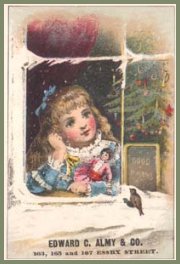
On many Victorian Parlor tables, a place of honor was reserved for the Bible, family album, post card album and a huge scrapbook. In the latter were lovely pasted advertising cards which were acquired by different members of the family. When members of the family went out to shop, they were given colorful trade cards with their purchases. At the local food store, many of these cards came packaged in tins of teas and coffees. Each member of the family would have been quite delighted to receive these free cards. The color cards were the most cherished. Lithography had just been introduced and any colorful bits of paper were treasured. As family members brought new cards home, everyone became excited. The family members began to go to many different stores to see if they had any cards and if they would look nice in their books.

Images of Santa Claus and other Holiday symbols were always welcome during the Christmas season. Advertisers during the Victorian period were no different than advertisers today. They wanted people to spend lots of money on their products for the Holidays. Cheerful images of Jolly Old St. Nick, Christmas trees, and happy children with toys were designed to promote the “giving spirit”. Christmas, followed by Easter, was the most popular holiday in which you will find trade cards

Although the commercial aspects of Christmas were greatly looked down upon from many of the church pulpits, merchants continued to promote Christmas. Toy stores, confectioners’ shops and German bakeries began to stay open late and to festoon their windows with red silk bunting and holly. Holiday shoppers could not resist the cakes, the smells of cinnamon kuchens and sweet almond paste. 1874 was the year of the first window displays with a Christmas theme at Macy’s. One window displayed an amphitheater of wax, rag, bisque and hand-painted porcelain dolls imported from Germany France, Austria, Switzerland and Bohemia. In another window, scenes from Uncle Tom’s Cabin were composed in a panorama with steam-driven movable parts. 1867 was the first year that Macy’s department store in New York City remained open until midnight on Christmas Eve. In 1880 Woolworths first sold manufactured Christmas tree ornaments, and they caught on very quickly.

Victorian Trade Cards were a popular way for advertisers to lure customers to purchase their products or to shop in their stores. Victorian Trade Cards featuring scenes of families celebrating Christmas give us a wonderful glimpse of what it must have been like in many Victorian homes during the Holiday season. If you look closely at many of the pictures, you will see Christmas trees lit by candles and covered with handmade decorations and fancy hand-blown glass balls. Some of the images show presents hanging from the tree branches. This was a common practice during the Victorian Era. Other cards show decorations inside the homes featuring fresh evergreens and berries.

Victorian Christmas Decorating

The Victorians decorated their homes in bold wallpaper, ornate furnishings, lace, and richly-colored draperies, and this love for decorating carried right over into the way they decorated for the holidays, as well. Although many of the Victorians had very little money to spend on extravagant decorations, they were enthusiastic in their celebration of the Christmas season. They turned to nature for inspiration and found fresh, rich greenery, flowers, pinecones, berries, and fruit which were all used to create colorful displays. Early in December the Victorian household began to decorate, covering every available inch of the house with greenery. Spruce, balsam, laurel, cedar, ivy, mistletoe, and holly graced tables, banniesters, chandeliers, archways, columns, and woodwork. Mistletoe dangled from the ceiling of the entry hall. Even picture frames and mirrors were wrapped with evergreen rope. Wreaths could be found hung on doors or behind windowpanes.

The Victorian parlor played an important role for the holiday season. The parlor was transformed into an enchanted winter wonderland filled with decorations such as garlands of cranberries and popcorn, tinsel and paper chains, paper and lace ornaments, tissue-paper snowflakes, glittering glass balls, angels, fairies and Santas. The candles on a glittering tree adorned with an angel or star on the treetop became the centerpiece of the room. Under the Christmas tree sat the tempting gifts, wrapped in colorful paper and tied with taffeta ribbons. Some were lavishly garnished with the addition of fine flowers and greenery. Colored glass lamps and candles throughout the room cast a festive glow. The fire blazed merrily, and stockings dangled from the fireplace filled to bulging with gifts and treats. An army of toy soldiers marched on the mantel above. The fragrance of cedar boughs drifted throughout the house, and arrangements of holly and ivy brought the peace of the winter woods indoors.