Gingerbread Men Cookies

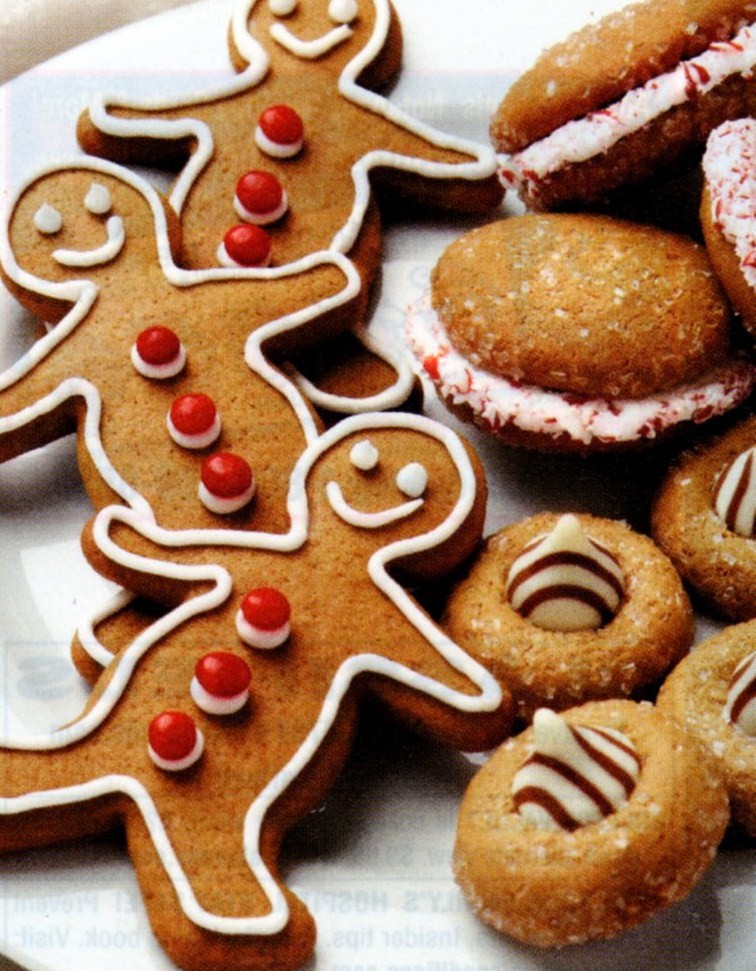
Gingerbread Men
3 cups flour
2 tsp. McCormick® Ground Ginger
1 tsp. McCormick® Ground Cinnamon
1 tsp. baking soda
1/4 tsp. McCormick® Ground Nutmeg
1/4 tsp. salt
3/4 cup (1/2 sticks) butter, softened
3/4 cups firmly packed brown sugar
1/2 cup molasses
l egg

MIX flour, ginger, cinnamon, baking soda, nutmeg and salt. Beat butter and brown sugar in large bowl with electric mixer on medium speed until light and fluffy. Add molasses and egg; beat well. Gradually beat in flour mixture on low speed until well mixed. Press dough into a thick flat disk. Wrap in plastic wrap. Refrigerate 4 hours or overnight.

ROLL out dough to 1/4-inch thickness on lightly floured work surface. Cut into gingerbread men shapes with 5-inch cookie cutter. Place 1 inch apart on ungreased baking sheets.

BAKE in preheated 350°F oven 8 to 10 minutes or until edges of cookies are set and just beginning to brown. Cool on baking sheets 1 to 2 minutes. Remove to wire racks; cool completely. Decorate as desired.

Makes 2 dozen.

Snowman Christmas Cake

snowman cake
MAKES 24 servings
prep 15 minutes
BAKE at 350° for 43 minutes
EQUIPMENT
2 8-ounce ovenproof glass bowls 2 12-ounce ovenproof glass bowls 2 4-cup ovenproof bowls or
metal ball pans (such as Wilton) 9   foil cupcake liners
Chopstick or wooden skewer
INGREDIENTS
2    boxes (18.25 ounces each) yellow cake mix
8   large eggs
2   cups buttermilk
2/3   cup vegetable oil
1    bag (14 ounces) flaked coconut
1     roll strawberry fruit leather (such as Fruit by the Foot)
2    cans (16 ounces each) vanilla frosting
1     orange fruit slice
12 mini chocolate chips
2   cream-filled chocolate cookies (such as Oreo)
1    thin chocolate cookie (such as Famous chocolate wafers)

Heat oven to 350°. Coat bowls with nonstick cooking spray; coat with flour. Place foil liners into muffin-pan indents.
Combine cake mixes, eggs, buttermilk and oil. Beat on low speed until just combined. Increase speed to high; beat until smooth, about 2 minutes. Spoon 2V2 cups batter into each of the largest bowls, 1 cup batter into each of the medium bowls and Vi cup batter into each of the smallest bowls. Divide remaining batter among the 9 prepared cupcake cups.

Bake at 350° until cake is golden and a toothpick inserted in center comes out clean: about 17 minutes for the cupcakes, 22 to 25 minutes for smallest bowls, 30 minutes for the medium bowls and 40 to 43 minutes for large bowls. Transfer cakes to a wire rack and cool completely.

Meanwhile, place the coconut in a food processor and pulse until finely chopped. Transfer to a medium bowl. Cut fruit leather into a 6-inch and an 8-inch length. Fold each in half, pressing to secure, to get 3-inch and 4-inch lengths. Use scissors to cut fringe on short end of each piece.

Invert cooled bowl cakes onto work surface. Trim flat sides to make level.

Place one of the large bowl cakes, flat-side up, on a platter. Spread top with vanilla frosting. Place the other cake layer on top, flat-side down, to create a ball. Spread a thin layer of the frosting all over cake. Gently press the coconut all over to cover.

Repeat with the remaining cakes to make 2 smaller balls.

Place the medium ball on top of the large ball. Insert a trimmed chopstick or wooden skewer for support. Place the 2 pieces of fruit leather as the scarf on top of the middle cake. Add the small ball cake on top. Add more coconut, if necessary.

Cut the orange fruit slice into a %-inch triangle for the nose and attach in the center of the small cake. Add the mini chips, pointed-end in, as the eyes and the mouth. For the hat, attach the 2 cream-filled cookies to the flat chocolate cookie with some of the remaining vanilla frosting. Arrange hat on top of snowman.

Spread remaining vanilla frosting on top of the cupcakes, sprinkle the tops with the coconut and serve with snowman.

PER SERVING 530 calories; 25 g fat (8 g sat.); 5 g protein; 73 g carbohydrate; 2 g fiber; 463 mg sodium; 73 mg cholesterol

Victorian Christmas Decorating

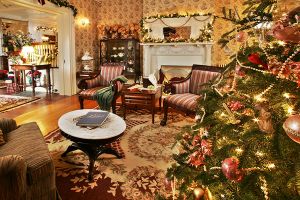
The Victorians decorated their homes in bold wallpaper, ornate furnishings, lace, and richly-colored draperies, and this love for decorating carried right over into the way they decorated for the holidays, as well. Although many of the Victorians had very little money to spend on extravagant decorations, they were enthusiastic in their celebration of the Christmas season. They turned to nature for inspiration and found fresh, rich greenery, flowers, pinecones, berries, and fruit which were all used to create colorful displays. Early in December the Victorian household began to decorate, covering every available inch of the house with greenery. Spruce, balsam, laurel, cedar, ivy, mistletoe, and holly graced tables, banniesters, chandeliers, archways, columns, and woodwork. Mistletoe dangled from the ceiling of the entry hall. Even picture frames and mirrors were wrapped with evergreen rope. Wreaths could be found hung on doors or behind windowpanes.

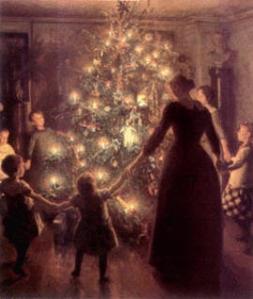
The Victorian parlor played an important role for the holiday season. The parlor was transformed into an enchanted winter wonderland filled with decorations such as garlands of cranberries and popcorn, tinsel and paper chains, paper and lace ornaments, tissue-paper snowflakes, glittering glass balls, angels, fairies and Santas. The candles on a glittering tree adorned with an angel or star on the treetop became the centerpiece of the room. Under the Christmas tree sat the tempting gifts, wrapped in colorful paper and tied with taffeta ribbons. Some were lavishly garnished with the addition of fine flowers and greenery. Colored glass lamps and candles throughout the room cast a festive glow. The fire blazed merrily, and stockings dangled from the fireplace filled to bulging with gifts and treats. An army of toy soldiers marched on the mantel above. The fragrance of cedar boughs drifted throughout the house, and arrangements of holly and ivy brought the peace of the winter woods indoors.

A Victorian Christmas Tree History

Behind the double doors of the Victorian parlor stood the Christmas tree, an old German custom the Victorians enlarged upon both in style and decoration. This tradition had come to England by way of Queen Victoria’s great-great-grandfather King George I.

When she was Queen, Victoria had a Christmas tree at Windsor Castle. In 1848, an etching of Victoria, Albert, and their children gathered acround their decorated tree was published in The Illustrated London News. At about the same time, Charles Minnegerode, a German professor at the College of William and Mary, trimmed a small evergreen to delight the children at the St. George Tucker House. Martha Vandergrift, aged 95, recalled the grand occasion, and her story appeared in the Richmond News Leader on December 25, 1928. Presumably Mrs. Vandergrift remembered the tree and who decorated it more clearly than she did the date. The newspaper gave 1845 as the time, three years after Minnegerode’s arrival in Williamsburg. Perhaps the first Christmas tree cheered the Tucker household as early as 1842.

As a result, Christmas trees became the popular fashion in England and the central feature of the Victorian family Christmas. German settlers had brought the custom to America, but when the same illustration of Victoria and her family appeared in Goody’s Lady’s Book in 1850, Christmas trees became even more popular in American then in England.

What made the Victorian Christmas tree so special was its elaborate decoration. Decorations included gingerbread men, marzipan candies, hard candies, cookies, fruit, cotton-batting Santas, paper fans, tin soldiers, whistles, wind-up toys, pine cones, dried fruits, nuts, berries, and trinkets of all kinds. Paper cornucopias filled with nuts, candies, and other treats were the Victorian favorite. It was not uncommon to find some small homemade gifts, such as tiny hand-stitched dolls or children’s mittens, and freshly baked treats like sugar cookies. Hand-dipped candles were placed carefully on each of the branches. A Christmas doll or angel could usually be found adorning the top of the tree.

Children often helped to make the tree decorations. They would string garlands of popcorn or cranberries, or make chains of paper flowers. Some families set up a Nativity or outdoor scene under the tree, using moss for grass and mirrors for ponds.

Later in the century imported ornaments from Germany began to replace the homemade ones. First came glass icicles and hand-blown glass globes called kugels. Dresdens, which were embossed silver and gold cardboard ornaments, took exotic shapes–moons, butterflies, fish, birds, ships, animals, flowers, trolley cars, and even automobiles.

A Victorian family’s most prized ornament was the Nuremberg angel atop the tree. It had wings of spun glass, a crinkled gold skirt, and a wax or bisque face. Angles or cherubs represented the Victorian ideal of childlike or womanly innocence.

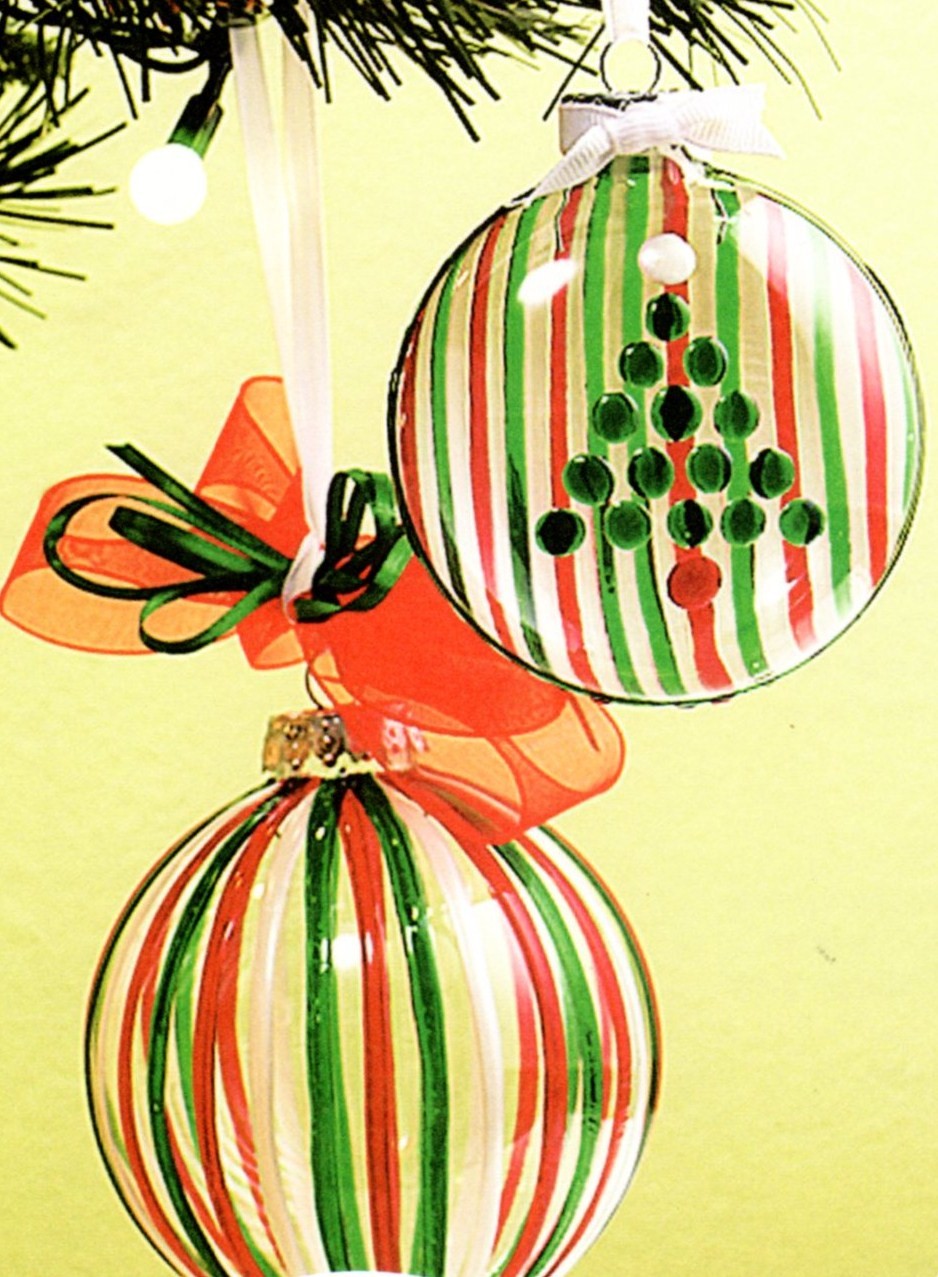
Christmas Tree Glass Ornament

Supplies
Gallery Glass Window Color – Snow White, Kelly Green, Ruby Red
Gallery Glass 10″ x 18″ Leading Blanks
Large Round Glass Ornaments
Notebook Paper
Craft Knife
Cellophane Tape
Ribbon

Instructions
Step 1 Place leading blank over lined paper; tape securely.
Step 2 Working one color at a time, trace multiple lines with Window Color. To keep the lines of paint from getting too wide, lightly squeeze the bottles of Window Color as you move it along the lines.
Step 3 Let dry overnight.
Step 4 Clean and dry ornaments.
Step 5 Remove the ornament hanger. Carefully peel the dry lines of Window Color from the leading blanks as you use them and apply them to the ornaments.
Step 6 Replace hangers and tie with coordinating ribbons.