Who doesn’t own a set of salt and pepper shakers? This is one collectible that everybody has on the table, whether it’s a dime-store duo, a Popeye and Olive Oyl pairing or a sterling silver set from Grandma’s trousseau.
 For tabletop collectors, salt and pepper would seem to be a match made in heaven. But it hasn’t always been so. In fact, the pairing of salt and pepper in shakers dates only to the Civil War era. “That’s when two small glass cylinders fitted with metal lids were patented,” explains Dottie Avery, a member of die Antique & Art Glass Salt Shaker Collectors Society in Maitland, Florida. “At first, people were not used to shakers at all. Then the pieces became enormously popular because they were easy and fun to handle.”
Early shakers were fashioned from glass and were known for their swirled patterns, hand-painted designs, pretty colors and “threads” or ridges around the tops. The threads mark them as one of the first containers with screw-on caps.
For Dottie Avery and her husband, Bill, these embellishments only add to die mystique of their two-thousand-plus shaker collection. But such details also make the designs harder to find and more expensive. “We can spend up to several hundred dollars for a single shaker,” Dottie says, “and that means just one of a pair.”
It’s not quite the same for collectors of novelty and figural shakers, though. Their passion is the often whimsical shape and color of each set. along with the large variety of motifs. Plus, prices for novelty shakers start as low as 50 cents a pair.
“Most serious collectors look for figural shapes from the 1940s and 1950s, because those are the most charming ones,” says Irene Thom-burg, a collector and member of die Novelty Salt & Pepper Shakers Club in Battle Creek, Michigan. Early shapes varied from a pair of sinking battleships commemorating Pearl Harbor, to “Campbell Kids” advertising shakers, to cupcakes with colored sprinkles.
Other highly prized figural shakers are those created by the German manufacturer Goebel (also known for its famous Hummel figurines). “Goebel started making shakers in 1923. Since then, they’ve produced about eight hundred designs,” says collector Hubert McHugh from Stroudsburg, Pennsylvania. He and his wife, Clara, wrote the book on Goebel shakers—literally. Their findings, in the Goebel Salt and Pepper Shakers Identification and Value Guide, are a must-read for collectors.
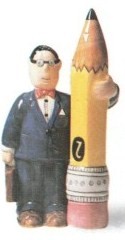
The variety of novelty shakers can be mind-boggling for even the most seasoned collector. Every year sees new designs, like the ceramic “Pencil Pusher” from the Movers & Shakers collection by Fitz and Floyd (above left), or handmade pieces such as the porcelain set with matching tray made by artist Michael Lambert for Freehand (left). Fruits, vegetables and other foods are another perennially popular style. The pewter pear and apple set by Kirk Stieff (above) is one elegant example.
What kind of shakers do serious collectors use on their own tables? There’s definitely irony at work here. “We have a set of plain glass ones from a local store,” says Irene Thornburg. “Salt is corrosive and can destroy your collection in no time.”
If you like this post and want to share it then click the service!

 To make sure you bring home the cream of the Christmas tree crop, perform a freshness test: Lightly grip a branch, and draw your hand toward the tip, letting the needles slip through your fingers. If no needles fall, it’s a keeper.

 Country & Victorian Times