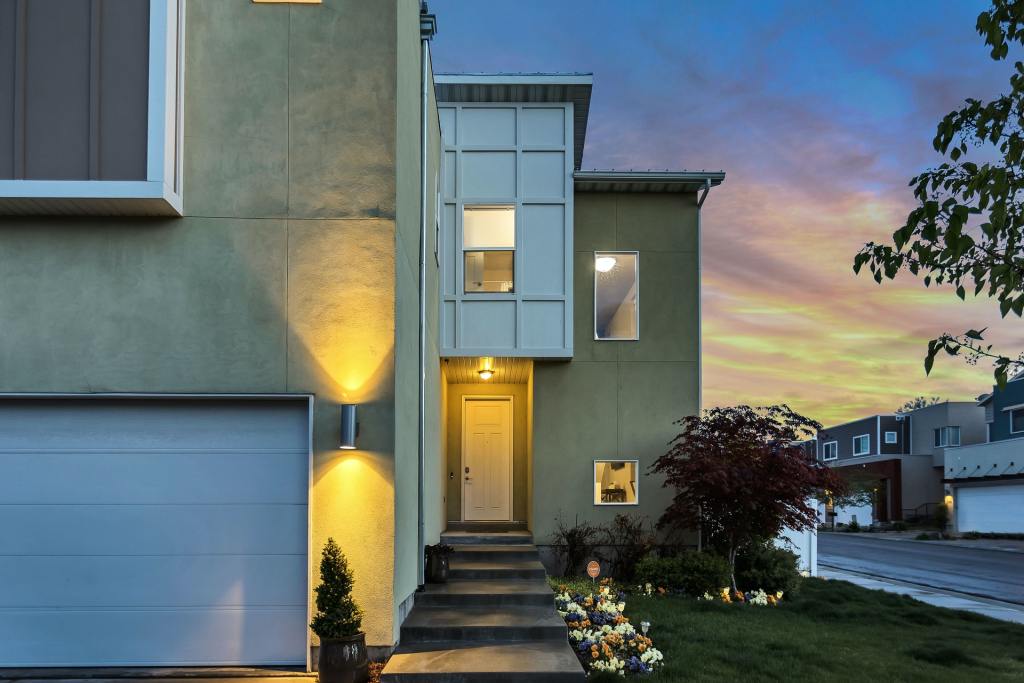
The exterior of the house is one of the most important parts to consider in the design, as it gives the first impression of the home and its residents, in addition to being a key to home security, so it is important to pay attention to its design and give it an aesthetic look without neglecting practicality and safety. In this article, we will present to you some easy and actionable methods that enable you to maintain the appearance of the exterior and create a beautiful design for your homes while ensuring it is maintainable, practical and secure.
Lively Colors
If there is anything that has the power to completely change the looks and aesthetics of the front of the house, it is painting it. Regardless of the color used, the paint should always be in good condition, but with the passage of time, the quality and the color of the paint erodes due to natural causes. The paint will start to fall off and the design will lose its elegance little by little until the house looks like an abandoned house, so it is important that we keep the external paint always in good condition and make sure that the walls are not affected by moisture, etc.
Adding Wood to the Equation
The presence of wood in the exterior adds an atmosphere of warmth to the house. Without a doubt, wood is one of the most popular materials in many modern designs, but the use of wood means that you should take a set of important precautions regarding how it is placed and maintained due to wood being much more fragile and susceptible to damage.
Because wood, by its nature, is greatly affected by the passage of time and weather changes, and its condition can seriously deteriorate if it is not properly cared for and preserved. Cracks that affect the look and feel of the home can easily occur if you’re not careful. That’s why you need to read up on how to properly take care of wooden figures.
Don’t Forget About Plants
The presence of plants as part of the front design is always a great idea, as plants are what give life to the place and add a cheerful color and a sense of movement and vigor to the front of the house. Although there are some plants that do not need regular watering or maintenance and are most commonly used in home designs, other types of plants cannot be completely ruled out depending on your needs and design! Maintaining the beauty of the front of the house requires good care of the existing plants and flowers – large trees can make the entrance to the house a magical place if taken care of well.
The Importance of Detail
When caring for and attending to the plants, we should pay special attention to climbing plants and vines, as they are one of the most important ways that can completely transform the front of your house and give more life and a homely character to any design.
In many cases, you can cover the entire wall covered with plants, which gives it a wonderful shape, but then we must pay special attention to the roots and not forget pruning when they start covering the windows, doors or other places that can affect the integrity of the building and damage it, such as the roof, for example.Having a lot of plants on the exterior will make it much more enjoyable to stroll through your garden and spend time outdoors. So, install one of these excellent awnings from London and enjoy your summers amid nature.
Rate this:
If you like this post and want to share it then click the service!
The most common problem that owners of small-sized apartments are facing is the very modest size of the bathroom. During the repair, you have to solve a difficult problem: how to properly plan a room so that it is both functional and not cluttered?
In fact, everything is much simpler – you just need to use your imagination and a little bit of work. Here are some useful and interesting ideas for a small bathroom.
Layout Features
If you start repairs “from scratch”, and the size of your bathroom is very small — you can think about increasing it due to the redevelopment of walls and partitions. The important thing is to consult an appropriate specialist for this. As a result, it will be possible to combine a bathroom with a toilet, or with a corridor. However, this is a very difficult job, it is better to save this option as a last resort.
A more affordable option may be the thoughtful layout and design of a small bathroom. Due to the visual effects and the arrangement of plumbing, you can greatly expand the visible boundaries of the room and not change its actual size.
First, you need to pay attention to the location of the plumbing — perhaps the toilet is too far from the wall or it can be moved closer to the drain. A door can also take a lot of space, especially if it opens inward. It is necessary to change the door so that it opens outward or even put the sliding doors that take no space at all.
Preparation for reparations in the bathroom
Walls and floors are needed to be cleaned to the ground. It is necessary to remove all the old coating: tiles, paint, old glue, etc. If the floor tile is very difficult to remove, then the solution can be to lay a new one on top of it. The cleaned surfaces need to be coated with a primer.
Preparation also includes plumbing and electrical work. For this type of work, you should also seek the help of a specialist.
When these works are completed, you can begin reparation and install plumbing.
Materials used for walls and floors
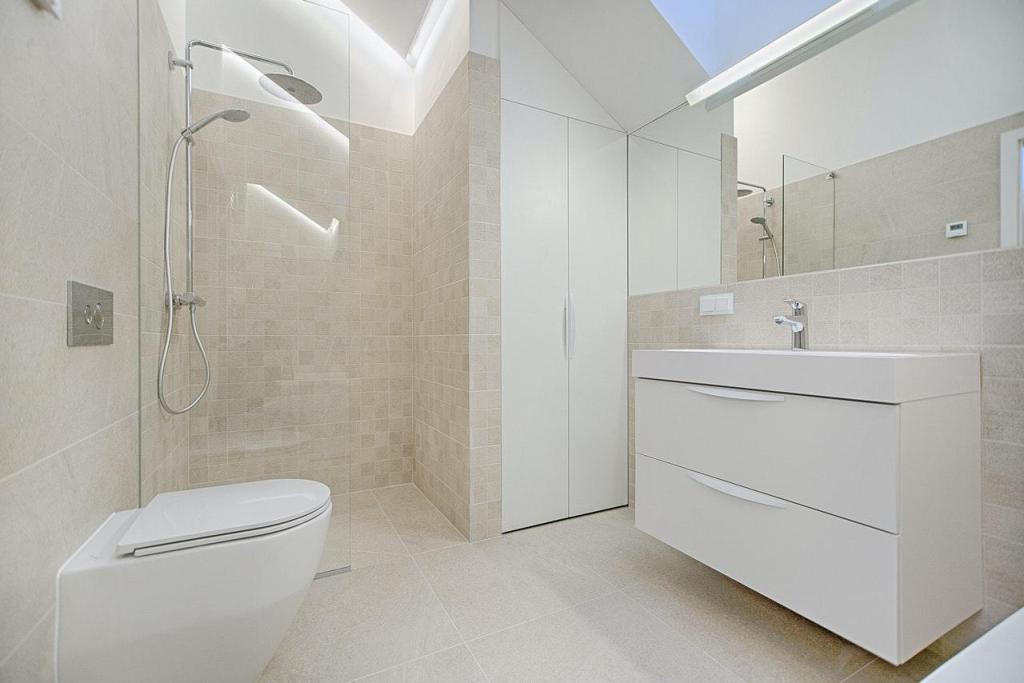
The most common and ideal option for covering walls and floors in the bathroom are ceramic tiles. Its diversity is so great that it can satisfy any, even the most sophisticated, needs. Just remember the main thing — tiles for a small bathroom should be small. In this case, a mosaic will be an ideal option.
The choice of tiles is one of the most important tasks. After all, it sets the main tone for the bathroom, but you should definitely check other options for your bathroom floor and walls, such as:
You can paint the walls with moisture-resistant paints;
Plastic panels or plastic tiles can also be a great solution.
You can use glass tiles, which are becoming more and more common and popular.
For the floor we recommend tiles. But, not the ordinary ones, with a smooth glossy surface, but rough. This kind of tile is made of porcelain. It is much stronger and will prevent falling and injuries on the wet floor.
Also, don’t forget about the ceiling – it should have moisture protection and fit into the interior.
Chose of colours
When designing a small bathroom, the choice of the right colour is very important. After all, the main task is to visually increase the small space. In order to do that, choose the tiles in bright colours. But do not get carried away with white and chrome interior details if you don’t want your bathroom to look like the operating room or laboratory.
However, you should keep in mind that designers do not recommend using more than three colours at the same time. You can also use the accessories in the same colour as the interior. Youll get the effect of “merging” when objects seem to be there, but they do not stand out against the general background and do not come to the fore.
It is better not to use large drawings on the walls, floor or ceiling – your bathroom can only visually decrease due to this.
Let there be light
Lighting is very important for a small bathroom. A dim light is absolutely not an option in this case. It needs bright artificial light. How to do it? Firstly, you can install many lights on the ceiling — then the light will be evenly distributed throughout the room. It is also desirable to have a light bulb above the sink.
In order to save energy, you can install energy-saving light bulbs, and enhance lighting with mirrors. But we will talk about this later. If there is a possibility, then make a window in the bathroom -it’s always better to have sunlight in the bathroom during the day! If this option does not fit, then you can make an imitation of a window with the appropriate highlighting — a very original idea.
How to choose furniture
As you may have guessed, the furniture shouldn’t be large, dark and clutter up all the free space. Furniture should create the illusion of transparency, “zero gravity” of the room, and not oppress with its quantity and dimensions.
The colour of the furniture should be light, ideally – merge with the walls or have similar tones. Instead of cabinets, you can use hooks and hangers, or hang a rack over the toilet.
Mirrors
The design of a small bathroom must include mirrors. Together with the right lighting, they can work wonders and significantly increase the room.
Corner mirrors look very original and are able to create a beautiful game of colours and highlights. If you want to install a mirror above the sink, do not forget to add lighting to it.
Decoration for a small bathroom
For a small bathroom, it is better to stick to the principles of minimalism and not to use a large amount of decor. If the design involves the presence of tiles of bright colours or unusual shapes, a small space does not need additional decor. It is better to use bathroom accessories that decorate the interior and are functional at the same time.
Shower curtain. An original curtain for a bath or shower will decorate the entire room. Neutral or similar in design fabric will work well.
Laundry basket. This item can be selected based on the design and style of the bathroom (a wooden basket for the Scandinavian style, metal for the modern, etc.)
Mats, towels. Bright fabrics will add the necessary accents, and brightness but only if your tiles are simple and plain and not too bright.
A set of holders for towels, toilet paper — it is better if the kit is from the same collection.
A set of dispensers for soap, shampoo, shower gel. Multi-coloured bottles and jars will not decorate the bathroom. Therefore, it is worth choosing sets consisting of dispensers and containers of the same design. It is better if they fit in the design of the interior of the bathroom.
Conclusion
If you follow all the instruction above while remodelling your bathroom, we are sure that you will forget that you ever considered it too small. But the most important thing is that you should listen to yourself, your preferences and needs. Don’t be afraid to experiment and include your own ideas. Options and possibilities are countless.
Good luck!
—————————————————————————————————-
Bio: Patrick Adams is a freelance writer and rock-blues fan. When he is not writing about home improvement, he loves to play chess, watch basketball, and play his guitar. More than anything, he loves to spend his time in his garage, repairing appliances and creating stuff from wood.
People often neglect lighting when decorating the rooms in their home. It’s often an afterthought, rather than being considered a crucial part of the décor, even though it is the latter. If you want your home to shine in more ways than one, you have to pick the most ideal lighting options for every room. Doing this feels difficult at first, but you only really need to follow a few steps when making your choice. Here are some tips that will help any homeowner pick out the right lights.
Consider the four types of lighting
Before you can pick out the best kind of lighting for every individual room, you have to get familiar with the different kinds of lighting that exist. A lot of people think that a light is just a light, but it’s more complicated than that. You have to see where it’s coming from and how it illuminates a room before you can decide whether or not it fits the look.
There are four types of lighting that are generally used in home settings. You have your ambient, task, general, and accent lighting. With task and ambient lighting, you can derive their purpose from the name. General lighting normally refers to overhead lighting from a ceiling lamp, but it can refer to every other kind of light source, depending on how it’s positioned. Accent lighting adds flair and personality to a room. It’s strictly decorative, even if it can help you perform certain tasks.
Think in layers
Most home lighting isn’t particularly complex. Homeowners often rely on a singular ceiling light to take care of a room, while only certain rooms have lamps for task lighting purposes. This singular view of lighting only diminishes and limits the room’s aesthetic. There’s a lot more that can be done by thinking of a room’s lights in layers.
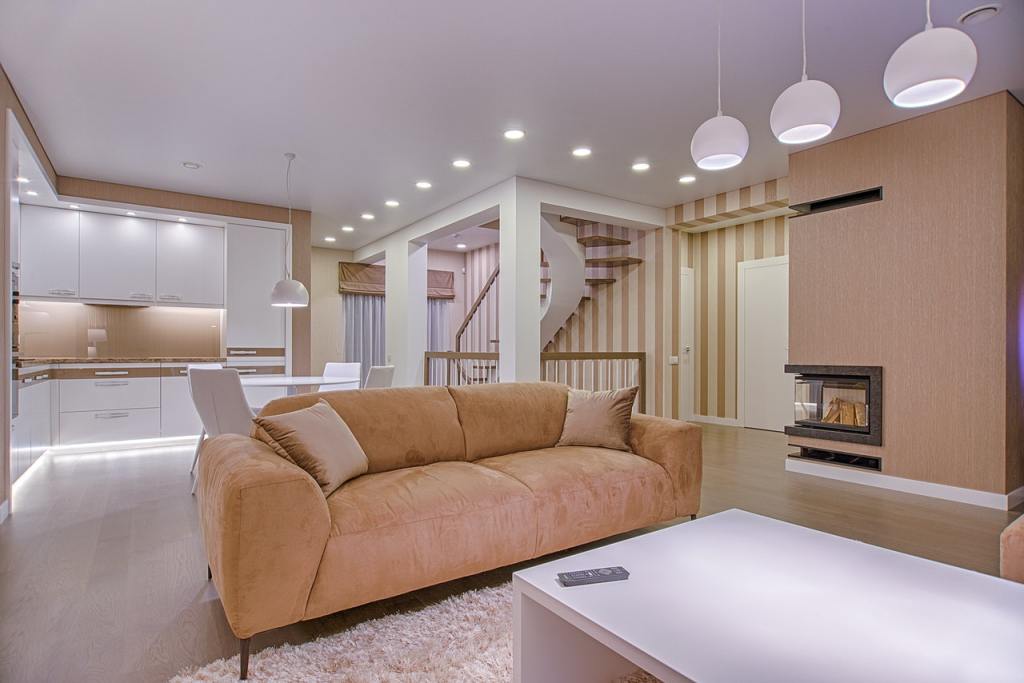
Every room needs to have at least three different kinds of light sources. You’ll always have one overhead light that provides general lighting, but it won’t always be on. Ambient lighting can replace it or compliment it, depending on how you place it. Task lighting is only important if you have a particular task that requires good illumination in one area of the room. Adding a few lights to accent a room’s look makes it a lot more pleasant to spend time there. Combine a few of these and you’ll give a well-decorated room a perfect atmosphere.
Get to know different light bulbs
The type of lightbulb you use has an enormous effect on how the light is projected in your home. In most cases, homes are outfitted with a range of bulbs that include incandescent lights, halogens, and fluorescents. They provide all sorts of different kinds of light, and their efficiency varies from bulb to bulb.
Incandescents are the ones most akin to sunlight, but they’re ridiculously short-lasting for how much power they use. When you want efficiency, LEDs are your best bet. They’re the most efficient ones by far, and produce pleasant enough lights to be worth installing.
When you decide on a particular lightbulb, consider whether you want them built-in, hanging from a chandelier, or fixed to a lamp. Built-in lightbulbs are great for ambient lighting and they’re not too difficult to install, especially when it’s done by reliable electrical services that you find locally. Lamps and chandeliers are simple enough, as you just need to screw in a lightbulb. This doesn’t mean you should disregard built-in ones, though. They all have their uses.
Stick to a specific style
A room’s lighting depends on the style that it’s decorated with. You won’t use the same type of lights for a midcentury look as you would for a sleek and contemporary, modern room. It all depends on the picture you want to paint with your light design.
Having to choose a particular style for your room can feel overwhelming. There are so many bulbs and colours available that it feels like finding the right piece of hay in a haystack. The good news is that you don’t have to build a style from scratch. Art often imitates art or at least takes inspiration from it.
Consult home décor magazines, as they will always have detailed descriptions of lighting in a room. You can get a good idea of how certain lights would match your room’s style. Then it’s smooth sailing from this point and you’ll have your ideal lighting system in no time.
Conclusion
Lights are a crucial part of every home’s décor. They give visibility, help set the mood, and improve the overall look of every room. With the right lighting options, you can turn a gorgeous setup into a movie-like setting. The trick is to figure out what kind of lighting best suits it. If you’re having any doubts, consult the above pointers and you will undoubtedly choose the right lights for every room.
Rate this:
If you like this post and want to share it then click the service!
The American housing market is finally picking up some steam. There are many new buyers entering the market.
If you plan on selling your home in the near future, you are probably wondering: Which upgrades will deliver the biggest ROI? What will sell my house above the asking price? How can I sell my home quickly?
Luckily, you don’t have to add a whole new wing to your house to boost its value. A few small upgrades here and there can double the value of your home. Here are some of the best improvements you can make to add significant value to your property:
Energy-Efficient Windows
Your old, single-paned windows can cause a variety of issues. They may look nice, but their charm comes at a cost. They are extremely inefficient insulators, which translates to a higher-cost for air conditioning in the summer and higher heating costs during the winter.
On top of allowing heat to easily pass through, old windows don’t do a good job of muffling sound. If you live in a high traffic area, or have a barking dog in your yard, this can be an issue. Homeowners are usually used to this, so they don’t mind, but potential buyers will certainly notice it.
The best thing to do would be to swap your old windows with ones that have an Energy Star rating. New windows can add significant value to your home, yet they are an affordable and cost-efficient upgrade.
According to the U.S. Department of Energy, you can reduce heat loss through windows by up to 50% just by installing storm windows. If you want to see what type of windows will work best for your climate and geography, check out this Efficient Windows Collective’s rundown.
Kitchen Remodel
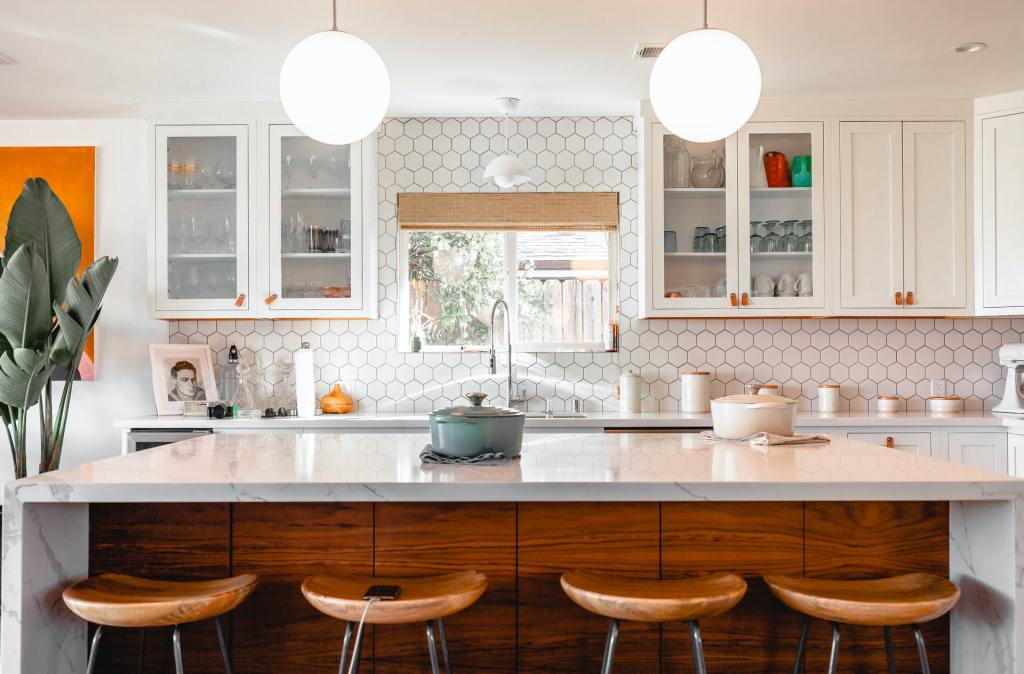
The kitchen is the heart of every home, so it’s no news that a kitchen upgrade can double the value of your property. But, you don’t have to go crazy for it to work. You don’t need a commercial-grade gas stove or a $3,000 vent to impress potential buyers.
Most homeowners appreciate the simpler pleasures: contemporary cabinet finishes, decent quality appliances, and, naturally, a good layout. Just a minor kitchen remodel can recoup81.1% of the initial cost, according to this 2018 Cost vs Value Report.
So, instead of splurging all of your savings on a new kitchen, you can update the cabin faces, put in an energy-efficient fridge, and replace the faucet and sink. But, if you are really adamant about doing a major kitchen remodel, make sure to consider the local market, home value, and your budget.
Steam Shower
Easy upgrades such as updated hardware or a new toilet can add value to your home, but why not go a step further? The average home buyer is in search of a bathroom that evokes an indulging experience.
The bathroom has become an experiential space; we don’t see it just as a utilitarian corner of a house anymore. The best way to tap into this new trend is to install a steam shower. A house that has a steam shower can sell forup to 30.7 % above the expected price, according to Zillow.
Refinish or Install Hardwood Floors
A durable and beautiful hardwood floor will stand up to heavy abuse and foot traffic for decades, while adding rich tones to the décor and improving the looks of the interior. Hardwood floors are popular among homebuyers because they are durable, gorgeous, and easy to clean.
But, if you already have a hardwood floor, it is a good idea to spruce it up a bit before you put your house up for sale. Refinished hardwood floors can recoup 100% of their cost, according to the National Association of Realtors.
Add a Patio or Deck
Due to the ongoing coronavirus pandemic and worldwide lockdowns, staycations are becoming increasingly popular. Outdoor living areas are already a big perk, and they will become even more desirable.
One of the best and mostunique ways to make your yard more inviting is to add a patio or deck to it. The average national cost of a yard patio is around $54,100. As seen in the 2018 Cost vs Value Report, you can recoup 82.8% of the cost after a deck addition.
Fancy railings, built-in seatings, new deck paint, pendant lights, or spotlights can really go far. Outdoor heaters are generally inexpensive and they can really cozy up your patio.
Spare Room
When pairing homebuyers with the right home, the number of bedrooms is key. A bit of extra room is always appreciated, especially among families. According to Zillow’s 2018 consumer housing trend reports,63% of homebuyers are interested in having a guest or spare room.
Remodeled basements can be very attractive to potential buyers. To add a magical extra room to your home, you can convert an under-loved or unused area of your home into an attractive living space.
If you already have enough bedrooms in your home, you can style an extra room as a cozy home theater, crafting area, or a game room. The more versatile your home is, the more appealing it will be to potential buyers.
Kevin has gone through an extensive home renovation with his son, which he has both
thoroughly enjoyed, and dreaded every morning. He is now the proud owner of half his dream house (the other half has been waiting for spring). You can read more of Kevin’s work on PlainHelp.
Rate this:
If you like this post and want to share it then click the service!
No matter the size of your garden, keeping your lawn in tip-top condition is no mean feat ‒ it can be a time-consuming and tiring task! With so many models to choose from, finding a mower that really makes the cut for your garden can seem like quite a challenge. But never fear, this helpful guide is here to help you make this all-important investment.
Whether you’re the proud new owner of your first patch of grass or a seasoned gardener, read on to find out which mower could make light work of your lawn.
Cylinder, rotary and hover lawn mowers
Before you even begin to consider the size and power of a lawn mower, you should first decide on a cutting system that would work best for you and your patch.
If you’re planning to cut your lawn regularly, you may want to consider buying a cylinder lawn mower. The grass is cut with sharp blades in the mower’s rotating cylinder, leaving a neat, even finish. Bear in mind that this system doesn’t work well with grass that is long or damp.
Rotary lawn mowers are typically larger machines, and they cope well with medium to long grass. These mowers have high-speed blades that rotate and slice the grass on impact. A rotary mower usually has a roller at the rear, and it’s this that gives that perfectly striped finish.
Hover lawn mowers tend to be a much cheaper option. They also have a rotary cutting system but don’t usually have wheels. For this reason, hover mowers are very lightweight and easy to use. However, you might find the finish a little less tidy.
Mowers by lawn size
The next step in choosing a new lawn mower is deciding which size and power would be best suited to your garden.
Small lawns only require a walk-behind mower ‒ a machine that you push along in front of you. Electric lawn mowers are the best option for small gardens, as they are cheap, lightweight and easy to use. To eliminate the risk of mowing through the cable, opt for a cordless electric lawn mower, although you should bear in mind that these machines have a limited running time before they need to be recharged.
If you have a bigger garden, remember that a cord might not reach to the outer edges, and a small battery-powered machine might not give you enough operating time. Instead, you might want to consider buying a petrol lawn mower. Although these machines are much heavier, and need to be serviced regularly, they are much more powerful and can adequately care for a larger lawn.
Ride-on lawn mowers are an excellent choice for medium to large gardens. Not only do they make quick work of larger grassed areas, but they are also a much more convenient and comfortable choice. After all, pushing a heavy mower across a large lawn isn’t too friendly on the muscles, especially when it needs to be done multiple times a month.
“For an eco-friendly approach to tackling large lawns, you can opt for the best electric riding lawnmower. These machines cover a lot of ground quickly, and they aren’t as noisy as their gas-guzzling counterparts.
Grass disposal
When choosing your new lawn mower, you should also consider how you will dispose of the resulting grass cuttings. Many lawn mowers have a collection bag or box which catches the cut grass for disposal. Remember, If you have a large garden, you might find yourself having to stop and empty the bag on multiple occasions. If you can’t organise a home collection for your garden waste, or you do not have a compost bin, then a good option for you could be a mulching lawn mower. This type of mower cuts the grass into small pieces, and then distributes it across the lawn.
Investing in the right lawn mower is a surefire way of ensuring your patch is a cut above the rest, and with the help of this guide, you’ll know the main models and key features to look out for!”
Rate this:
If you like this post and want to share it then click the service!




 Country & Victorian Times