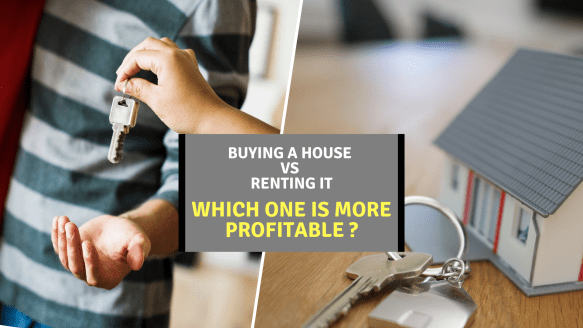
Buying A House VS Renting It – Which One Is More Profitable?

There’s a widely held belief that buying a home is preferable to renting. You’ve probably heard your parents or even friends say that as long as you are renting, you just throw the money away, into a landlord’s pockets. Contrary to this popular belief, fewer and fewer Americans decide to own a house, claiming it is a liability at best, and a problem at worst.

Which one then is a better, safer, and more profitable option? This article examines the benefits of both buying and renting and tries to determine the answer to this question.
Benefits of Buying

You can Make Money from your Home

When you own your home, you can make money from it in a variety of ways. Renting out a room or even just car parking space could deliver a steady stream of income.

And if you have the right kind of mortgage, you can rent your house out whilst living somewhere else. Check out this rental property calculator to find out how much you’d stand to make.

House Value May Increase

When you buy a home, particularly if you have a considerable deposit, you can look at it as an investment. As long as you’re not planning to move any time soon, chances are its value will increase by the time you come to sell.

This, of course, depends upon the area in which you buy and the general economic climate. But if you sell your home 20 or 30 years down the line, you probably stand to make a profit.

Making Home Improvements Usually Reaps Rewards

When it comes to putting your home back on the market, you could find that improvements you’ve made to the property have increased your home’s value.

Often, well-executed home improvements pay for themselves and then some at the time of a sale.

Benefits of Renting

No Additional Costs

People like to say that renting a property is just like throwing money away. But whilst buying a home can be an investment, there are plenty of other costs involved.

If you buy a home with a mortgage, you’re spending a huge amount of money on interest payments over the course of that mortgage.

And that’s before you even get started on maintenance costs, insurance, the fees associated with buying and your utilities. By renting you avoid all of these additional costs.

The Current Economic Climate is Less Relevant

The economic climate has much less impact on your rental than it would on a bought home. Whilst rental prices may rise and fall, chances are they generally stay in line with wage patterns.

However, buy a home with a large mortgage and you’re more susceptible to changes in the economy and the housing market. 23% of Americans owe more on their mortgages than their home is actually worth.

This is called negative equity and unless house prices increase dramatically or these people hold on to their homes for a long time, they’ll struggle to sell their homes any kind of profit.

You Won’t Be Stuck Paying a Rate you Can’t Afford

Sometimes landlords choose to raise the rent. If this happens and you can’t afford the new figure, you have the opportunity to give your notice, pack up and find somewhere new.

When you have a mortgage, payments can rise with interest rates. But if your mortgage suddenly becomes unaffordable, you don’t have the same flexibility to reduce costs. You may end up having to organise a costly move to downsize or even lose your home if you fail to make mortgage payments.

Renting Frees Up Money for Other Investments

You may find that renting is actually a cheaper option for the moment. But that doesn’t mean you can’t invest in your future. The money you save renting rather than buying can be used to make investments in areas other than property.

Time to Ask Yourself Some Questions

Whether you choose to rent or buy will depend largely on your current circumstances. Ask yourself a few questions.

  • Do you like the flexibility of renting? Or would you like to settle down in one place to raise a family?
  • Do you have a big enough deposit to buy a home? And are current interest rates favourable?
  • How much are monthly rental costs? How do they compare to the costs of buying a home, maintaining it and paying a mortgage?

Predicting how much profit you stand to make from buying a home is impossible. It’s always something of a gamble. What you can do is work out the current affordability of both renting and buying and decide which option fits best with your life.


Sienna’s bio:

Sienna Walker is a self-growth and lifelong-learning enthusiast who enjoys seeking out new and unique ways of saving and earning money. She is also an active blogger and might often be found online, sharing her tips with others and participating in online discussions.


5 Signs Your Current Lifestyle Will Lead to Your Financial Demise

Your lifestyle is very closely tied to your finances, as it often indicates how much you spend. Living frugally or spending with abandon are two very different lifestyle experiences, and the results of each will clearly show in your bank balance.

Here are five signs that mean you are heading for a cliff edge in terms of your financial situation.

1. You’re not saving 5%

Advice from experts suggests that you should be putting aside at least 10% of your income each month, if not 15%. But if you aren’t even managing to put 5% in your savings, then you are definitely living beyond your means. It’s even worse if you haven’t been able to put any savings aside at all.

If you feel like you can’t save that much each month, then you may need to cut back on your spending. Maybe that means not going out to dinner, limiting yourself to non-luxury items when shopping for groceries, or cutting back on some of your subscriptions. If you’re already living as frugally as possible and still not making savings, then the truth of the matter is that you’re simply not earning enough. Downsizing your home and looking for another source of income could be the solution in this case.

2. You don’t have an emergency fund

Everyone should have an emergency fund – again, experts recommend that you have around nine months’ worth of living expenses set aside, the minimum amount of money you would need to live during that time if you didn’t have any income at all. Why? Because life happens. You might find yourself unable to work, or suddenly lose your job – even if you have been an exemplary employee so far. You could crash your car and have your insurance fail to pay out, or lose your home in an accident which is not covered by your policy.

Vet bills, medical bills, legal fees, a broken-down car or boiler – these are all expenses which can come up from time to time and really knock you for six. You need to be prepared for these situations. If you aren’t, then you could have a nasty surprise waiting around the corner which could leave you bankrupt or in heavy debt.

3. You’re paying overdraft fees (or credit card fees)

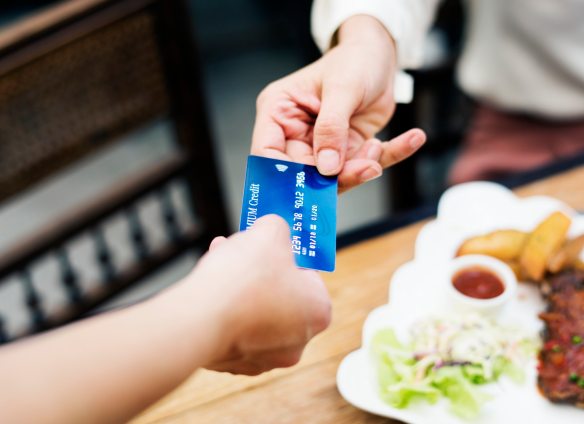
It came to the end of the month, and you didn’t have quite enough to get you through to the next payday. Now you’ve got overdraft charges on your account – or you might even have credit card fees to pay until you pay them off. This is a bad situation, as it is the beginning of a spiral into debt. In both situations, you are being charged extra money because of the fact that you didn’t have enough to begin with.

When this happens, you should see it as a huge red flag and stop spending right away. Don’t be tempted to put more things on a credit card.

An interesting technique you can use is to stop paying with your card at all, and instead use a cash envelope system. Withdraw your money for the week or the month, and divide it into envelopes for specific purposes: groceries, shopping, going out, and so on. When the envelope is empty, you just have to stop spending in that category – simple as that.

4. You don’t have a budget

Not having a budget in place might seem fine when you have enough money to make ends meet easily. However, it’s a problematic situation to be in when one of those emergency situations strikes. Suddenly, you are spending far more than you can afford, and you have to suddenly put on the brakes to try and learn how to budget for the first time.

Set a budget now, and learn how to stick to it, as well as what constitutes a realistic budget based on your spending habits. This will help you a lot when changes in your situation occur.

5. You spend out of fear

Fear of missing out, or FOMO, is something that can drive us to spend money on crazy things. Do you really need that new piece of Victorian furniture, or are you just scared that you’ll never get another chance like that again? Don’t let fear dictate your spending. Don’t overspend on going out just to keep up with your friends, or buy a house you can’t afford the payments on because you want people to be impressed. It’s a road to nowhere.

By recognizing these signs and making changes now, you might be able to turn things around. Don’t let the worst happen – get in control of your lifestyle now, and stop your finances from suffering.

About Alana: Alana Downer is a personal finance expert and an avid blogger, who often shares her money tips and tricks online. Alana is also a part of the team behind Learn to Trade – a useful resource for all those who wish to start trading and investing. Should you have comments or questions, feel free to contact Alana on her Twitter.

Saving Money The Victorian Way

header1Now we’ve rung in the New Year, many of us will be looking at our bank balances and feeling twinges of regret about our overspending during the holiday period.  According to Forbes Magazine, consumers who took on additional debt this holiday season added an average of $1,003 to their balances. The burden of debt can have a huge impact on both our emotional and physical wellbeing, leading to stress, anxiety, and sleepless night.

If you’re struggling with debt, or have simply overspent and would like to tighten your belt in order to get your budget back under control, then why not look to our Victorian past for a huge wealth of fun ideas on how to save money? Frugality and resourcefulness are both key buzzwords for describing the lifestyles of most Victorians, regardless of their class and social status. Victorian people made do with what they had and were incredibly resourceful when it came to finding what they needed without expense.  Here are some ideas on how you can adopt this philosophy to suit your own lifestyle:

Repair Rather Than Replace

Victorians didn’t have wardrobes overflowing with clothes in the way that so many of us do: they certainly didn’t feel the need to wear a new outfit for every social occasion they attended. Clothes were not purchased off the rack: each gown worn by a woman, for example, would be made either by a professional seamstress or (if finances didn’t allow) hand sewn at home. As a result, dresses were often repurposed and updated to suit changing fashions, and repaired when they were showing signs of wear, rather than simply discarded. Modern money savers can learn a lot from this Victorian model: why not learn some simple sewing techniques? It is much more cost effective to replace a button than buy a new coat, and small holes in garments can be repaired very simply with minimal skill and technique. By repairing rather than replacing clothes, and other items around the home, you’ll be amazed at how much money you can save: that money would be much better spend on removing the burden of your debt and living a debt free life than on continued consumerism and things you don’t really need .

Ditch Your Car

Very few Victorians had their own personal transportation: the Victorian era was the era in which public transport became more easy and convenient to use than ever. Regular buses, trams, and even a rudimentary underground railway system (which would later become the subway) were all established during the Victorian era. Taking public transport is easy, cost effective, and what’s more it’s also great for the environment. Contrary to popular belief, nearly all forms of public transport pose less of a cost to the average commuter than driving and, thanks to increasing congestion and traffic, you can often reach your destination much faster if you are travelling by public transport too. Why not ditch the car (at least for a couple of months) and see how much money you could save on gas, parking, and car maintenance expenses? You might even find that taking public transport is so convenient that you never want to jump in your car for simple journeys again!

Grow Your Own Vegetables

Why not make like a Victorian and use your backyard space to grow something useful, such as vegetables? No matter how big or small their outdoor space, the Victorians often utilized this to grow vegetables in order to ensure they had access to a nutritious meal without having to spend any more. What’s more growing your own vegetables is a fun and inexpensive hobby that you can involve the whole family in, and it provides a great lesson for children about where food comes from, as well as encouraging them to spend more time outdoors. Carrots, tomatoes, potatoes and cucumbers are all very simple to grow for a beginner, and you will soon be able to eat and enjoy the fruits of your labour, whilst watching your grocery store bills decrease as a result. Have a large yard and enjoy the idea of growing your own food? Why not consider buying some chickens and a small chicken coop: much cheaper to own as a family pet than a cat or dog, when you own chickens of your own you will always have a ready supply of eggs for breakfast!

header1

Coin Saver

8e57299da59090f6055a656487234dd5a83a48e9Keep the slim tubes that you can buy M&M’s in (usually near the register) and use them in the car to keep your change in. Easy to save up the change and makes it easy to save up and bring into the house to put in a change jar.

No More Junk Mail

Did you know that if you wanted to get rid of junk mail effectively, you must contact several companies?

National Do Not Call Registry: Telemarketers: This is a permanen list by the government of off-limit numbers. www.donotcall.gov

Opt Out Services: Credit Card and Insurance Companies: The four major credit reporting companies will take you off their list. www.optoutprescreen.com or 1-888-567-8688

Direct Marketing Association Mail Preference Service Program: All catalogs, magazine offers and circulars that come from this very large group. www.dmachoice.org or 212-768-7277 ext. 1500

Valassis: All coupon inserts that come directly from this mail company. www.valassis.com (click “contact us”) or 1-888-241-6760

Acxiom US: All phone, mail or email contacts that come from this company. www.acxiom.com/opt-out-request-form or call 1-877-774-2094 ext.5

Catalog Choice: Unwanted catalogs. Register with this non-profit and they will contact businesses on your behalf. www.catalogchoice.org