An Interior Desgners Gingerbread House

AN INTERIOR DESIGNER’S GINGERBREAD HOUSE

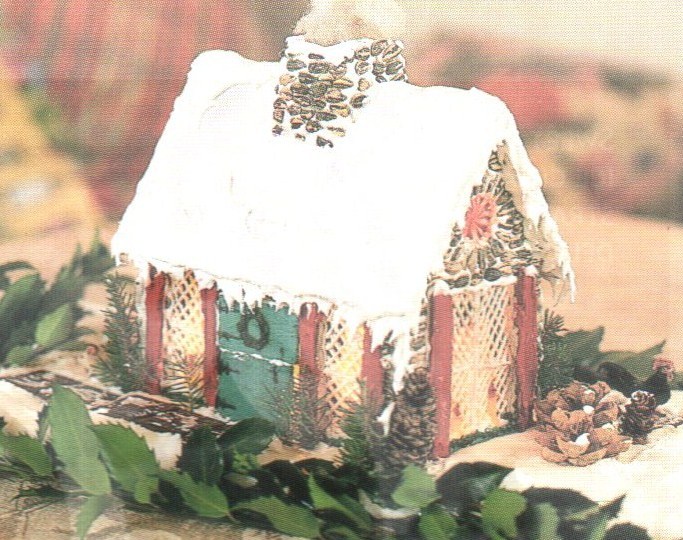
Every year James Deartron makes a ginger­bread house part of his holiday decora­tions. His professional experience gives him lots of good ideas for decorating the delicious structure, and he has become known around town for these clever cre­ations. Here are some of his tips.

Cotton batting is perfect for smoke com­ing out of the chimney.

Un-shelled sunflower seeds give the look of flagstones.

Chocolate-covered   graham   crackers pave the walkway outside the house.

White frosting makes good snow; to cre­ate the effect of rooftop icicles, allow frosting to drip down eaves.

Powdered sugar resembles the freshly fallen snow.

Pine cones provide some outdoor land­scaping (tip them with frosting for snow).

A red-and-white  peppermint drop is a good stained-glass window.

Meringue latticework is used for the doors and windows, which are glued to gingerbread pillars with royal icing (a mix­ture of egg whites and powdered sugar).

Bread Dough Aztec Mask

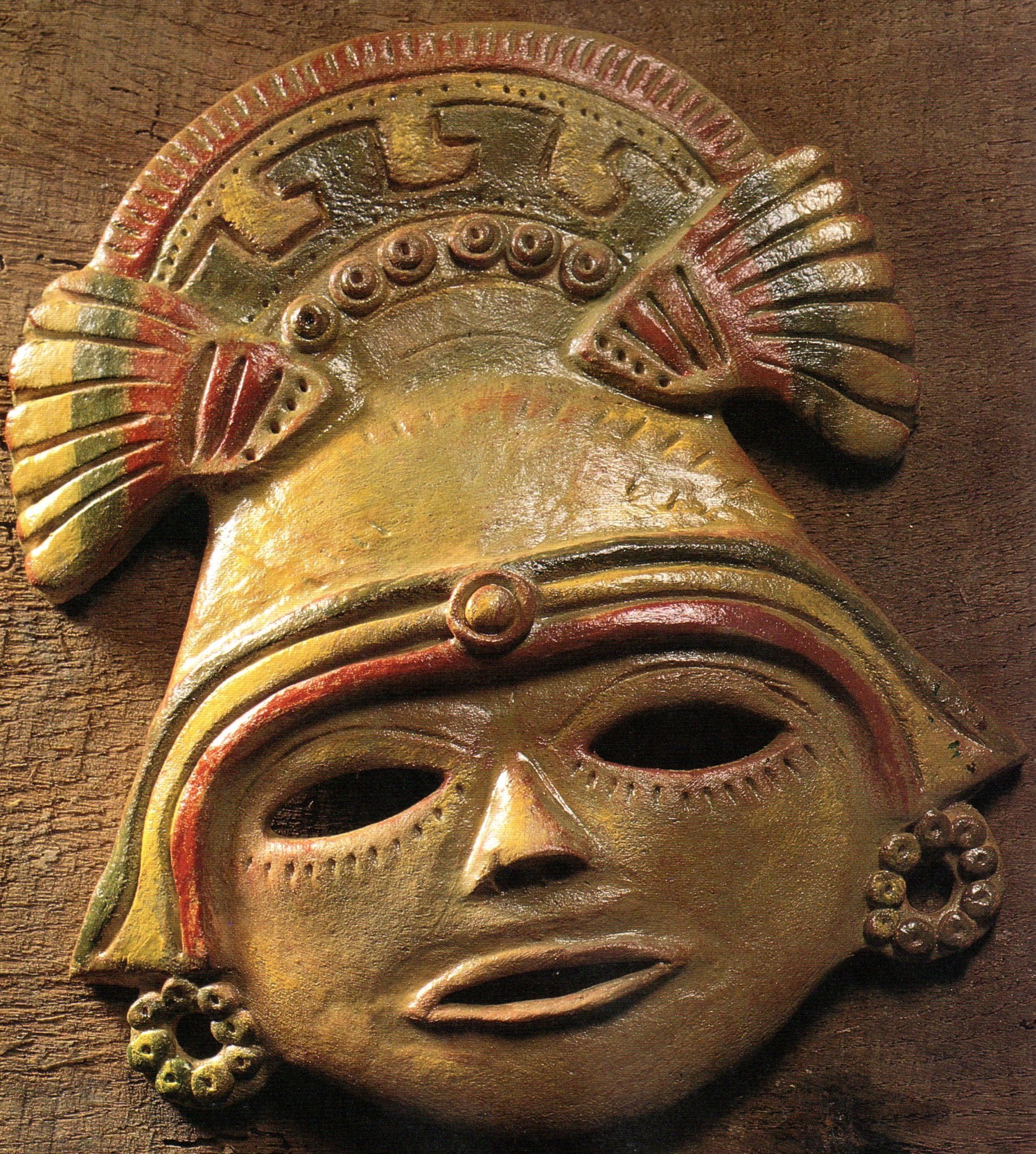
A stunning wall decoration created by molding and layering simple template
shapes combined with surface texturing techniques. The earthy yellow, red
and greens blend do well together to produce a strikingly authentic effect

YOU   WILL   NEED
1 batch salt dough
Roiling pin
Flour
Pastry board
Tracing paper
Pencil
Plain paper
Scissors
Small knife
5-inch diameter saucer to use as a mold
Plastic food wrap
Modeling tools
Wooden skewer
Fine srade sandpaper
Paintbrushes
Acrylic paints
synthetic sponge (optional)
Satin polyurethane varnish

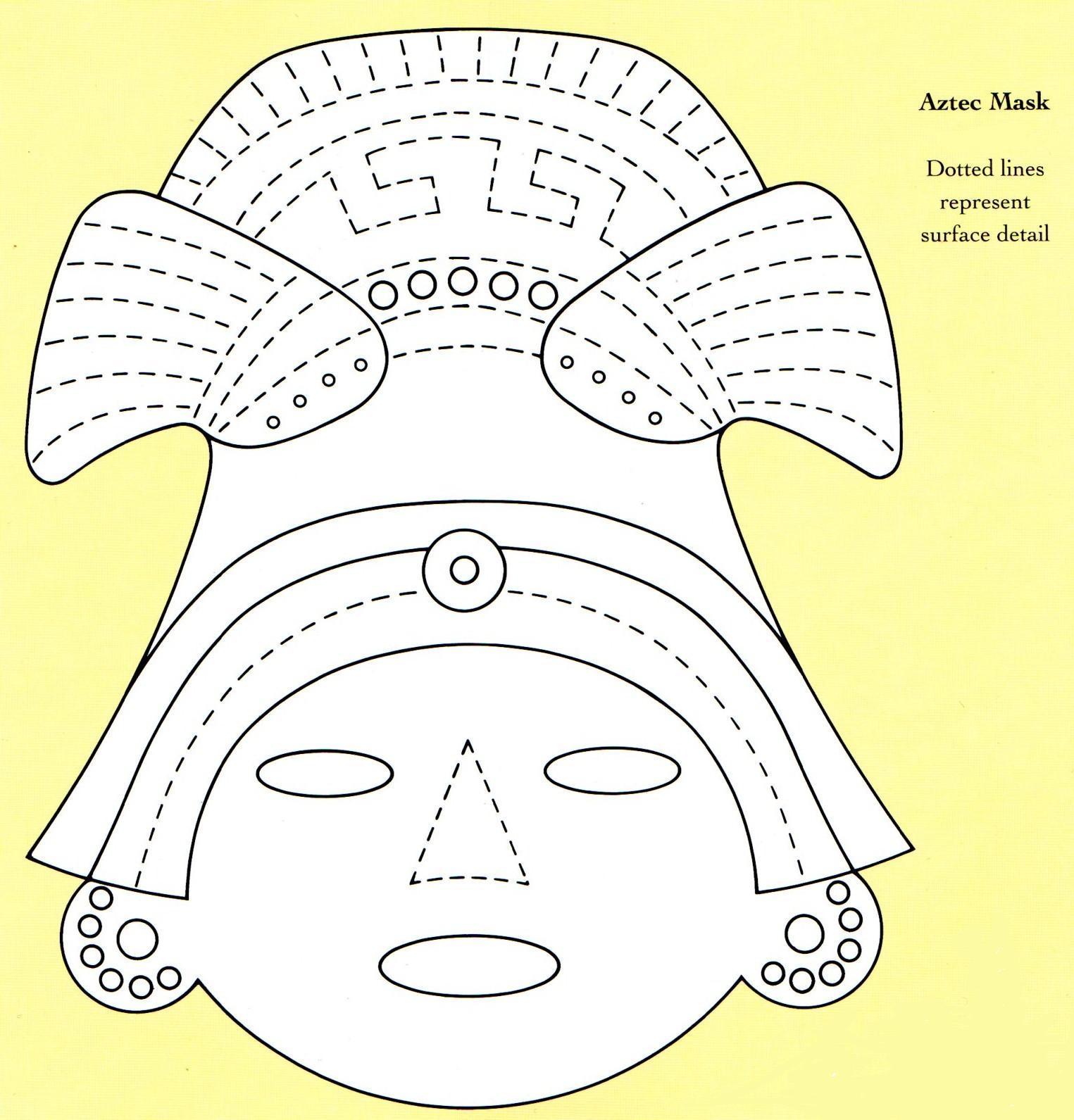
~ Roll out the dough to a thickness of  1/4  inch on a lightly floured pastry board. Trace off the basic template, and then trace off the other template details following the solid lines (the dotted lines represent surface details). Cut out the templates in plain paper and place on the rolled-out dough. Cut around each shape, using a small knife, removing the eye and mouth sections. Remove the excess dough.

~  Cover the convex side of the saucer with plastic food wrap and lay it on the pastry board. Carefully lift the main mask template and place it over the mold. The saucer should fit under the face part of the mask and the head-dress should lie flat on the board. Moisten the entire surface of the dough with water and carefully lay the other cutout shapes in position.

~  Use modeling tools or a wooden skewer to make the surface decorations, referring to the dotted lines on the template and to the photograph as a guide. Use a moistened modeling tool to smooth out the joins. The raised details on the forehead and earrings are made from small balls of dough squashed to make a flatter shape and then pierced with the blunt end of a skewer. For the nose, model a small ball of dough into a pyramid shape and press it carefully into position, smoothing out the joins with a moistened modeling tool. Form the nostrils, using a pointed modeling tool.

~  Transfer the mask to the microwave turntable plate and bake on low for 20 minutes + 20 minutes, medium low for 20 minutes, and medium for 10 minutes + 10 minutes. Remove it from the microwave oven and leave to cool. Do not attempt to remove the mold while the dough is still warm as this may cause warping and damage. Gently prize the dough mask away from the mold and, using sandpaper, smooth off any rough edges.

~ Apply two coats of beige acrylic paint to both sides of the mask to act as a sealant and bottom coat. Apply the other decorative colors, using the photograph as a guide. Use a dry brush or a sponge to achieve the subtle effects.

~  When the decorative paintwork is dry. apply three coats of varnish, Leaving each coat to dry before applying the next.

I’m Melting

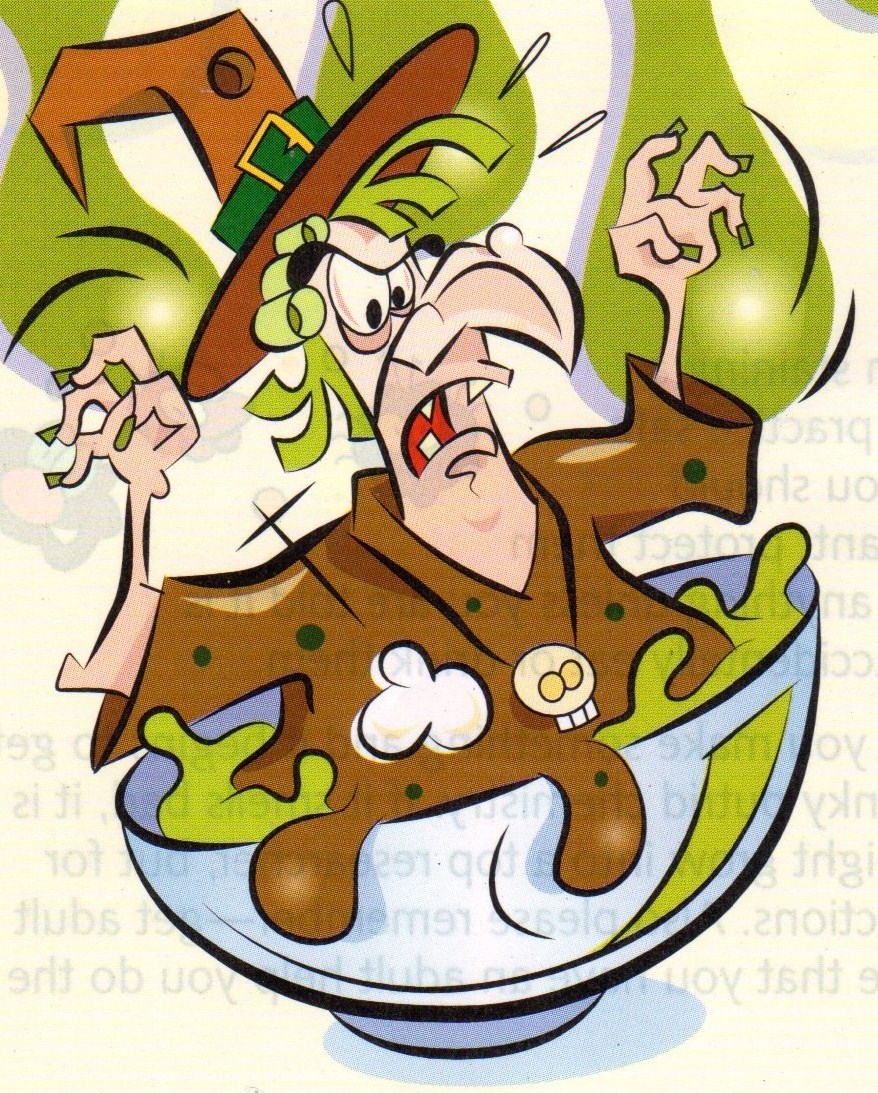
A witch placed into acetone melts into sticky goo. The goo can be molded into different shapes before it hardens.

What you’ll need
foam cup
pen
goggles
rubber gloves
acetone (nail polish remover)
glass or metal bowl

1, Draw a picture of a wicked witch on an upside-down foam cup. Put on the goggles and rubber gloves.
Pour acetone into the bowl so it is about Vi inch deep.
3,  Put the witch into the acetone, feet first. Watch as the witch melts, just like the wicked witch in The Wizard of Oz! As you watch, say in your best witch voice, “I’m melting, I’m melting.”
4,  When the witch has totally melted, reach into the acetone and pull out the goo. Mold it into any shape—when it dries you will have a statue.

Safety
Adult supervision is needed for this project. Protect your eyes from the acetone by wearing goggles and your hands by wearing rubber gloves. Don’t pour the acetone into a plastic bowl because it could damage the bowl. Do this activity in an area with good air circulation.

What Happened?
Similar to salt dissolving in water, polystyrene foam dissolves in acetone. The foam in the cup holds millions of tiny pockets of air. This makes the cup a great insulator, helping to keep your hot chocolate warm on cold days. When the foam dissolves in the acetone, the air is released, and a sticky goo results. When the foam goo hardens, it doesn’t have air pockets anymore.

Fun Fact
Styrofoam is made from a chemical called polystyrene. The Dow Chemical Company invented it in the 1940s. Polystyrene beads are heated and air is blown in to create air bubbles in the foam. It is used for cups, home insulation, packing material, and flotation devices.

ACEO’s = What are they???

What ACEO is all about

ACEO stands for “Art Cards, Editions and Originals”. These cards have one main rule – they are 3.5 inches by 2.5 inches – the size of a trading card.

The reason for this is, of course, that Art Cards are made to be traded! But while artists were happily trading cards, the general public was left out in the cold, having no Art Cards to trade. A group of artists realized this, and quickly made their cards available for sale at remarkably low prices so that everyone could join in the fun!

Cards are also sold either as originals or editions. Make sure you know which you are buying! If it is a print it should say so, and it should be numbered and signed, usually on the back.

Art Cards can be a riot! Artists from all over the world are creating, and now selling these little gems in different mediums and of different subjects. Watercolor, Oil, Acrylic, Colored Pencil, Pastels, Pyrography, Pen and Ink, Sketching, Collage – the sky is the limit. Abstract, Surrealism, Outsider Art, Impressionism, Expressionism -every style you can think of – and then some!. Every interest and subject is covered! Extremely collectable Pocket Art, you can’t stop at just one!

Roasting Chestnuts

a    different nut    to    crack

Soak chestnuts in a bowl of water for about 30 minutes; drain well. Cut a slit in the shell in the rounded side of the chestnut. Make sure the cut goes all the way through the shell; otherwise, they can explode.

To roast: Arrange chestnuts in a single layer in a chestnut pan. Place over an open flame; roast 25 minutes, shaking frequently.

To roast in the oven, arrange chestnuts on a baking sheet. Bake at 400° for 25 minutes.

To mi­crowave, arrange chestnuts in a single layer on a microwave-safe dish. Microwave at HIGH 2 min­utes. Microwave a maximum of 12 chestnuts at one time so that they cook evenly.

Let the chestnuts cool about 5 minutes. Peel.