6 Roof Maintenance Tips Every Home Lover Should Know

Roof is what is standing between you and sunlight, rain, snow, feces of birds along with natural disasters. Since we have established that the roof is the most important part of any individual’s life, let me ask a question that is going to make a bunch of you very uncomfortable. What are you doing to keep it over your head? How often do you run maintenance sprees on it? 

Have you thought about it? Would you like to do something to make the big fat investment which is your roof safer? Your stars are aligning just in the right direction today, as I am going to teach you six simplest of the ways to keep your roof healthy for years. 

  1. Get Rid of Those Branches 

When the trees and branches are friends of the environment, the same cannot be said about the relationship of your roof and branches, according to the Roof Professionals

Simply put, branches are evil for your roof. You cannot allow trees to grow above or near your home’s roof at any cost. While it may sound bizarre, due to trees providing us the much needed oxygen factor, the truth is during any sort of natural disaster, even in the case of strong winds, branches tend to break. Breaking heavy branches may fall onto your roof, ending up damaging your roof. Maybe even breaking it. 

So, if after looking at a branch you wonder, “if it is too close?” Well, it might really be. The excellent solution will be to chop off the tree while planting a new one away from your roof, you can also go for trimming the tree every then and now, to get a secure roof.

  1. The Downspouts Cleaning 

Downspouts or roof drains are often clogged after a heavy rain and for obvious reasons as well. After clearing gallons of water off your roof, some things like dirt, stones, leaves, et cetera will block it naturally. These vertical pipes that run down to the gutters are lifelines of your roof. 

They evacuate the rainwater from your roof, not allowing it to accumulate on your roof and messing it up. So, if you ever run across a clogged downspout, just try adding screens into them. Mesh screens are just another shortcut to cleaner downspouts. 

Another downspout prevention is to keep in mind that there are many joints, connections, and elbows used in downspouts. You must keep all these connections in check as well for any leaks and cracks. 


Your best bet is to check the pipes when it is raining. Fix if there are any leaks in the pipe or it may collapse very soon. 

  1. Mingling With Shingles

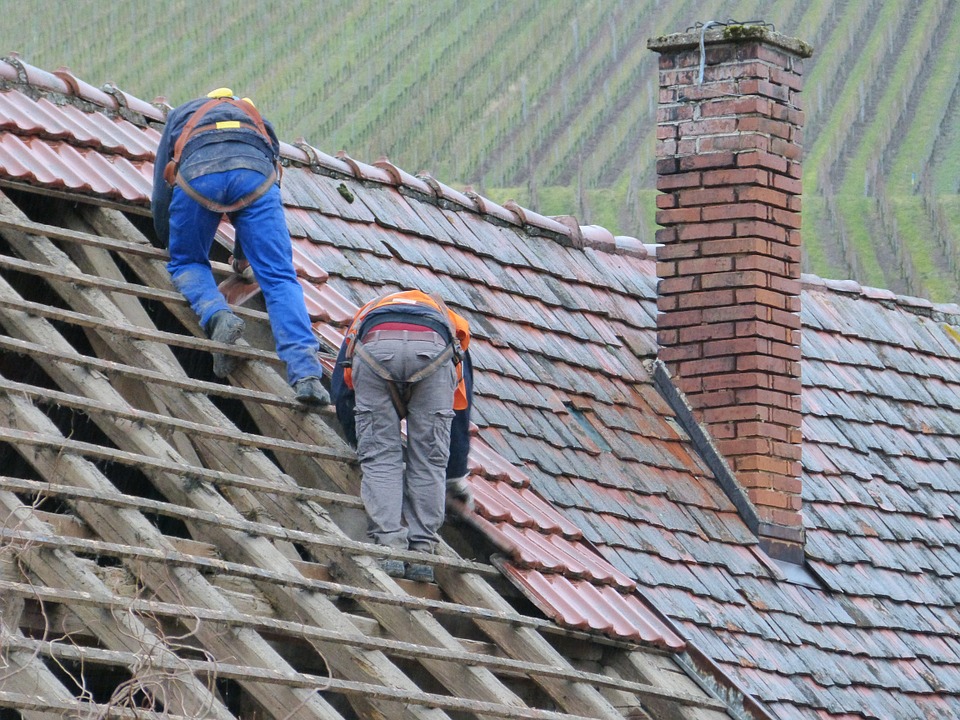
This one is the easiest one on the list so far. As a homeowner you have to know how to check your roof shingles. It has to be a part of your weekend routine. Pay your roof a visit during the weekends and check for any broken or missing shingles. 

You should also pay attention to how your roof shingles look. If any area looks really streaky to you or you may find any cracked shingles, change them as soon as possible. Shingles can also be inspected from the ground. However, not all of them will be visible from down there, you eventually may have to go back up on the roof for a thorough inspection. 

  1. Look Out For the Signs Within the Home

When there is something wrong with your roof, your home will start spreading out the signs all over it. All you need to do is, look. Translate what your home is telling you about your roof’s condition. 

Look for molds or any big black spots on your ceiling. If there are black spots on your ceiling, there are good chances that somewhere on your roof, either water or moisture has accumulated. Both of them will ruin your home in no time. Better keep them under the check. 

Dipping water from the roof is also a huge red flag, that indicates that your roof has been cracked. Repair the roof without any delays in this scenario, you do not have much time. 

  1. Adopt a No Nest Policy 

It is your home, it is your roof, there cannot be a place for any bird or its family. Similar policy needs to be adapted for rodents as well. They can look cute but they are really the villains here. They will dig holes into your roof to make it their own home. 

You do not want holes in your roof do you? Good, chase them away whenever you notice any bird, squirrel or rat sitting on your roof for too long. 

Their presence under your roof is a bad sign and you should chase them out immediately when you notice their movement. Squirrels, as cute as they are, can and will chew onto your roof. Hence the no nest policy.  

There Can be Underlying Issues

There can be a lot of underlying issues, when it comes to roofs. You can add or replace attic insulation, can ensure proper ventilation in your home and there still can be issues. It is your most important part of the home we are talking about. 

With all the personal inspection, you should always get your roof checked by the professionals, every then and now. It is not about money, but about saving your life earnings and your family. A broken roof can end up hurting your family. 

So, even if you can, once every year, ask the pros to check your roof thoroughly for any dangerous business. 

Ending Note

So, these are six pro tips that are going to help you in protecting your home’s roof while extending its life. I am sure these tips will help you save a lot of money in repairs. You are going to eliminate the problem before it is even going to start. 

To end, while using any of these tips, always keep your security and your family’s as top priority. Whenever you are in doubt, it is safer to call the experts in, rather than doing a DIY on the roof. It is an important part of your life, take care of it with love. 

10 Things You Didn’t Know That Can Drastically Improve Your Mental Health

Image source

Mental health is not a given in the hectic world we live in – especially these days, with COVID-19 in the mix. Job uncertainty, lack of human interaction, and pervading fear of the pandemic’s recurrence are only some of the many factors that can chip off chunks of our mental wellbeing. Still, there are quite a few things we can do to keep our psychological equilibrium in check and stay on the safe side of the mental health agenda. So, what are the things we can do to nurture our mind and drastically improve our mental health in times of global upheaval?

1. Focus on the Positives

When times are hard, it can be really difficult to find a silver lining in every single cloud – but it’s far from impossible. Invest active effort and try to take notice of the little things in your immediate environment during the day that you can be grateful for. Focusing on the good things that happen around you every day can help you restore faith in positives and preserve your mental equilibrium in the long run. So, what are the things that you can be grateful for today? Write them down and see just how lucky you actually are.


2. Break Some Sweat

Medical studies have shown that physical exercise can boost mood and help keep depression, anxiety and various psychological hitches at bay. Release of endorphins, dopamine, and serotonin which occurs during training has an invigorating effect on our overall mental wellbeing. For a neat side-effect, regular exercise is also good for your physique and long-term health. The takeaway? Sign up for the gym today and do yourself a triple favor by a single routine tweak.

3. Pedal through Nature

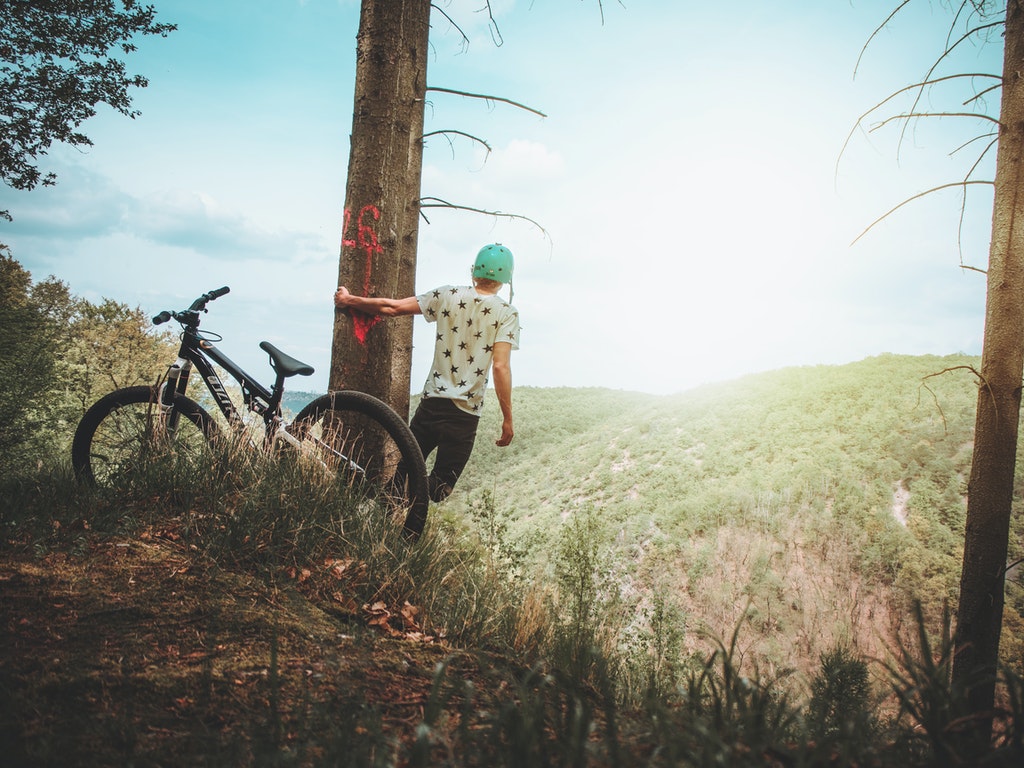
Did you know that cycling through nature can elevate your mood and help you regain – or retain – mental fortitude? Gliding through trees and across rough terrain on sturdy mountain bikes is a great exercise for both the body and the mind. Spending time in nature allows your brain to de-stress and reboot, while hard pedaling labor and conquest of challenging trails trigger release of happiness hormones in the brain. For added fun, a biking session will also physically remove you from the gloom of your everyday setting.

Image source

4. Omm Your Way to Bliss

Meditation and other New Age techniques have been around for a while, and for a good reason, too. According to some studies, not only does meditation alleviate anxiety and depression, but it also enhances processing of emotions which is essential to long-term mental wellbeing. If you’re a newbie, it may take you a while to get into the nirvana state of mind, but don’t give up. The outstanding effects which meditation has on your overall psychology are definitely worth the extra effort!

5. Open up to a Loved One

Sometimes, talking about everything we keep inside isn’t easy, but a heart-to-heart talk can go a long way in times of trouble and distress. Humans are social beings by nature and even though you may be a loner, you will still need some contact with others now and then – and especially at a time when everything you believed to be safe and stable starts to shake and collapse. A chat with a trustworthy person can ease mental load and restore a smile to your face and make you feel you are not completely alone.

6. Charity Goes a Long Way

In times when you might feel that you’re the most unfortunate of souls out there, remember that there are others who are in a much graver situation. If you can afford it, it might be helpful to muster the strength to do something for them. Charity and volunteer work are beneficial for both the givers and the ones on the receiving end. By volunteering in an animal shelter or soup kitchen or working with the homeless, you will do a lot of good for others and get a mood boost yourself – and maybe you’ll even find your purpose.

7. Adopt a Furry Friend

Loneliness can be a real bugger – all the more so in times when you feel less than. For a heart-warming and mind-soothing plot twist, why not get a pet? A human and a pet are a match made in heaven, especially in the times when either of them is hurting. These days, science is including pets in the mission to cure mental health – and the endeavor appears to be working like a charm. As a bonus, having a pet will also dial up your sense of purpose, so you may just give it a go – for your heart’s and mind’s sake.

Image source

8. Count Your Zzzs

Proper rest is one of the essential elements in the wellbeing puzzle – but it’s also one of the first to go to shambles when the pillars of our world start to shake. Do your mental health a favor and shape up your bedtime routine by ditching screens from your sleeping area and setting up a bedtime schedule. Aim for 6-8 hours of solid sleep per night and try to stay away from heavy, fat- or sugar-laden foods before bedtime as rich dinners have a detrimental effect on sleep quality.

9. Mind Your Plate

Be honest now: are you eating your way to lasting mental wellbeing? Many people feel down and out without knowing exactly why, and they are all too quick to dismiss the significance of their diet for their psychological state. If you want to stay fit as a fiddle both physically and mentally, watching your diet is a must. To secure lasting mental health, drop fast food from the menu and set aside time each day to prepare your own meals. Bonus point: eating healthy, energy-boosting foods is both delicious and it costs less, too.

10. Take a Break

When everything begins to slide into a rut, a short break from the norm may be everything you need to stay on top of your mental shape. A weekend trip will infuse your life with vigor and excitement, and it will also allow you to take your mind off everyday stress and focus on other, more inspiring things in life. To max out on stimulation, you can choose an adrenaline holiday or day trip with thrill-packed activities such as bungee jumping or rafting. Now, that’s an outing you’ll never forget!

Preserving mental health in times when the world seems to be losing it is not always easy, but it is nonetheless crucial. As the old adage goes, the choices we make define our destiny, and it is up to you to call your shots wisely. Use the tips above to shape your daily routine with your long-term psychological wellbeing in mind. Sleep well, eat clean, exercise regularly, consider getting a pet, do some charity work, allow yourself a break from the norm when you feel like it, and your mind will always be in a good place. You’re welcome!

A Brief Overview Of Victorian Schools For Children

The Victorian era is packed with many histories and mysteries. One of the most historical topics that would spring up from that era was schooling.

What was schooling like for children in the Victorian era?

Believe it or not, Victorian schools are far different than schools today. In fact, let’s just say your own child wouldn’t like being in Victorian schools much. With no technology, no “fun” activities, and enforced punishments to students who defied the rules, Victorian schools differ greatly from the tech-drenched, “fun”-enforced, and lenient-punishment atmosphere of today’s schools.

This brief overview will cover the following, when it comes to Victorian schools:

  • Background
  • How rich students and poor students attended school
  • What the school “uniforms” looked like
  • What school is like, AND
  • How teachers handled punishments

A Little Background

“The Victorian era was when schools were taken seriously as institutions,” says Rose McKelvey, a history writer at State of writing and Essay Roo. “In fact, schools in the Victorian era were available to all children, regardless of one’s family’s financial situation. A law passed in 1870 required all children in Britain between the ages of 5 and 10 to attend school. However, this law was contested in 1893, when the leaving age was changed to 11 years old, since children of working parents were convinced to join the workforce instead of going to school.”

The Rich And The Poor

While very few children actually attended school, there were two different realities: the rich and the poor.

Children from rich families received homeschooling. In homeschooling, children would be taught by a governess, or a female teacher. The only notable thing here is that while boys at age 10 would go on to public schools, the girls would continue to be homeschooled.

As for the poor, children would sometimes attend church for school, despite these “schools” having limited educational resources. However, a law passed in 1880 had all children – rich or poor – attend school.

School Attire

School attire in the Victorian era left very little room for students to express themselves. The most common uniform colors were dark colors like black and brown, and dull colors like grey and white.

The girls would wear a dark knee-length wool dress, along with a white apron (tied at the back of the dress), thick black stockings, and black shoes (or boots). Boys, on the other hand, wore shirts, trousers (or shorts), and ankle boots (along with long socks), with the addition of a jacket with a waistcoat (or jumper) underneath.

What Was School Like?

In essence, schools in the Victorian era looked something like this:

  • Schools lasted until 5 PM.
  • Children sat silently in rows, as the teacher wrote lessons on the blackboard. As the teacher wrote, so did the students at their desks.
  • The main subjects taught were Reading, Writing, and Arithmetic (Math).
  • Distractions and looking out the window were discouraged.
  • Certain subjects like needlework were taught to girls. Meanwhile, other subjects like woodwork were taught to boys.
  • Students would use the following to study and learn:
    • A slate and chalk (along with a cloth to wipe their slate clean)
    • A quill pen (with an ink well) and parchment
  • Equipment in classrooms were often scarce. A classroom was often lucky to have a map of the world or an abacus for reference.

School Punishments

“Unlike today’s standards, where punishments these days are more lenient and less harsh, Victorian school punishments were more severe physically and mentally,” says Chelsea Niall, an education blogger at Boom Essays and Paper Fellows. “One of the most common forms of punishment was the use of a cane. A teacher’s cane was typically long and thin. They would use this stick to strike children on the hand for either misbehaving, being tardy to class, or for telling lies. There was also a leather strap used to beat children, or the infamous dunce’s hat which is worn by misbehaving students. Or, children were subject to writing lines, where students wrote the same sentence or phrase over and over however the teacher saw fit.”

Conclusion

As you can see, Victorian schools were worlds away from the schools that we see today. In this overview, it’s clear that Victorian schools had different values and methods, when it comes to teaching children, thus cementing themselves into a part of Victorian history.

Christina Lee is a writer and editor at Dissertation help and Write my paper. She is also a contributing writer for OX Essays. As an education blogger, she writes articles about tutoring, histories of various time periods in education, and teacher spotlights.

What You Need to Know Before You Go for Artificial Grass

A beautiful green lawn accentuates the beauty of the house. It is the pride of every homeowner. A lot of people do not spare any effort to make their lawn perfect. Sadly, everyone does not have the appropriate conditions to maintain a perfect lawn. 

Also, it is not something that is very simple to maintain. Having a beautiful green lawn in your yard looks nice but it takes a lot of time and effort to maintain it. So, if you know it is something you cannot handle, there is an alternative for you. 

Highly durable, beautiful, and easy to maintain, faux or artificial grass is an effective way to considerably reduce your hassle. It is used both indoors and outdoors. With the advent of production technology and the development in the types of material used, faux grass has successfully imitated natural grass with the perfect combination of the color and thickness of the fibers. It is a great solution for your lawn or terrace. 

So, in case you plan to get artificial grass for your house, here are some things you should know. 

Base and Drainage

Faux grass does not simply lay out on the floor like a rug. Generally, the ground is dug about 5 inches before it is laid out on the ground. After excavation, pipe drains are fitted that are designed specifically for your property to ensure that any water over the area is drained consistently and prevent any bacterial problems. 

A 2-3 inch of crushed rock and fine aggregate makes a thick base layer covering the drainage area. It is leveled to form a robust, water-permeable layer that is the foundation for the top grass layer. This combination of small and large rocks keeps faux grass stable. And not just that, it increases the life of the artificial grass and helps it remain composed during high foot traffic. 

Maintenance

While it is a lot less hassle to maintain faux grass than the real one, it does not mean that it is totally maintenance-free. Yes, you do not have to worry about weeding, mowing, or watering, but you cannot simply live your life ignoring its existence. 

You have to deal with a lot of things when it comes to artificial grass like stains if and when they occur. A spilled beverage is cumbersome but not a lot of trouble. The maintenance is not limited to spillage. Leaves can be a lot of trouble as well. If not taken care of, they can grind into the turf and in time can become really difficult to remove. Essentially, you need to work a little to ensure that your lawn or terrace looks great. 

Pricier But Cost-Effective

Faux grass does not come cheap. It costs about $10-14 per foot which when compared to about $0.50 per foot for sod seems quite expensive. In a nutshell, if you want to cover a 500 square foot yard, you will have to spend around $6000 and only about $200 for real grass. While it seems like a lot right now, down the road it will not be so much. 

You will be able to recoup the investment over time. If you get sow grass, you will end up spending a huge amount of money over time on maintenance. You will save on fertilizers, lawn services, water, and in about 7-8 years you will even out. To put things into perspective, you are paying more upfront but then you won’t have to worry about any regular costly maintenance year after year. 

Environment-Friendly

It is absolutely normal to believe that fake grass will not be good for the environment when compared to natural grass. Well, this is not exactly true. In reality, the natural grass in your lawns isn’t as green as you tend to assure it is. To maintain natural grass, you use a lot of water and chemicals to ensure its proper care. And we all know that it is not exactly going green when you are using so much water and chemicals. 

And not just that, the growing interest in faux grass has led to huge investments in this sector. This has further led to investment in sustainable materials such as sand, coconut fiber, and cork. So, if you want to think about the environment, having a natural garden is not exactly the right foot forward. 

Conclusion

Once you’ve understood the pros and cons of getting artificial grass for your property, take note of the aforementioned points about faux grass that you must learn. While it is not a simple answer to choose between natural and fake grass. This depends on various factors like budget and requirements. Especially, if you are living in areas that have adverse climate conditions for your grass like an arid and hot state, it is only wise to give your outdoors a makeover with artificial grass. 

To put things into perspective, if you do not have time and energy to maintain your lawn, you should go for artificial grass. It will give your house the aesthetic appeal you are looking for without having to go through any hassle. While this is all good, it does not mean that real grass does not have any benefits. Having real grass in your yard is ofcourse a luxury. It is just that faux grass is much better for people who do not like to be at the end of regular maintenance. 

Ultimately, it is upon you to decide whether you want real grass or artificial grass. We hope the aforementioned points helped you decide better. Let us know your thoughts in the comment section below. 

Top 6 Activities  to Prepare Your Body for the Fall Season

Photo by Ketut Subiyanto from Pexels

The main problem with the new year’s resolutions is that they are impractical. So, why wait until January to make new fitness goals and take good care of yourself? In Australia, summer and fall are the best seasons for fitness, and if you lack motivation or don’t know where to start, here are some ways to build your own workout routine and get back in shape after lockdown.

Go for a walk

When going to the gym isn’t an option, walking is a great way to get back in shape. Not only will you manage to burn some calories, but you’ll also improve posture, strengthen your muscles, and shore up your joints and bones.

Walking for 30 minutes a day can be very beneficial for your mental health as well. This is a mindful exercise that allows you to enjoy some alone time, relieve stress and even try new things, such as walking to a new ice cream shop on the other side of the city. The best part is that you only need a good pair of running shoes to start today. So whether you want to go for a walk with your friends or go sightseeing when you need some time to unwind, this type of physical activity will definitely improve your mood.

Go on a hiking adventure

Photo by Isaac Garcia from Pexels

Fall is the best season for hiking in Australia, and if you’ve been thinking about building a new fitness routine, this type of physical activity can help you get back in shape before hitting the gym. Because it is such a unique and rewarding experience, many fitness lovers prefer hiking over any other outdoor activity. Going for a hike helps you burn calories faster, breathe some fresh and cleaner air, and train all major muscle groups at once.

However, it would be best to start your training a few weeks before going on a hike. Try to walk for at least one hour a day to avoid muscle soreness and improve your chances of reaching your hiking goals. In addition, be sure to bring a camera because hiking in the fall is truly an amazing experience.

Hit the road

Cycling is an ideal exercise for busy bees. If you don’t have time for regular exercise and want to help our environment, try cycling to work. Fall is definitely one of the best seasons for hiking, especially because it gives you a chance to see your hometown through different lenses. On top of that, biking increases muscle strength and flexibility, improves joint mobility, and increases cardiovascular fitness. If you’re looking for a workout session that’s gentle on your body and mind, be sure to give biking a try.

Exercise with your friends and family

Many people don’t exercise because they lack motivation. If you’re one of those people, ask your friends and family to join you and organise soccer or volleyball matches that will help you get back in shape. Exercising in groups while having the best time of your life can help you nurture your relationship with exercise and take better care of your body and mind. In addition, playing a sport is a great way to burn calories and improve your strength and flexibility without feeling obligated to run the extra mile or stick to your exercise routine.

Get back to the gym

Photo by William Choquette from Pexels

When it’s raining outside, and the weather is too cold for exercise, consider getting back to the gym. A well-equipped gym in Sydney CBD will provide everything you need to get back in shape in no time. One of the main reasons why going to the gym can be very beneficial is that you always have support from trained instructors and other gym buddies. In addition, exercising in your favourite gym allows you to stay focused on certain muscle groups and develop a fitness routine that suits you the best.

Go for a run

Running on a treadmill isn’t as exciting as running outside and feeling the fresh breeze on your face. A 30-minute running session will help you burn around 500 calories, build and improve your stamina and motivate you to overcome your challenges. This type of outdoor exercise will strengthen your whole musculoskeletal system and help you maintain a healthy weight. So, lace up your sneakers, create a new playlist for running around the block, and you’ll notice improvements after the first session.

Conclusion

We understand that it’s often difficult to put yourself out there and get back in shape after feeling drowsy all summer. But, regular physical activity is important for your mental and physical health, which is why it’s recommended to give these ideas a try. Whether you want to go to the gym, try cycling or start a game of soccer, be sure to stay hydrated and change your diet because that’s one of the best ways to stay healthy during the fall season.

Written by Liam Smith Twitter