
The Naked Egg

egg

1 – is after making the egg naked and putting it in corn syrup
2- is after introducting the naked shriveled egg to water and food dye

This is really cool! It will amaze your kids and teach them some science all at once. Time needed: 4-7 days

Put an egg in a cup and fill it with apple cider vinegar till egg is covered. Cover tightly and let it sit. Each day give it a swirl. At the end you rinse off the egg and VIOLA! A rubber egg! Just be careful…it will bounce but is still delicate and very smelly when it breaks. LOL …Not rotten — just smells like vinegar. Always keep it in the fridge during the whole process!

Added tip: If you place the “naked egg” in corn syrup, it will shrink/shrivel up. The vinegar inside the egg moves through the semi-permeable membrane.

You can then place it in water with food coloring and “color” the inside of the egg and it will fill up again due to osmosis
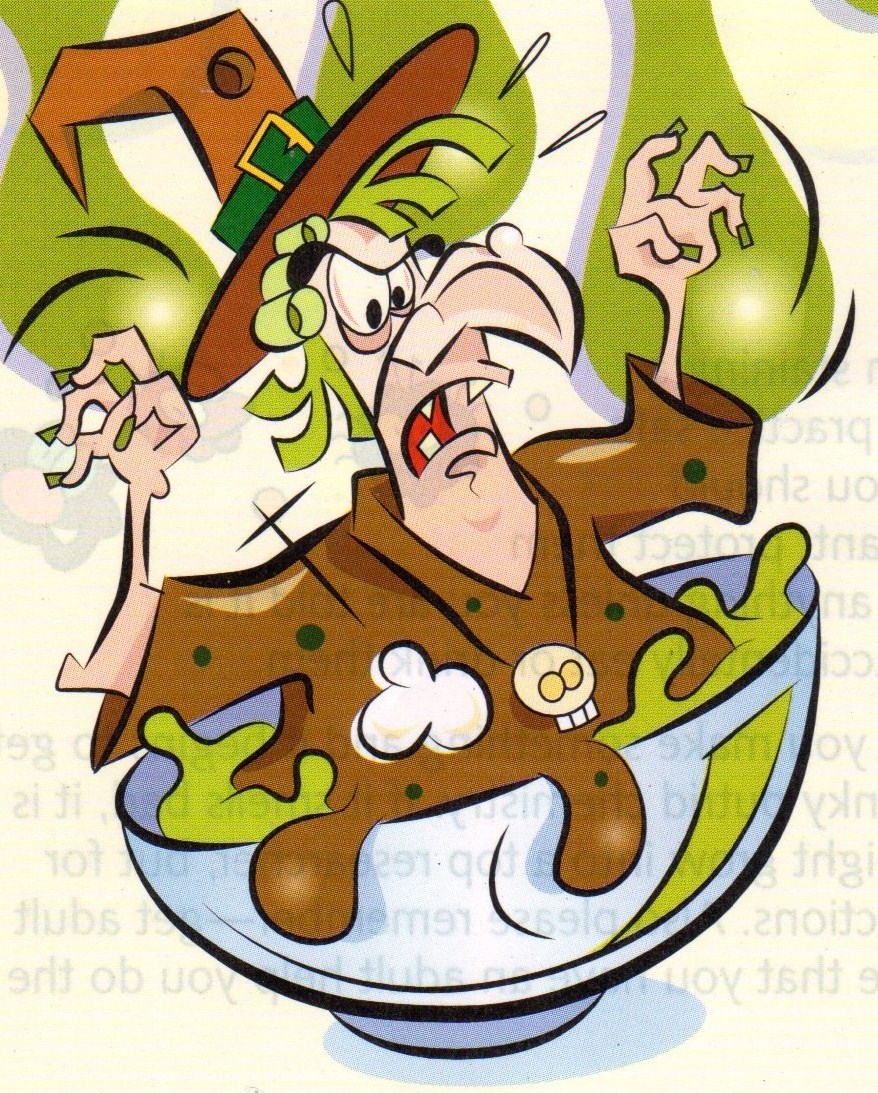
I’m Melting

A witch placed into acetone melts into sticky goo. The goo can be molded into different shapes before it hardens.

What you’ll need
foam cup
pen
goggles
rubber gloves
acetone (nail polish remover)
glass or metal bowl

1, Draw a picture of a wicked witch on an upside-down foam cup. Put on the goggles and rubber gloves.
Pour acetone into the bowl so it is about Vi inch deep.
3,  Put the witch into the acetone, feet first. Watch as the witch melts, just like the wicked witch in The Wizard of Oz! As you watch, say in your best witch voice, “I’m melting, I’m melting.”
4,  When the witch has totally melted, reach into the acetone and pull out the goo. Mold it into any shape—when it dries you will have a statue.

Safety
Adult supervision is needed for this project. Protect your eyes from the acetone by wearing goggles and your hands by wearing rubber gloves. Don’t pour the acetone into a plastic bowl because it could damage the bowl. Do this activity in an area with good air circulation.

What Happened?
Similar to salt dissolving in water, polystyrene foam dissolves in acetone. The foam in the cup holds millions of tiny pockets of air. This makes the cup a great insulator, helping to keep your hot chocolate warm on cold days. When the foam dissolves in the acetone, the air is released, and a sticky goo results. When the foam goo hardens, it doesn’t have air pockets anymore.

Fun Fact
Styrofoam is made from a chemical called polystyrene. The Dow Chemical Company invented it in the 1940s. Polystyrene beads are heated and air is blown in to create air bubbles in the foam. It is used for cups, home insulation, packing material, and flotation devices.