Choosing the Right Plan for Your Dream Home

Whether you are shopping for “The One,” you are building a new home from the ground up, or you are remodeling the home you already cherish, the decisions you make along the way can both be intimidating and highly rewarding. It is natural to feel overwhelmed when you wonder about how to logistically turn your dreams into reality, whether that reality will be as good as it was in theory, your budget, your timeline, or anything else. To help start you off right, here are a few key thoughts to help guide your next steps.

1.  Practical Considerations

Before you design your live-in masterpiece, make sure it is compatible with your lifestyle. The absolute last thing you want is to build your dream home only to find out it doesn’t suit your needs. 

The Ins and Outs of the Home

Ultimately, your home needs to be livable. For example, if you are looking to expand your house for more rooms for a growing family or for more overnight hosting for guests, do your goals to add rooms accommodate adding extra people, with comfortable space, adequate privacy, and enough bathrooms? If you’re planning for a multigenerational home, are you considering safety, accessibility, and versatility with your family’s changing needs?

Similarly, when you consider your house’s exterior, consider the type of materials used, including choices in facades that are suitable to the climate you live in. After all, if you live in an area that is prone to hurricanes, it would be best to factor in durability for extreme storms into your choice of materials such as paneling and tiles before you get blown away by an idea that will, too.

Design Code and Permitting

Before you pull out the blue tape, make sure that you’ve gone through the red tape. While working with licensed and bonded teams will help with quality control and legality, it is helpful to first make sure that what you are considering is feasible. For example, many municipalities require additional permits for Accessory Dwelling Units; additionally, understanding that expanding your home will require changes to your electrical wiring and installing extra pipes, which could lead to additional inspections and fees for hook-ups to water and sewage. On the other hand, your plans may qualify for tax breaks and other federal or local incentives! Planning for these contingencies can help spare financial and legal heartache, and help you anticipate delays in the timeline.
2.  External Influence: Upping your Curbside Appeal

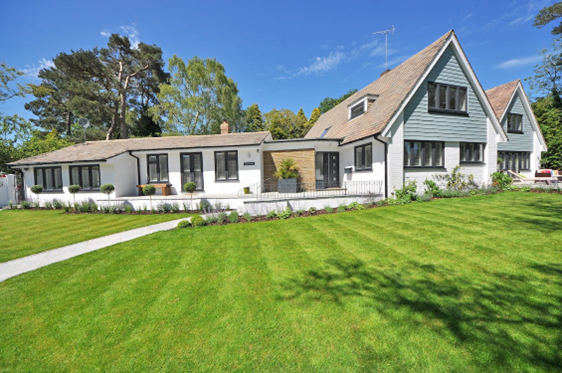
There are many great reasons to invest in exterior architecture and home exterior makeovers. Not only is your home’s outside the first impression you make to yourself and others, but putting the extra effort into the outside of your house can definitely boost your home’s value! Alongside practicalities like maintenance and, if you are or will be in a planned community, HOA restrictions, consider your personal aesthetic: do you want quirky and playful? Timeless and elegant? Hoping to accentuate a cultural tradition, such as a classic Southwestern abode or a Scandinavian seaside town? Designing with the front end in mind can help you also consider which parts of your design matter most. From there, you can make more empowered decisions on who to contact in terms of contractors, specialists, and/or agents.

3.  Insider Information: Your Interior Design Mind

While curb appeal is important, your living room’s spaciousness, kitchen surfaces, and staircases matter as well! Consider, for example, that you already have an idea for your ideal amount of natural light, both for your own personal tastes as well as ways to add eco-consciousness into your enhancements. Even more, for kitchens, laundry rooms, hobby rooms, and bathrooms alike, consider which practical elements you want to make the focal point, such as a countertop that is a conversation starter, or a porcelain sink that sets the tone for the room.

Whether you are designing the whole house, or looking to modernize one room, once again, start with a theme or favorite piece of furniture you want to design around. 

Start Building Your Team!

Once you are ready to hammer away, make sure that when you are collecting your bids, you are also looking for compatibility with the folks who will help you achieve your housing dream. After all, whether you are working with a real estate agent, or you are working with an architect, making sure that your people are also ready to execute your vision is at the front and center of everything you do. While budget and reading quality reviews will always matter, make sure that you also feel comfortable with the people you are working with. So, here’s to happy dreaming and even happier doings!


Tips From Pros: Choosing The Right Awning For Your Home

Source: unsplash.com

Providing shade for your backyard or front porch is one of the most important things during summer heats and there are several ways to do so. Planting a tree is the most cost-effective, some would even say the most elegant solution, however, it could take 15 to 20 years for a tree to fully matures and even then, it will cause a no small amount of additional maintenance on your property. As an alternative, some people decide to go with expensive wooden constructions or simple, cheap and inefficient method of using parasols. As a compromise, more and more people are turning towards the idea of awnings. Still, making a choice of the right awning for your home is not an easy one to make.

The location of the awning:

The first thing you need to consider when getting an awning is the location that it is about to take. Two most notable spots for an awning are just above the window or over your patio. The benefits of the awning in the first location are the fact that it protects the room from the direct sunlight, therefore resulting in a significant heat reduction.

Source: unsplash.com

During the summer, this helps reduce the amount of energy spent by your AC unit in order to cool down the room. On the other hand, during the winter, you might want to get as much daylight as possible, which is why the above-window awning should, almost always, be a retractable one.

As for the awning above the patio, in a situation where you have a wooden outdoor furniture, having this protection from direct sun ray exposure may protect it in the long run. In the above-discussed winter scenario, however, it is always advised to move your outdoor furniture somewhere else.

The choice of the material:

The next major choice you will have in front of you is the one of material. Apart from determining the appearance of your awning, this choice also determines the maintenance and durability of the awning in question. When it comes to the appearance, this is not a choice that can be made standalone. You need to take into consideration the layout of your home, the façade on its exterior as well as the patio it hangs above.

Source: burst.shopify.com

As far as the popular choices go, cotton, canvas, mesh and acrylic are the most popular choices. One last thing that the choice of the material determines is the price of the awning, while those determined can always get an appropriate solution from their local budget awnings Sydney retailers.

The shape and style:

While awnings are getting more and more popular solution for providing shade and covers in households, traditionally, they are most commonly used in front of stores or boutiques. This diversification of use for private households and businesses of various kinds has led to the situation where there are so many different shapes and styles of awnings. Rounded entrance canopy or gabled entrance canopy are most commonly used in hotels, traditional valances and quarter rounds is commonly used in front of stores. As for households, lateral arm or concave are styles that are used in most situations.

To retract or not to retract:

In the first section of this piece, we already went to length to address the advantages of retractable awnings, however, a lot of people prefer to go with fixed designs. Most common reasons for this are the fact that they are easier to install and much less likely to malfunction.

Source: unsplash.com

No matter how quality the installation process was, a retractable awning still functions with a help of a specific mechanism. Now, this mechanism consists of numerous moving parts, each of which might malfunction at one point. In this situation, you probably won’t be able to immediately fix a problem but would have to look for a professional aid. In other words, while retractable awning is clearly superior in many aspects, the ease of maintenance is clearly not one of them.

Situational variables:

Finally, in some situations, it may not be so easy to make the right choice seeing as how there may be a number of situational variables one needs to take into consideration. For instance, you may, or may not, need some side panels or an awning that stands at a certain unorthodox angle. Furthermore, there may be a series of obstacles like tree branches you might need to either prune or work around. In any case, each of these variations will make the price of the installation a tad more expensive.

Source: unsplash.com

At the end of the day, making the choice of the right awning for your home can be incredibly difficult, yet, there is one thing you must always take into consideration – it isn’t something you’re supposed to again for quite a long time. You see, this is one of those choices that will stick with you for years and decades afterward, which is why you need to be extra cautious while making it.