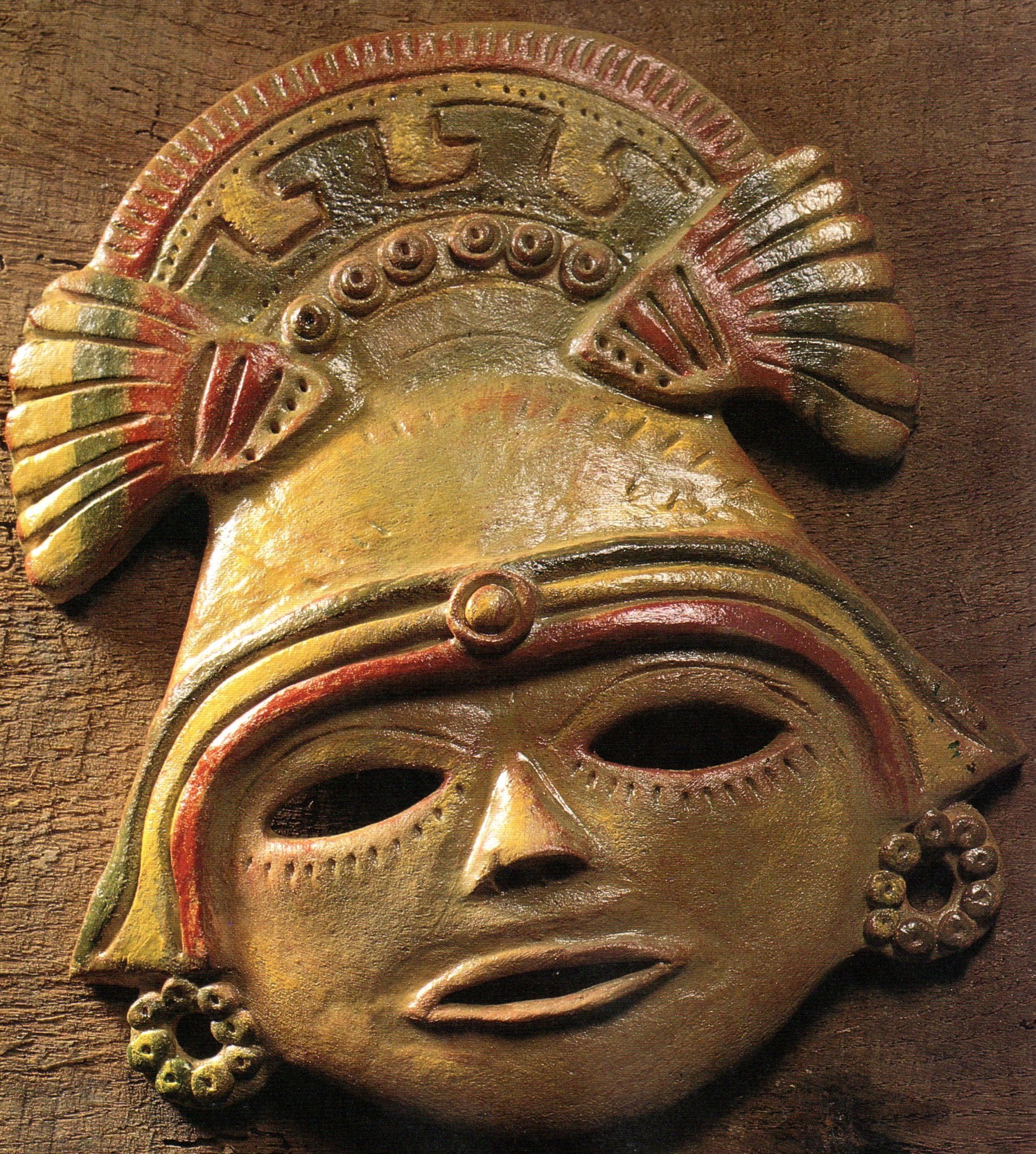
Bread Dough Aztec Mask

A stunning wall decoration created by molding and layering simple template
shapes combined with surface texturing techniques. The earthy yellow, red
and greens blend do well together to produce a strikingly authentic effect

YOU   WILL   NEED
1 batch salt dough
Roiling pin
Flour
Pastry board
Tracing paper
Pencil
Plain paper
Scissors
Small knife
5-inch diameter saucer to use as a mold
Plastic food wrap
Modeling tools
Wooden skewer
Fine srade sandpaper
Paintbrushes
Acrylic paints
synthetic sponge (optional)
Satin polyurethane varnish

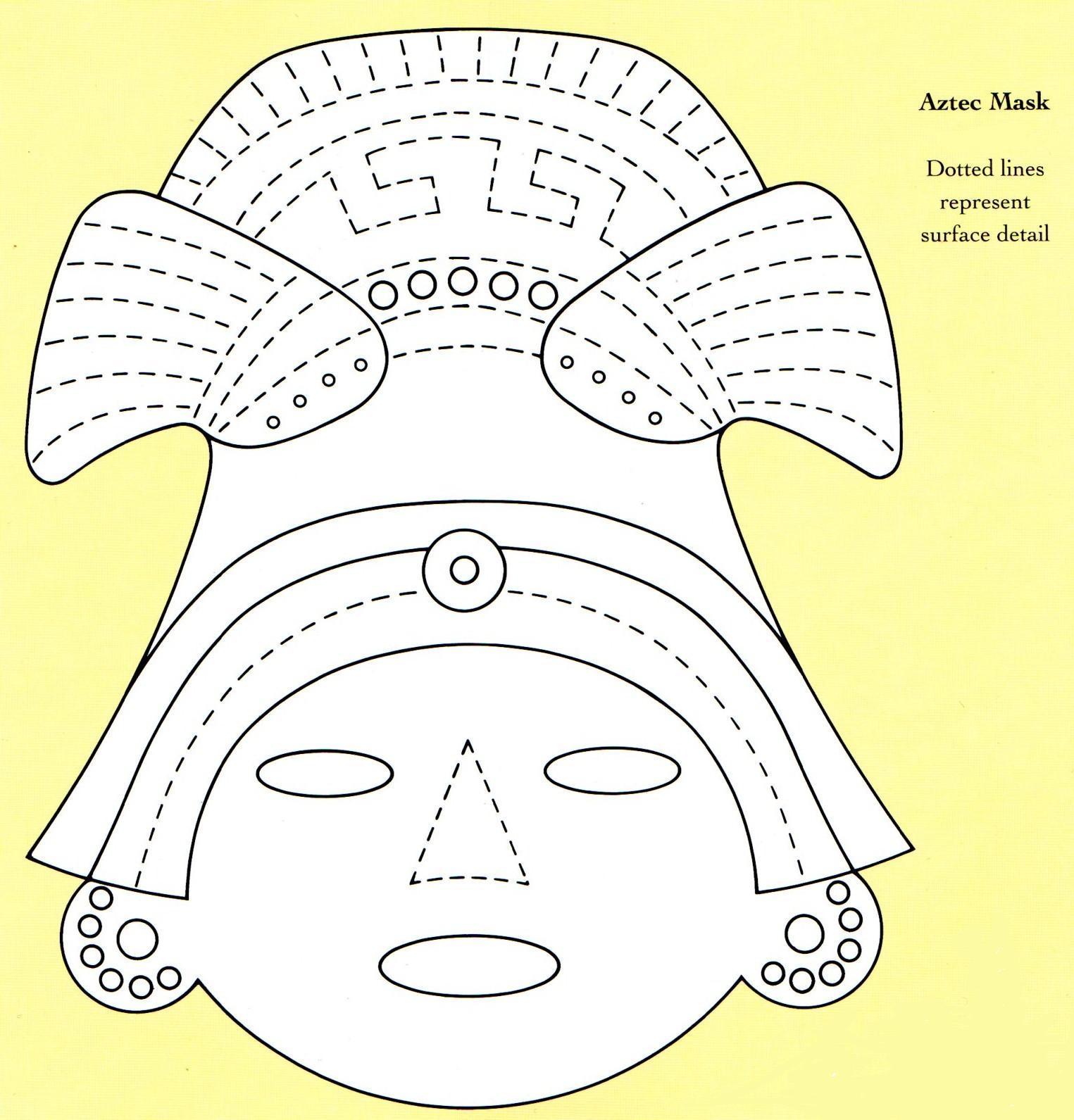
~ Roll out the dough to a thickness of  1/4  inch on a lightly floured pastry board. Trace off the basic template, and then trace off the other template details following the solid lines (the dotted lines represent surface details). Cut out the templates in plain paper and place on the rolled-out dough. Cut around each shape, using a small knife, removing the eye and mouth sections. Remove the excess dough.

~  Cover the convex side of the saucer with plastic food wrap and lay it on the pastry board. Carefully lift the main mask template and place it over the mold. The saucer should fit under the face part of the mask and the head-dress should lie flat on the board. Moisten the entire surface of the dough with water and carefully lay the other cutout shapes in position.

~  Use modeling tools or a wooden skewer to make the surface decorations, referring to the dotted lines on the template and to the photograph as a guide. Use a moistened modeling tool to smooth out the joins. The raised details on the forehead and earrings are made from small balls of dough squashed to make a flatter shape and then pierced with the blunt end of a skewer. For the nose, model a small ball of dough into a pyramid shape and press it carefully into position, smoothing out the joins with a moistened modeling tool. Form the nostrils, using a pointed modeling tool.

~  Transfer the mask to the microwave turntable plate and bake on low for 20 minutes + 20 minutes, medium low for 20 minutes, and medium for 10 minutes + 10 minutes. Remove it from the microwave oven and leave to cool. Do not attempt to remove the mold while the dough is still warm as this may cause warping and damage. Gently prize the dough mask away from the mold and, using sandpaper, smooth off any rough edges.

~ Apply two coats of beige acrylic paint to both sides of the mask to act as a sealant and bottom coat. Apply the other decorative colors, using the photograph as a guide. Use a dry brush or a sponge to achieve the subtle effects.

~  When the decorative paintwork is dry. apply three coats of varnish, Leaving each coat to dry before applying the next.

I’m Melting

A witch placed into acetone melts into sticky goo. The goo can be molded into different shapes before it hardens.

What you’ll need
foam cup
pen
goggles
rubber gloves
acetone (nail polish remover)
glass or metal bowl

1, Draw a picture of a wicked witch on an upside-down foam cup. Put on the goggles and rubber gloves.
Pour acetone into the bowl so it is about Vi inch deep.
3,  Put the witch into the acetone, feet first. Watch as the witch melts, just like the wicked witch in The Wizard of Oz! As you watch, say in your best witch voice, “I’m melting, I’m melting.”
4,  When the witch has totally melted, reach into the acetone and pull out the goo. Mold it into any shape—when it dries you will have a statue.

Safety
Adult supervision is needed for this project. Protect your eyes from the acetone by wearing goggles and your hands by wearing rubber gloves. Don’t pour the acetone into a plastic bowl because it could damage the bowl. Do this activity in an area with good air circulation.

What Happened?
Similar to salt dissolving in water, polystyrene foam dissolves in acetone. The foam in the cup holds millions of tiny pockets of air. This makes the cup a great insulator, helping to keep your hot chocolate warm on cold days. When the foam dissolves in the acetone, the air is released, and a sticky goo results. When the foam goo hardens, it doesn’t have air pockets anymore.

Fun Fact
Styrofoam is made from a chemical called polystyrene. The Dow Chemical Company invented it in the 1940s. Polystyrene beads are heated and air is blown in to create air bubbles in the foam. It is used for cups, home insulation, packing material, and flotation devices.

Fall Pear Salad

Fall Pear Salad

6   slices (about 14 Ib.) bacon
3   large firm-ripe red pears (about mib. total)
3   tablespoons lemon juice
1   package (10 oz.) washed fresh spinach (or I’/z Ib. spinach, stems and wilted leaves discarded), rinsed and crisped
1/2   pound mushrooms, rinsed and thinly sliced

Ginger dressing (recipe follows) In a  10- to 12-inch frying pan over medium-high   heat,   cook  bacon   until brown and crisp, turning often. Drain on towels. When cool, crumble.

Core pears and cut each into 16 wedges; mix fruit with lemon juice.

On a platter or 8 salad plates, ar­range spinach and mushrooms; top with pear slices and juice. Moisten with dressing; top with bacon. Serves 8.

Ginger dressing. Mix !/2 cup minced crystallized ginger, !4 cup each extra-virgin olive oil and red wine vinegar, and !/2 teaspoon pepper.

Per serving: 201 cal. (43 percent from fat); 3.2gprotein; 9.5 g fat (1.7 g sat); 29 g carbo.; 103 mg sodium; 3.4 mg chol.

Cream Cheese Mincemeat Cookies

Cream Cheese Mincemeat Cookies

1   cup  butter or margarine
1   large package (8 oz.) cream cheese
2   cups powdered sugar
About 3 cups all-purpose flour
3/4   cup prepared mincemeat
1  teaspoon grated lemon peel

In a food processor or with a mixer, whirl or beat butter, cream cheese, and ‘/2 cup sugar until smoothly blended. Thoroughly mix in 3 cups flour. Cover and chill dough until firm enough to handle, about 1 hour.

On a floured board, roll half the dough (keep remainder cold) Vs inch thick. Cut into 21/2-inch rounds with a floured cutter; place rounds slightly
apart on 2 ungreased 12- by 15-inch baking sheets. Reroll scraps and cut.

Combine mincemeat and peel; drop Vi teaspoon of mixture in center of each round. Fold each round over filling and press edges to seal.

Bake in a 375° oven until golden, 18 to 20 minutes; if using 1 oven, switch pan positions after 10 minutes.

Transfer a few hot cookies at a time to a paper or plastic bag with remaining sugar; shake to coat well. Cool on racks. Repeat to use remaining dough and filling. Serve, or store airtight up to 2 days or freeze. Makes about 5 dozen.

Per cookie: 87 cal. (47 percent from fat); 1 g protein; 4.5 g fat (2.8 g sat); 11 g carbo.; 53 mg sodium; 12 rag chol.

Hearty Baked Pork and Apple Stew

Hearty Baked Pork and Apple Stew

2   pounds pork shoulder (fat trimmed), cut into 2-inch chunks
1   large (3/4 Ib.) onion, chopped
1/2   cup water
1/2  cups regular-strength beef broth
1  cup apple butter
1   large (1/2 Ib.) bell pepper, stemmed, seeded, and sliced
1%   cups sliced carrots ‘/2   cup sliced celery
3   large (l’/2 Ib. total) Granny Smith apples, peeled, cored, and sliced

Place pork, onion, and water in an ovenproof 5- to 6-quart pan over high heat. Cover, bring to a boil, and boil for 10 minutes; stir occasionally. Uncover and stir often until moisture evaporates and pan drippings are dark brown, about 5 minutes.

Add broth and apple butter; stir to free browned drippings. Bake, covered, in a 350° oven for 30 minutes. Stir in bell pepper, carrots, celery, and apples. Continue to bake, covered, until meat is very tender when pierced, about 1 hour longer. Serves 6.

Per serving: 316 cal. (23 percent from fat); 20 g protein; 8.2 g fat (2.6 g sat.); 42 g carbo.; 97 mg sodium; 63 mg chol.