6 Roof Maintenance Tips Every Home Lover Should Know

Roof is what is standing between you and sunlight, rain, snow, feces of birds along with natural disasters. Since we have established that the roof is the most important part of any individual’s life, let me ask a question that is going to make a bunch of you very uncomfortable. What are you doing to keep it over your head? How often do you run maintenance sprees on it? 

Have you thought about it? Would you like to do something to make the big fat investment which is your roof safer? Your stars are aligning just in the right direction today, as I am going to teach you six simplest of the ways to keep your roof healthy for years. 

  1. Get Rid of Those Branches 

When the trees and branches are friends of the environment, the same cannot be said about the relationship of your roof and branches, according to the Roof Professionals

Simply put, branches are evil for your roof. You cannot allow trees to grow above or near your home’s roof at any cost. While it may sound bizarre, due to trees providing us the much needed oxygen factor, the truth is during any sort of natural disaster, even in the case of strong winds, branches tend to break. Breaking heavy branches may fall onto your roof, ending up damaging your roof. Maybe even breaking it. 

So, if after looking at a branch you wonder, “if it is too close?” Well, it might really be. The excellent solution will be to chop off the tree while planting a new one away from your roof, you can also go for trimming the tree every then and now, to get a secure roof.

  1. The Downspouts Cleaning 

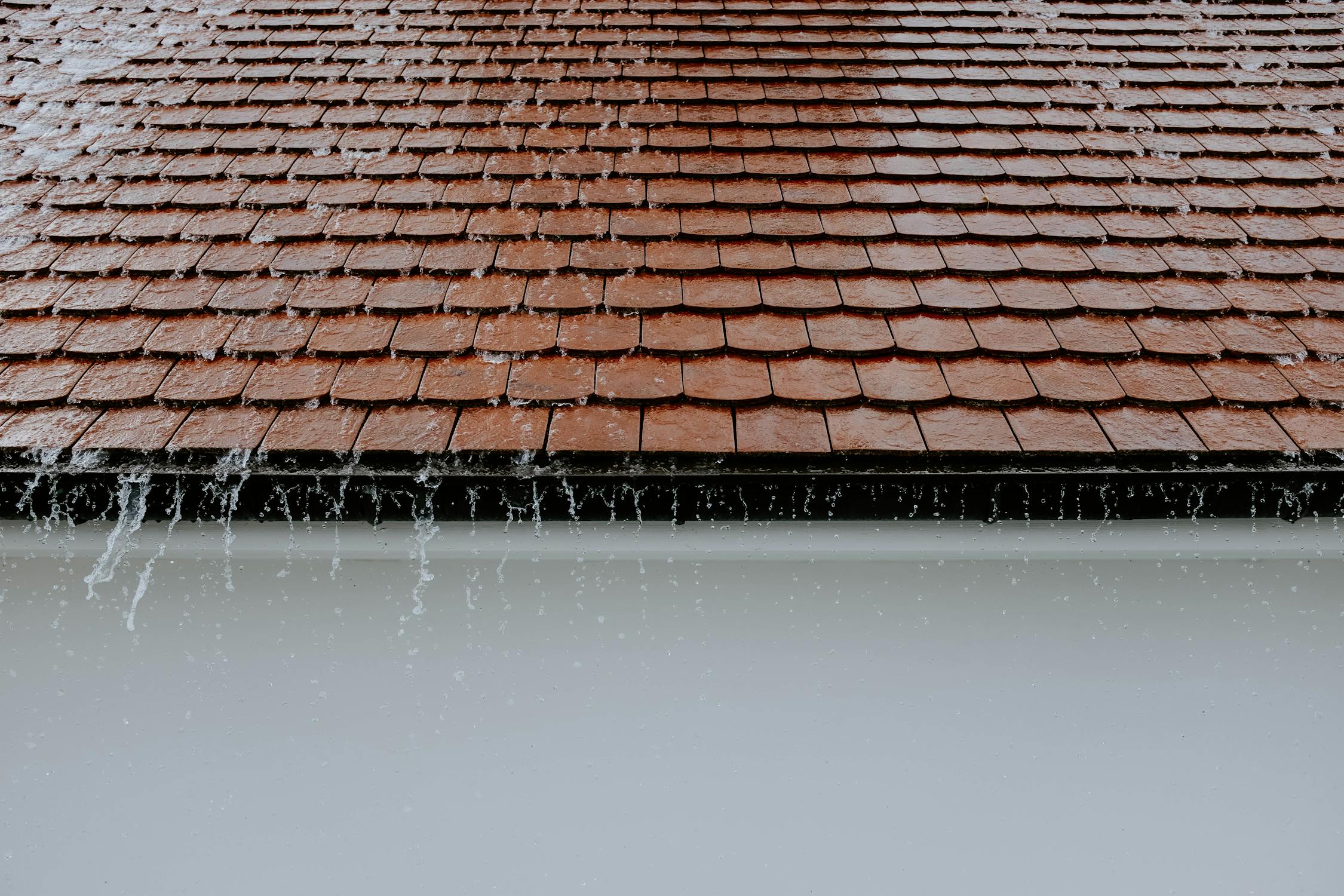
Downspouts or roof drains are often clogged after a heavy rain and for obvious reasons as well. After clearing gallons of water off your roof, some things like dirt, stones, leaves, et cetera will block it naturally. These vertical pipes that run down to the gutters are lifelines of your roof. 

They evacuate the rainwater from your roof, not allowing it to accumulate on your roof and messing it up. So, if you ever run across a clogged downspout, just try adding screens into them. Mesh screens are just another shortcut to cleaner downspouts. 

Another downspout prevention is to keep in mind that there are many joints, connections, and elbows used in downspouts. You must keep all these connections in check as well for any leaks and cracks. 


Your best bet is to check the pipes when it is raining. Fix if there are any leaks in the pipe or it may collapse very soon. 

  1. Mingling With Shingles

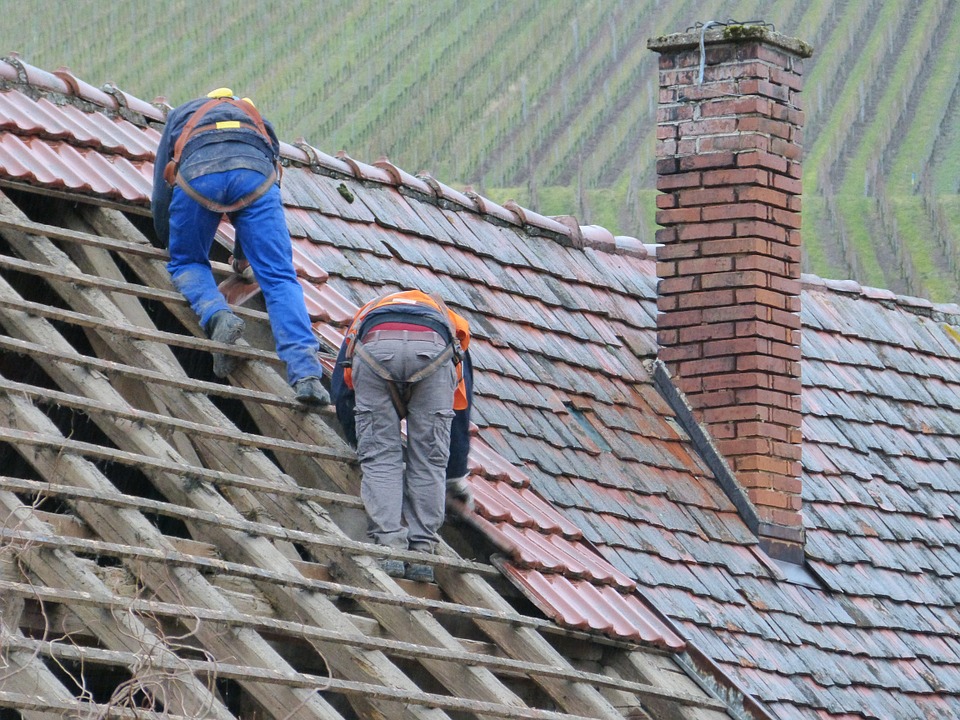
This one is the easiest one on the list so far. As a homeowner you have to know how to check your roof shingles. It has to be a part of your weekend routine. Pay your roof a visit during the weekends and check for any broken or missing shingles. 

You should also pay attention to how your roof shingles look. If any area looks really streaky to you or you may find any cracked shingles, change them as soon as possible. Shingles can also be inspected from the ground. However, not all of them will be visible from down there, you eventually may have to go back up on the roof for a thorough inspection. 

  1. Look Out For the Signs Within the Home

When there is something wrong with your roof, your home will start spreading out the signs all over it. All you need to do is, look. Translate what your home is telling you about your roof’s condition. 

Look for molds or any big black spots on your ceiling. If there are black spots on your ceiling, there are good chances that somewhere on your roof, either water or moisture has accumulated. Both of them will ruin your home in no time. Better keep them under the check. 

Dipping water from the roof is also a huge red flag, that indicates that your roof has been cracked. Repair the roof without any delays in this scenario, you do not have much time. 

  1. Adopt a No Nest Policy 

It is your home, it is your roof, there cannot be a place for any bird or its family. Similar policy needs to be adapted for rodents as well. They can look cute but they are really the villains here. They will dig holes into your roof to make it their own home. 

You do not want holes in your roof do you? Good, chase them away whenever you notice any bird, squirrel or rat sitting on your roof for too long. 

Their presence under your roof is a bad sign and you should chase them out immediately when you notice their movement. Squirrels, as cute as they are, can and will chew onto your roof. Hence the no nest policy.  

There Can be Underlying Issues

There can be a lot of underlying issues, when it comes to roofs. You can add or replace attic insulation, can ensure proper ventilation in your home and there still can be issues. It is your most important part of the home we are talking about. 

With all the personal inspection, you should always get your roof checked by the professionals, every then and now. It is not about money, but about saving your life earnings and your family. A broken roof can end up hurting your family. 

So, even if you can, once every year, ask the pros to check your roof thoroughly for any dangerous business. 

Ending Note

So, these are six pro tips that are going to help you in protecting your home’s roof while extending its life. I am sure these tips will help you save a lot of money in repairs. You are going to eliminate the problem before it is even going to start. 

To end, while using any of these tips, always keep your security and your family’s as top priority. Whenever you are in doubt, it is safer to call the experts in, rather than doing a DIY on the roof. It is an important part of your life, take care of it with love. 

What You Need to Know Before You Go for Artificial Grass

A beautiful green lawn accentuates the beauty of the house. It is the pride of every homeowner. A lot of people do not spare any effort to make their lawn perfect. Sadly, everyone does not have the appropriate conditions to maintain a perfect lawn. 

Also, it is not something that is very simple to maintain. Having a beautiful green lawn in your yard looks nice but it takes a lot of time and effort to maintain it. So, if you know it is something you cannot handle, there is an alternative for you. 

Highly durable, beautiful, and easy to maintain, faux or artificial grass is an effective way to considerably reduce your hassle. It is used both indoors and outdoors. With the advent of production technology and the development in the types of material used, faux grass has successfully imitated natural grass with the perfect combination of the color and thickness of the fibers. It is a great solution for your lawn or terrace. 

So, in case you plan to get artificial grass for your house, here are some things you should know. 

Base and Drainage

Faux grass does not simply lay out on the floor like a rug. Generally, the ground is dug about 5 inches before it is laid out on the ground. After excavation, pipe drains are fitted that are designed specifically for your property to ensure that any water over the area is drained consistently and prevent any bacterial problems. 

A 2-3 inch of crushed rock and fine aggregate makes a thick base layer covering the drainage area. It is leveled to form a robust, water-permeable layer that is the foundation for the top grass layer. This combination of small and large rocks keeps faux grass stable. And not just that, it increases the life of the artificial grass and helps it remain composed during high foot traffic. 

Maintenance

While it is a lot less hassle to maintain faux grass than the real one, it does not mean that it is totally maintenance-free. Yes, you do not have to worry about weeding, mowing, or watering, but you cannot simply live your life ignoring its existence. 

You have to deal with a lot of things when it comes to artificial grass like stains if and when they occur. A spilled beverage is cumbersome but not a lot of trouble. The maintenance is not limited to spillage. Leaves can be a lot of trouble as well. If not taken care of, they can grind into the turf and in time can become really difficult to remove. Essentially, you need to work a little to ensure that your lawn or terrace looks great. 

Pricier But Cost-Effective

Faux grass does not come cheap. It costs about $10-14 per foot which when compared to about $0.50 per foot for sod seems quite expensive. In a nutshell, if you want to cover a 500 square foot yard, you will have to spend around $6000 and only about $200 for real grass. While it seems like a lot right now, down the road it will not be so much. 

You will be able to recoup the investment over time. If you get sow grass, you will end up spending a huge amount of money over time on maintenance. You will save on fertilizers, lawn services, water, and in about 7-8 years you will even out. To put things into perspective, you are paying more upfront but then you won’t have to worry about any regular costly maintenance year after year. 

Environment-Friendly

It is absolutely normal to believe that fake grass will not be good for the environment when compared to natural grass. Well, this is not exactly true. In reality, the natural grass in your lawns isn’t as green as you tend to assure it is. To maintain natural grass, you use a lot of water and chemicals to ensure its proper care. And we all know that it is not exactly going green when you are using so much water and chemicals. 

And not just that, the growing interest in faux grass has led to huge investments in this sector. This has further led to investment in sustainable materials such as sand, coconut fiber, and cork. So, if you want to think about the environment, having a natural garden is not exactly the right foot forward. 

Conclusion

Once you’ve understood the pros and cons of getting artificial grass for your property, take note of the aforementioned points about faux grass that you must learn. While it is not a simple answer to choose between natural and fake grass. This depends on various factors like budget and requirements. Especially, if you are living in areas that have adverse climate conditions for your grass like an arid and hot state, it is only wise to give your outdoors a makeover with artificial grass. 

To put things into perspective, if you do not have time and energy to maintain your lawn, you should go for artificial grass. It will give your house the aesthetic appeal you are looking for without having to go through any hassle. While this is all good, it does not mean that real grass does not have any benefits. Having real grass in your yard is ofcourse a luxury. It is just that faux grass is much better for people who do not like to be at the end of regular maintenance. 

Ultimately, it is upon you to decide whether you want real grass or artificial grass. We hope the aforementioned points helped you decide better. Let us know your thoughts in the comment section below. 

Mixer Spillage Fix

I have a Kitchenaid mixture and use it all the time. I do have a splatter shield but when I am making a large recipe of something like butter cream there is bound to be a mess. Powdered sugar is always an obstacle to not get a cloud of it in the air even when you are careful. This is a simple solution that I saw and have used regularly. Such a cheap solution that can just be thrown away when I am done. Just take a piece of plastic cling and wrap it around the opening to the mixer. It keeps everything in the bowl and confined to that area. This also allows me to do other prep work while the mixer is beating something that has to take awhile.

Roof Leak Detection and Repair

Image Source: Pexels

If you suspect you’ve got a leak in your roof, it can be hard to find and fix. If left unattended for too long, it can cause a significant amount of damage and make it difficult to continue living in your home. Let’s take a look at what you as a homeowner can do to spot roof leaks and fix them… and when to call in the professionals.

Before we start, make sure you know the type of roof material that’s on your home and how long it lasts. This will help you determine whether repair work or replacement is the most sensible option.

It’s recommended to inspect your roof once a year, but no matter how recently you completed your last regular home inspection, always be sure to check your roof after any kind of storm. Thunderstorms, hail, and other major weather events can cause damage even if your area isn’t hit particularly hard. Even if your property looks like it survived the storm without any major damage, you should always look for signs of a leaky roof.

Signs of a Leaky Roof

  • Water stains on your ceiling – especially new ones that appear after a storm. Even small water spots are an early indication of a leak
  • Damp spots on the ceiling, around air vents, and fireplaces
  • Damp or moist paint or drywall around electrical outlets and light fixtures
  • Unexplained dripping sounds inside your home
  • Water stains are on the rafters in your attic or on the top floors of your home
  • Drips or moisture on the walls, particularly after a major thaw
  • Interior paint peeling or bubbling during a hard rain
  • Loose shingles around your property
  • Buckling or curling of your shingles
  • The roof has changed colors, especially if localized to a certain spot
  • Loose or exposed nails on the roof
  • Cracked or damaged flashing around roof vents
  • Damaged flashing or cracked sealants around the chimney
  • Clogged/Loose Gutters or downspouts
  • Moss or mold on exterior walls that appears to be growing

How to Check for Roof Leaks

Look at the parts of your roof that are higher than the stains on the inside and outside of your home. Look for holes and other visible damage to the roof from the outside.

Roof leaks aren’t limited to just areas around your plumbing, vents, and chimneys, so make sure you look at your entire roof, not just the areas close to those projections.

Next, if it is possible, access your attic. Use a flashlight and your smartphone camera to find evidence of a leaky roof, such as:

  • Water stains
  • Mold
  • Dark spots
  • Any other inconsistencies

It’s best to look during the day when things are bright. The brighter the flashlight you have, the better. Travel upward from the source of the leak, paying attention to any dampness you see along the framing and underside of the roof. Look for marks and discolorations that are a result of moisture – especially if your local weather has been dry for an extended period.

Turn off the lights and look for pinholes where you can see daylight shining through. Closely inspect those areas. While inspecting your roof from the inside, never stand on insulation or the top part of the ceiling. Remain on the secure framing.

Finding the Source of the Leak

Chances are the water spots you see aren’t going to be close to the leak itself. Water travels downhill from the point where it enters your roof, so the source of the leak is likely much higher on the plane of the roof.

As you look for the source, think like water. It will typically come through broken shingles, corroded or poorly sealed flashing, vents, skylights, and areas where nails are loose or missing.

Sometimes, even with the best maintenance and inspection, you’ll find a roof leak that needs immediate repair. Or, you may find evidence of a leak but be unable to locate the source yourself. And if it’s outside normal business hours, it can be hard to find someone to come fix it for you. That’s why 24-hour emergency roof repair services are available.

If you have vaulted ceilings or otherwise lack access to your attic, you may need to go up on the roof yourself. Depending on your level of comfort and ability, you may not want to do this yourself. It’s perfectly acceptable to call in professional help.

Author Bio:

Karstine Sanchez is a freelance writer and content marketer with Allstate Roofing. She enjoys writing home decor, maintenance, and improvement.

Buying a Home as a Single Person: What You Need to Know

Image Source: Pexels

Buying a Home as a Single Person: What You Need to Know

Buying a home used to be associated with getting married or starting a family. But, that isn’t the case anymore. Marriage rates are declining in the U.S. and people are choosing to stay single longer. So, you certainly don’t have to be in a relationship to buy a home. Homeownership has long been a part of the American dream, whether you’re a couple or not.

You can obtain that dream on your own, and make a solid investment while you’re at it.

That being said, buying a home on your own can feel a bit intimidating, especially if you’re doing it for the first time. How do you know if you’re ready? What does the market look like? What should you know before you even make an offer?

Let’s cover a few things you should know before you buy a home as a single person. The more informed you are about the process and what to expect, the easier it will be. If you find that it’s the right option for you, you’ll be moving into a place of your own in no time.

Are You Ready to Own?

It’s not uncommon for single individuals to choose to rent over buying a house, and it has its benefits. You don’t have maintenance issues to worry about on your own, and you’re not “tied down” to one place. But, there are so many additional benefits to owning your own home that often outweigh the pros of renting. Some of those benefits include:

  • It’s a good long-term investment
  • You’ll build equity
  • Tax perks
  • More privacy
  • Greater stability

You can also put more into a home you buy, making upgrades that could increase its value if you ever decide to sell.

Once you’ve decided that you want to buy, your next question should be if you’re truly ready. Take a look at your financial situation. Crunch the numbers and be realistic about your budget. If buying a home is something you truly want, you might have to cut back elsewhere (including that morning coffee run for a $5 latte). In addition to thinning out your expenses, consider getting a roommate while you save up, or even moving back home with your parents for a few months, if possible.

In addition to knowing if you can afford it, it’s also important to know whether you can handle the everyday responsibilities of a home. If there are any maintenance issues, they fall on you. Emergency repairs? That’s on you, too. You can be as prepared as possible, and the unexpected can still occur at any time. Make sure you’re ready for that before you commit to anything.

Getting What You Need

You’re officially ready to start house hunting and eventually make an offer. But, do you have everything you need to get started? Even if you know your budget and how much you’re willing to spend, there are a few things you’ll need to move the process along:

  • A real estate agent
  • A lender
  • Insurance
  • A real estate lawyer

It’s also important to make sure you qualify for a loan. Having a good lender to work with will help, but you can figure things out ahead of time and make life easier on yourself. Conventional down payments on a home are 20%. If you’ve figured out your budget and don’t have that kind of money, don’t stress. You may qualify for an FHA loan if you have a decent credit score and you can verify that you’ve been consecutively employed over the last two years.

Getting organized before you start the process will make things less complicated for you. In the end, when you finally make an offer and finalize the buying process, you’ll be more prepared to deal with the pile of paperwork that follows because you’ve done so much leg work already.

Don’t Buy “Too Much House”

Some people say single people should look for homes that are attractive to married couples and families. Why? Well, you might decide to start one of your own someday. Beyond that, though, family-style homes are usually more desirable. You may be able to eventually sell your house for a profit.

But, a larger home may not be within your budget right now, and that’s okay. There are some risks to buying “too much house.” You won’t have much equity, your payment could be eating up too much of your income, and you might not be able to afford to keep up with general maintenance. If that’s the case, it’s unlikely the house will ever be in good enough shape to upsell anyway.

Buying a house you can afford is crucial. While staying within your current budget is smart, you can always choose to take on a side gig to earn extra money. You can earn money freelancing through sites like Upwork, Elance, or SimplyHired and work as much or as little as you want to bring in extra income every month. Freelancing has its risks, of course, since there’s no way to determine how much you’ll make. But, if you have a “dream home” in mind and are willing to work harder to afford it, a side hustle is a great way to do it.

Don’t let the concerns over buying a home for the first time consume you. It can be a lot of work, but it’s well worth it, in the end. Keep these ideas and tips in mind as you go through the process, and you can be confident in every step of the buying process.