7 Tea Recipes You Haven’t Made Yet

With tea coming in so many varieties, it’s a good chance you haven’t tried all of them. There are probably plenty you’ve never even heard of – that’s until now. Expand your options because we have seven tea recipes you haven’t made yet. You’re sure to find a new favorite on this list.

Get Spicy with Ginger Cardamom Chai

One of the best ways to warm up is with a cup of spicy ginger cardamom chai. Originally popular in India, chai has now made its way into homes worldwide. The delicious creamy tea is a blend of black tea leaves, milk, water, and, of course, spices.

Peel and deseed two cardamom and crush them with a mortar and pestle. Add freshly grated ginger and the cardamom to heated water. Add milk and sugar, and boil. Pour in loose leaf black tea and simmer for a minute or longer. Finally, strain your tea into a cup with a strainer.

Get Refreshed with Vietnamese Lime Tea

Vietnamese lime tea is served ice cold, making it refreshing on a hot day. Tea drinkers love its balance of flavors: sweet, bright, bitter, and crisp. This simple drink only involves green tea, hot water, honey, and lime juice and can be whipped up in minutes.

Steep green tea bags for about three minutes in hot water before removing. Add your desired amount of honey and fresh lime juice for more intensity. Stir the tea and place in the fridge for 10 minutes to cool before enjoying.

Get Fit with Coconut Green Tea

Coconut green tea is a fantastic option for a healthy drink. You get layered notes of sweet, creamy coconut and floral earthiness from green tea. This is one of the easiest recipes since you can purchase herbal tea botanicals with perfectly shredded coconut included.

For an extra boost of nutrition, add pure coconut oil. It is well-regarded for adding healthy fats to your drink. Simply steep green tea in hot water before adding it to a small blender with one tablespoon of coconut oil. Blend, pour into your mug, and enjoy.

Get Foggy with London Fog Tea Latte

London Fog Tea Latte takes Earl Grey to the next level because it’s sweet, creamy, and delicious. By skipping the coffeehouse, you can make it healthier with fresh ingredients. It takes only a few ingredients, including liquid honey, milk, and vanilla bean.

Add Earl Grey tea bags to boiling water and steep for 5-7 minutes. Cut open the vanilla bean, scrape out the seeds, and set aside. Take the tea bags out of the water and stir the liquid honey (or any honey substitute) until fully dissolved. Add whole vanilla bean pod, the seeds, and your preferred milk to the tea. Stir and simmer before straining tea into a mug. Add vanilla sugar as a garnish if desired.

Get Caffeine-Free with Rooibos Latte

Fun to say and drink, rooibos tea is having a moment as more people turn to it for its herbaceous flavors and love that it is caffeine-free. Easy to make, boil water, remove from the heat, and steep the rooibos tea. Add the desired amount of honey and vanilla extract.

To make it a latte, use a milk frother with your milk of choice. Pour the tea into a mug, top with the froth, and sprinkle cinnamon. Not only will you love drinking your rooibos latte, but you can use the old tea bag as an effective acne treatment!

Get Blue with Butterfly Pea Flower Tea Latte

Another interesting recipe is the blue butterfly pea flower tea latte. A lovely blue color, it adds pizazz, and best yet, butterfly pea flower powder is a caffeine-free botanical tea blend. The final drink has a sweet yet mild earthy taste and is known to boost your mood.

Combine butterfly pea flower powder, ginger, cardamom, and vanilla sugar into a jar. Add two teaspoons of the powder mix and a tablespoon of boiling water in a cup and dissolve. Add one cup of your preferred hot milk to the cup and stir.

Get Floral with Lavender Iced Tea

Lavender iced tea is the perfect way to unwind. You can use any type of tea, from black to lavender mint for extra lavender flavor. It only takes a few steps. Brew tea until you reach the desired strength. Meanwhile, make a lavender simple syrup by adding sugar and water to a small pan and cooking over medium heat. Add culinary lavender, and let simmer for up to three minutes.

Allow the syrup to cool. Next, add the syrup, fresh lemon juice, and brewed tea in a pitcher. Place sliced lemon, ice, and fresh lavender into the pitcher. Pour tea over ice in a glass for a refreshing drink.

The best thing about these recipes is you can customize them to make them your own, so don’t be afraid to experiment. Happy tea drinking!

Image 1: https://unsplash.com/photos/white-and-brown-ceramic-mug-qEcWgrTG578

Image 2: https://unsplash.com/photos/white-ceramic-mug-with-brown-liquid-inside-RKDP3D-6G5E

Tips On How To Avoid Overspending On Your Groceries

It gets hard to stay on budget while grocery shopping, especially when deals are shoved in your face through every aisle you walk in. When you see the big words spelling “Sale” on a product you do not even need; the temptation becomes hard to resist.

Do not fret; the temptations can be controlled, and you will be able to follow your grocery list. Here are some tips or advice for you to be mindful of on your next trip to the grocery store.

pexels.com / @Matheus Cenali

Make a Shopping List

One may think making a shopping list is a waste of time, but it helps you a lot. A grocery list should be filled with items that you are sure you need. Going to the store without a list to refer to can be tricky as it is that easy to grab something that you do not need randomly.

By writing down and sticking to the grocery list, you will be able to save money and only reach for the items that you need. It is also important to write down the items you can use more than once a week. For example, having a type of vegetable that you can make into more than one dish.

Reverse Shopping List

Similar to the shopping list, the reverse shopping list is also helpful to ensure you do not spend too much. The list consists of things you may have in your pantry. Then you check your pantry before leaving, checking off the items you already have. So, the list now only consists of items you do not have.

There are a lot of instances where we end up buying something we already have back home. This happens because we usually do not bother to check our pantry or kitchen before leaving. With the reverse shopping list that you can refer to, you will not be buying doubles.

pexels.com / @Anna Shvets

Go by Yourself

An easy tip to follow would be to go to the grocery store alone. This will help you not to have too many in your shopping cart. This is because, when you shop with your significant other or your kids, you are more likely to be influenced into buying stuff that you do not need.

Furthermore, going in a group will also make you look at your shopping list less, making you buy unnecessary items. Moreover, you will not be the only one reaching out to grab items, making it hard not to overlook unneeded items.

Online Grocery Shopping

If you are not too keen on leaving the house or going on your own, you could always try grocery online as easy as accessing from your HP laptop. Grocery shopping has become much easier these days and has become available online.

Online grocery shopping is convenient as you can easily browse through the catalog whenever you want to. Moreover, you will not have to wait for the stores to open or wait for the staff to restock the aisles. Not only that but you will also save time and energy by not leaving your house.

Adding to this, by doing your groceries online, you can even compare prices without the hassle of the physical store brings. All you need to do is download the apps from Android phone and you would be able to do everything you usually do in a physical store but easier.

pexels.com / @Anna Tarazevich

Get Discounted Items

Grocery stores usually have deals, sales, and discounted items to help you save money. From products like milk to candies and drinks, there is surely a discount for the item you are looking for.

You should consider purchasing products on sale, especially if the price is normally high. Sale items are frequently clearly displayed throughout the store, such as at the entrance and end of aisles. In addition, sale items are marked with banners and signs to make them easy to find.

Prepared Foods Aisle

Next, you should try not to go to the prepared food aisle where single servings of food are made ready to be bought and eaten. This is because the cost of prepared foods is generally higher than the cost of you making the same food on your own.

The prepared foods typically include dressings, toppings, and even cutlery in the food container. So, you are not only paying for the food but also other inclusions. So, to save money, you should opt for making the food yourself instead of buying a ready-to-eat version of it.

Bring Your Own Grocery Bag

This may be a trivial thing, but it could also be a game-changer. Some stores may charge you for grocery bags, adding to your existing bill and making you pay more. If you decide not to pay extra for the grocery bag, you will have to use your hands to bring the items back home. 

To avoid this, you could simply just bring your grocery bag. Not only is it sturdier than the usual plastic bags the store gives you, but it is also more eco-friendly. With this, you are not only saving money but the earth as well.


How to Go Grocery Shopping Sustainably

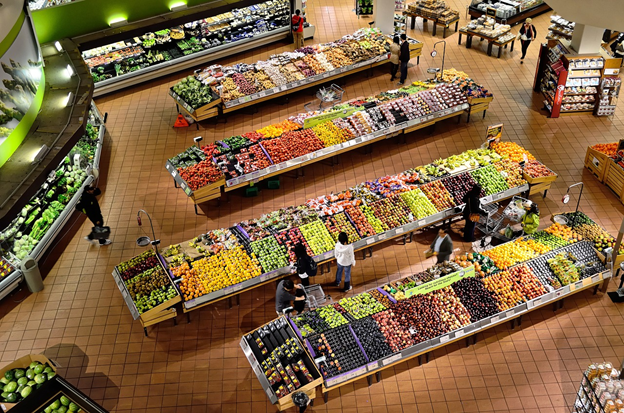
https://pixabay.com/photos/supermarket-stalls-coolers-market

Going zero-waste might be the right thing to do for the planet, but it is certainly not the easiest to accomplish. Almost every grocery store you visit will have food packaged and stored behind layers and layers of plastic. Most foods are produced with high carbon emissions. It costs both your wallet and the planet way more than it should.

Practicing sustainable measures while grocery shopping is the only solution to this lifestyle problem that impacts Earth as much as it impacts us. To make your journey towards a sustainable life more accessible, there are 8 tips you can follow. Let’s dive in.

1. Bring Your Own Reusable Bags

Statistics suggest that nearly 40% of all the plastic produced every year is single-use plastic used for packaging. This kind of plastic is really difficult to recycle as it gets tangled in the machinery and interferes with robotic sensors used in the recycling process. Their obvious fate is ending up in landfills and water bodies where they have detrimental impacts on the environment.

Each time you purchase something that uses single-use plastics, you contribute to the growing plastic crisis. Bringing your own grocery shopping bags really pays off in this scenario. If you resolve to bring your own reusable bags and containers, you can say “no” to single-use plastic every time while grocery shopping. With a few storage and organization tips, incorporating reusable bags and containers into your life can be easy as pie.

2. Buy Loose Produce

While we’re on the topic of plastic packaging, you should know that using reusable bags only works when you buy loose produce. Putting a container of packaged vegetables or meat in your tote bag defeats the purpose. You are still creating significant plastic waste. To prevent this, visit stores that contain fresh, unwrapped foods.

Buying loose produce helps you control the amount you want to buy and save money in the process. In organic stores, you will find a wide range of loose products — fruits, vegetables, spices, pasta, cereals, rice, biscuits, and much more! In a supermarket, however, most of these products will be wrapped in plastic.

3. Steer Clear of Processed Food

How much do you pay for packets of chips, biscuits, or cookies per month? $20? $50? More? Try spending that amount on buying whole, raw ingredients. You’ll easily make twice as much food that’s thrice as healthy!

It’s called “shopping the perimeter”. When you shop the perimeter, you buy your cheese and pasta separately instead of buying a box of microwaveable mac and cheese. Better yet, make your own pasta from scratch!

Processed food comes with a lot of drawbacks: huge carbon footprint, higher costs, loss of nutrients, unhealthy additives, and excessive packaging, just to name a few. These impair your health, tarnish the environment, and snowball your grocery bill. You can live a much healthier life by sacrificing snacks and easy food options for more healthy recipes.

4. Opt for a Plant-Based Diet

Does making your own pasta sound like an odious task to you? Were you thinking of veering towards meat more? If so, think twice! Eating a predominantly animal-based diet can be even more detrimental than eating overly processed food.

Plant-based foods have a smaller carbon-footprint. Most animal-based foods are way more resource intensive and harmful for the environment. A study found that beef production requires 20 times more land and emits 20 times more greenhouse gas than common plant-based protein sources such as beans, peas and lentils. Chicken and pork require thrice the amount of resources as plants.

5. Read the Labels

Labels can reveal so many secrets about how the food is produced and the impact it has on the environment. Not all processed food and meat out there hurts the planet. Some of it is responsibly and consciously produced. Certain food labels can certify that. Lookout for trustable certifications like Fair Trade, American Grassfed, Organic, Bird Friendly, Animal Welfare Approved, Safe Catch, BPI Compostable, Non-GMO, and so on. Eat responsibly!

6. Shop Local and In-Season

Food can have a high emission tag if it is transported from somewhere far away or exported from another part of the world. This is often the case when we try to eat fruits or vegetables that are not in season. This means more energy consumption, higher carbon emission, and outrageous prices.

If you eat what is locally grown around you, you consume food with negligible carbon emissions and low prices. Shopping from your local farmers’ market is a great way to start.

7. Know Your Plastics

Sometimes, purchasing items with plastic packaging is unavoidable if you do not have any plastic-free alternatives at your local grocery stores. In such dire scenarios, check the plastic resin identification number. It’ll be a small code inside of a triangle. This symbol reveals which type of plastic is used to make a packaging material.

Always go for HDPE (high-density polyethylene) and PETE (polyethylene terephthalate) plastics since they are more easily recyclable than other kinds of plastic. Learn more about recycling and upcycling to keep yourself updated about ways you can repurpose plastic containers.

8. Always Carry a List and Never Go In Hungry

Going grocery shopping without a list is how you get confused. Going in hungry is how you lose focus and self-control. The result is buying a bunch of stuff you don’t need. Overbuying leads to food wastage. Annually, Americans waste 30-40% of the US food supply. You sure don’t want to contribute to this number.

Happy Shopping!

https://pixabay.com/photos/shop-supermarket-grocery-cart-4527402/

If you’re already living a pretty sustainable lifestyle, the above tips will only add to it. And if your next grocery trip is going to be your first attempt at being sustainable, following these tips will make for an effortless transition into this lifestyle. Either way, more power to you!


Author Bio:

Carolyn Mitchell is a freelance writer and content strategist with a passion for home décor. She can often be found re-painting and updating the furnishings in her home, and she is also a dedicated cat mom to two adorable kitties.


How To Go Grocery Shopping Sustainably

https://pixabay.com/photos/supermarket-stalls-coolers-market-949913/

Going zero-waste might be the right thing to do for the planet, but it is certainly not the easiest to accomplish. Almost every grocery store you visit will have food packaged and stored behind layers and layers of plastic. Most foods are produced with high carbon emissions. It costs both your wallet and the planet way more than it should.

Practicing sustainable measures while grocery shopping is the only solution to this lifestyle problem that impacts Earth as much as it impacts us. To make your journey towards a sustainable life more accessible, there are 8 tips you can follow. Let’s dive in.

1. Bring Your Own Reusable Bags

Statistics suggest that nearly 40% of all the plastic produced every year is single-use plastic used for packaging. This kind of plastic is really difficult to recycle as it gets tangled in the machinery and interferes with robotic sensors used in the recycling process. Their obvious fate is ending up in landfills and water bodies where they have detrimental impacts on the environment.

Each time you purchase something that uses single-use plastics, you contribute to the growing plastic crisis. Bringing your own grocery shopping bags really pays off in this scenario. If you resolve to bring your own reusable bags and containers, you can say “no” to single-use plastic every time while grocery shopping. With a few storage and organization tips, incorporating reusable bags and containers into your life can be easy as pie.

2. Buy Loose Produce

While we’re on the topic of plastic packaging, you should know that using reusable bags only works when you buy loose produce. Putting a container of packaged vegetables or meat in your tote bag defeats the purpose. You are still creating significant plastic waste. To prevent this, visit stores that contain fresh, unwrapped foods.

Buying loose produce helps you control the amount you want to buy and save money in the process. In organic stores, you will find a wide range of loose products — fruits, vegetables, spices, pasta, cereals, rice, biscuits, and much more! In a supermarket, however, most of these products will be wrapped in plastic.

3. Steer Clear of Processed Food

How much do you pay for packets of chips, biscuits, or cookies per month? $20? $50? More? Try spending that amount on buying whole, raw ingredients. You’ll easily make twice as much food that’s thrice as healthy!

It’s called “shopping the perimeter”. When you shop the perimeter, you buy your cheese and pasta separately instead of buying a box of microwaveable mac and cheese. Better yet, make your own pasta from scratch!

Processed food comes with a lot of drawbacks: huge carbon footprint, higher costs, loss of nutrients, unhealthy additives, and excessive packaging, just to name a few. These impair your health, tarnish the environment, and snowball your grocery bill. You can live a much healthier life by sacrificing snacks and easy food options for more healthy recipes.

4. Opt for a Plant-Based Diet

Does making your own pasta sound like an odious task to you? Were you thinking of veering towards meat more? If so, think twice! Eating a predominantly animal-based diet can be even more detrimental than eating overly processed food.

Plant-based foods have a smaller carbon-footprint. Most animal-based foods are way more resource intensive and harmful for the environment. A study found that beef production requires 20 times more land and emits 20 times more greenhouse gas than common plant-based protein sources such as beans, peas and lentils. Chicken and pork require thrice the amount of resources as plants.

5. Read the Labels

Labels can reveal so many secrets about how the food is produced and the impact it has on the environment. Not all processed food and meat out there hurts the planet. Some of it is responsibly and consciously produced. Certain food labels can certify that. Lookout for trustable certifications like Fair Trade, American Grassfed, Organic, Bird Friendly, Animal Welfare Approved, Safe Catch, BPI Compostable, Non-GMO, and so on. Eat responsibly!

6. Shop Local and In-Season

Food can have a high emission tag if it is transported from somewhere far away or exported from another part of the world. This is often the case when we try to eat fruits or vegetables that are not in season. This means more energy consumption, higher carbon emission, and outrageous prices.

If you eat what is locally grown around you, you consume food with negligible carbon emissions and low prices. Shopping from your local farmers’ market is a great way to start.

7. Know Your Plastics

Sometimes, purchasing items with plastic packaging is unavoidable if you do not have any plastic-free alternatives at your local grocery stores. In such dire scenarios, check the plastic resin identification number. It’ll be a small code inside of a triangle. This symbol reveals which type of plastic is used to make a packaging material.

Always go for HDPE (high-density polyethylene) and PETE (polyethylene terephthalate) plastics since they are more easily recyclable than other kinds of plastic. Learn more about recycling and upcycling to keep yourself updated about ways you can repurpose plastic containers.

8. Always Carry a List and Never Go In Hungry

Going grocery shopping without a list is how you get confused. Going in hungry is how you lose focus and self-control. The result is buying a bunch of stuff you don’t need. Overbuying leads to food wastage. Annually, Americans waste 30-40% of the US food supply. You sure don’t want to contribute to this number.

Happy Shopping!

https://pixabay.com/photos/shop-supermarket-grocery-cart-4527402/

If you’re already living a pretty sustainable lifestyle, the above tips will only add to it. And if your next grocery trip is going to be your first attempt at being sustainable, following these tips will make for an effortless transition into this lifestyle. Either way, more power to you!


Author Bio:

Carolyn Mitchell is a freelance writer and content strategist with a passion for home décor. She can often be found re-painting and updating the furnishings in her home, and she is also a dedicated cat mom to two adorable kitties.

Hamburger & Hotdog Condiment Server

It is always an issue. Having lots of people over for a party or just a bunch of people eating hot dogs or hamburger and just how to put everything out that someone might need. This is a simple way to put out all the goodies and keep the mess at a minimum and the best part is you probably already have everything you need. We used a 24 cup cupcake pan and spread out all of the ingredients one item per well. Added some plastic spoons and forks where appropriate and you are ready to go. Your next BBQ or cook off or gathering can be an easy display of foods and easy way to clean it all up.