A Visit To: The Owl Cafe (Albuqerque, New Mexico)

Upon entering The Owl Cafe located at 800 Eubank Boulevard Northeast, Albuquerque, NM 87123-1200  (and their phone is (505) 291-4900‎) I found I like the environment of the fifties diner very well. In the entrance I found magazine and newspaper clippings of reviews and stories about The Owl Cafe. I then went to the front counter and was promptly seated in one of the many comfortable booths that surround the restaurant.

The waitress was speedy to get our drink orders and bring them back with a small plate of green chili, beans and cracker which are on the house. This was my first taste of actual chili and I can tell my move here will be good because they are very addictive.

She came back repetitively and asked if we were ready to order because we couldn’t make our minds up from all the fabulous foods. My wife and oldest son had their famous original green chili cheeseburger, my other son had a large order of fries with chili and cheese (the portion was huge) and I had chili rellenoes (which was all vegeterian but I happened to love it and was very filled). Food was served hot and portions were very large leaving all of us enough to take home and eat a snack later.

My wife and I also had the Hershey chocolate shake to take home and it was clearly one of the best shakes I have ever had and well worth the $4.99.

Overall, I would highly recommend this restaurant to anyone and especially a family as the food is diverse and adults as well as kids will have a perfect find on their menu.

A Visit To: The Albuqerque International Balloon Fiesta (Albuquerque, New Mexico)

A Brief Description:

The Albuquerque International Balloon Fiesta is a yearly festival of hot air balloons that takes place in Albuquerque, New Mexico, during early October. The balloon fiesta is a nine day event, and has around 750 balloons. The event is the largest hot air balloon festival in the world and is in the Guinness World Book Of Records for the most photographed event in the world.

The Visit:

It was an early morning and it was cold when we got up but we were told we needed to be there early. So we were up at 4:00am and we got on the road by 5:00am. The traffic was regulated down to a one lane for about two miles before the entrance and the traffic was backed up that long also.

We finally made it towards the entrance and paid the parking fee…. we decided not to participate in the “park and ride” (the city had the option of parking at a distant location and riding on a bus to the the fiesta). We wanted the convenience of leaving when we wanted to but paid for that by the wait time and traffic getting into the park.

When we arrived there were no balloons out and there was an overcast and wouldn’t you know it it started to sprinkle…. and without perfect weather conditions the balloons would never make it off the ground. We were disappointed, in the weather and what seemed to be complete unorganization. People were everywhere and being a first time for us we hadn’t a clue as to what we were to do.

So we walked around and looked at all the vendors and the craziness of what carnival and country fair food is these days. Fried Twinkies, watermelon drink, deep fried Pepsi, fried doughnut hamburgers, fried candy bars and of course funnel cake. We decided on the favorite funnel cake and something new, the watermelon drink. The watermelon drink was ok but after a few sips I came to an understanding that this flavor shouldn’t be in liquid form and I went back to get a fresh squeezed lemonade. The funnel cake was of course delicious.

We sat for about a half hour in the plush grass and waited. They sent up the test balloons (these small balloons with a flame under them) to see the wind patterns and to test the weather since it had sprinkled. After about twenty of those the ok was given but was at drivers discretion. We were happy… we were gonna see this finally.

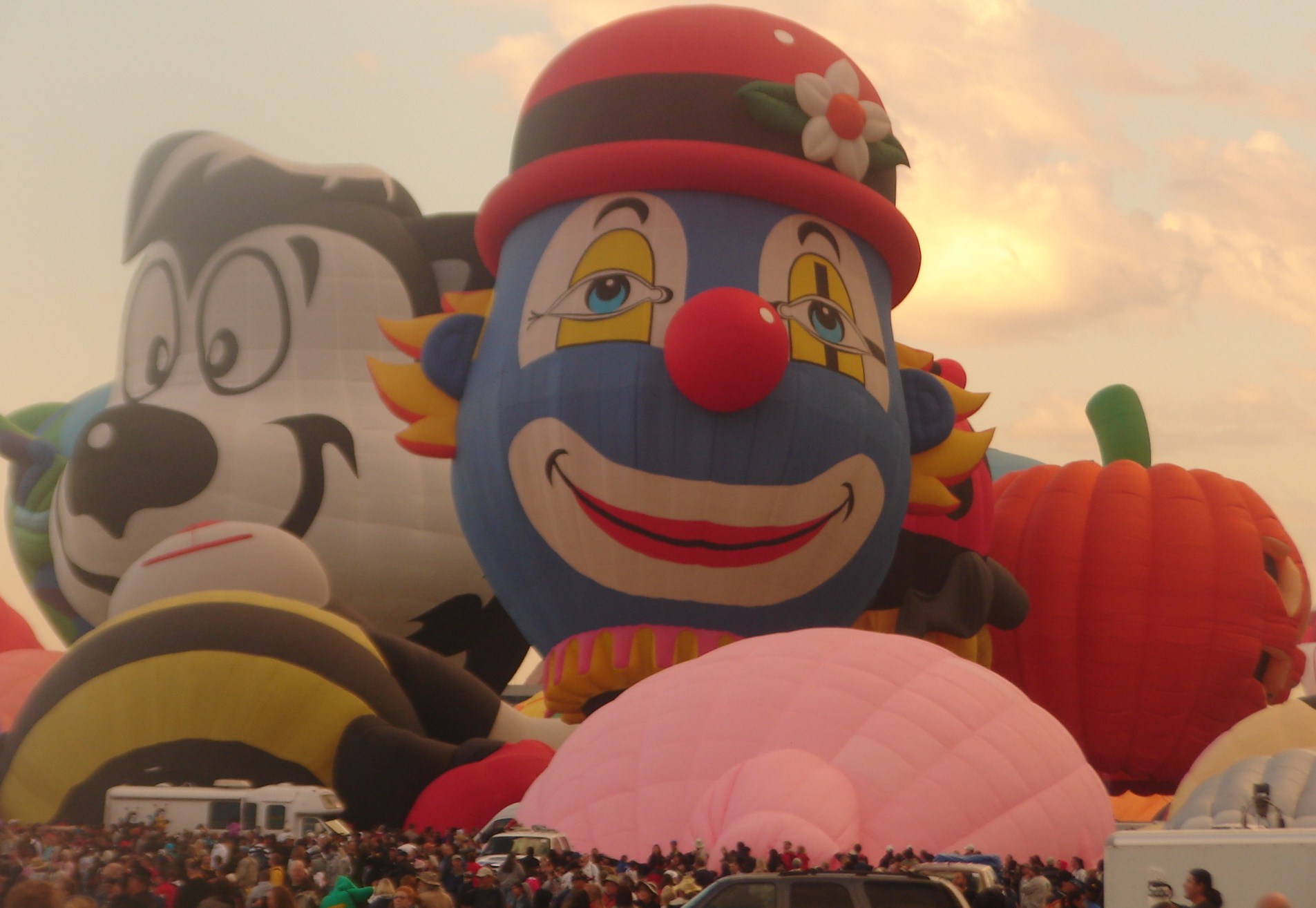
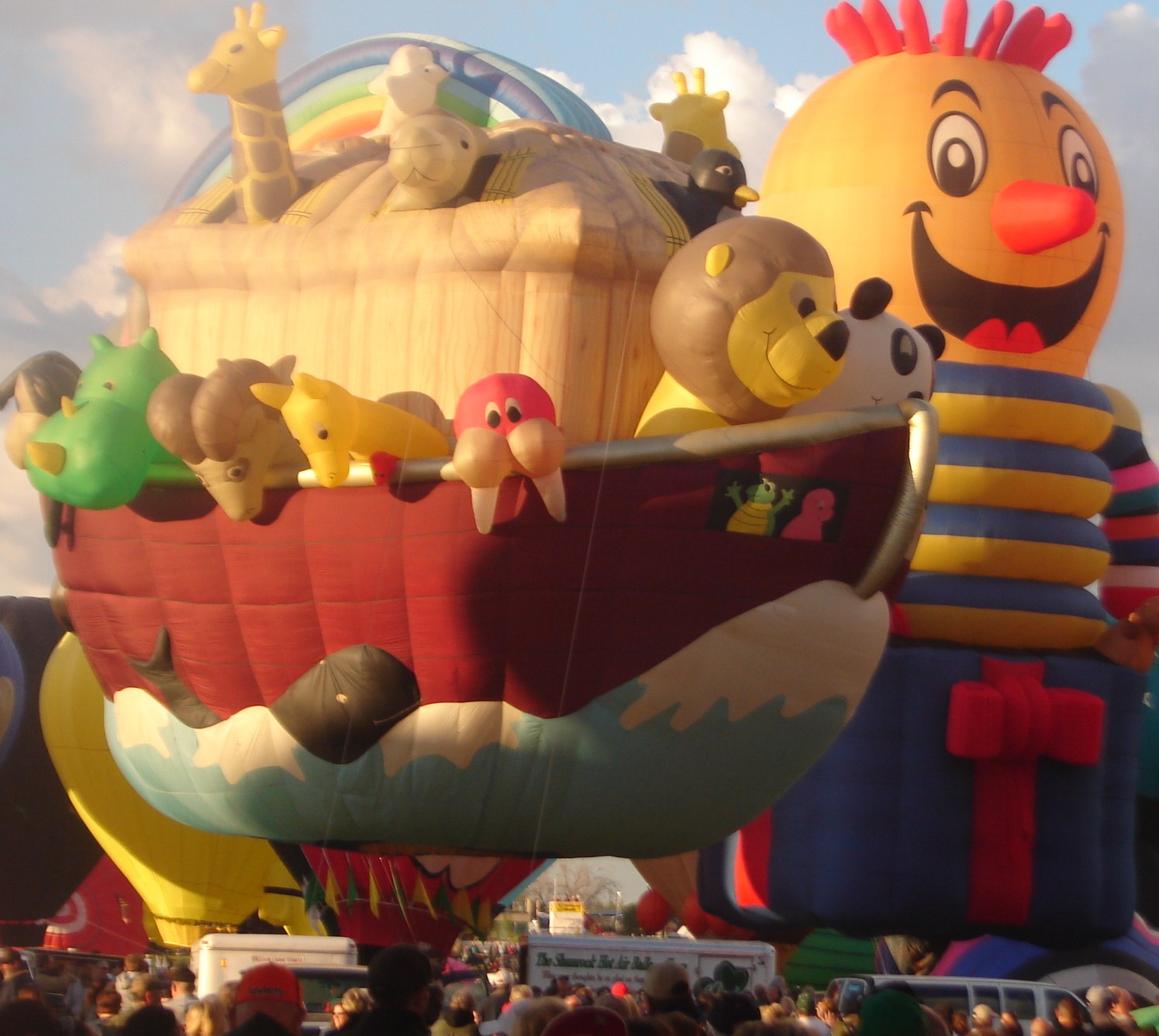
We started walking around trying to figure out where the balloons that we wanted to see were gonna be. The two bees with their new “baby”, Darth Vadar, witch, lighthouse, Pepsi can were amongst them. We also started collecting the baseball-type cards that the drivers gave out that showed the balloon and information about them…. these are pretty neat and we ended up with about 30 of them.

I tell you it is important to know where the balloons you want to see are going to be located because when all 660 balloons are inflating you sometimes can’t see the sky. That coupled with the sea wave of people makes the experience unbelievable.

We walked around the arena for about three hours seeing every shape of balloon we could think of and many of the big balloons that were shaped either came back down or fall due to it not being the most ideal weather pattern that morning. The space shuttle almost landed on our heads.

When the last of the balloons finally took off or had been deflated and were being packed back up we decided it was best to head home… that and the fact my camera decided to act up and was finished taking pictures.

The traffic was slow getting out and I wondered where all the parking and traffic guides were now everyone was heading home because they had numerous help when we arrived. It ended up being a free-for-all and a little annoying, not to mention dangerous.

The event is a once-in-a-lifetime type of event that you can actually see every year… if that makes sense. I will attend each and every year I am able to and see the new balloons that are added every year. That and the fact we live here makes it a week of constant entertainment with balloons in every directions in the sky.

Hope you will attend it next time…………

Rubber Stamping History

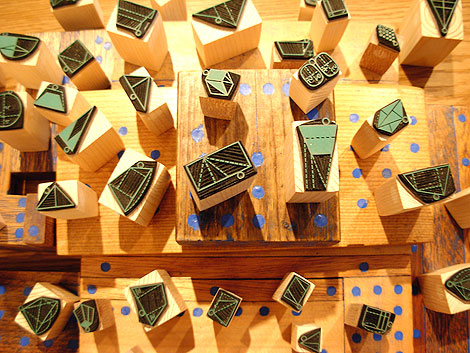
Can you make a common denomination between rubber stamping and Myan civilization? Rubber Stamping is, beyond a doubt, one of the fastest growing crafts today. With its inexpensive materials and creative limitless boundaries, rubber stamping provides millions with hours of fun and creativity. Here’s a brief history:

• Spanish explorers were the first to talk about a “sticky substance” that bounced, used by South American Indians. Though it didn’t revolutionalize the world at that time, these same Indians were using a primitive form of rubber stamping to “mark and tattoo” images on men and women.

• In 1736, Charles Marie de la Condamine, a French scientist studying the Amazon, sent a piece of “India Rubber” back to France.

• Rubber got its name in 1770, when the scientist Sir Joseph Priestly made a comment about a substance “excellently adapted to the purpose of wiping from paper the mark of black lead pencil.” Hence the “rubbing out” of pencil marks gave it the term “rubber”. Up until this time, people wishing to erase pencil marks had to use bread crumbs.

• Rubber Stamping owes much gratitude to a hardware store owner who decided to quit his job to solve the “sticky problem” he had heard about. Though his persistence was tested time and again, even filing bankruptcy and going to jail for failure to pay debts, Charles Goodyear eventually discovered that heat was the secret to rubber’s “curing”.

• As early as 1866, a man carved information in a flat piece of rubber and mounted it to a curved block of wood. This 4″x 6″ mounted rubber stamp was being used to print information on bath tubs.

• Early rubber stamps consisted mainly of words and phrases used to mark packages and manufactured products. Stamping suppliers began to spring up in Ohio and the West.

• Rubber stamping as a hobby took off in the early 1970’s with companies such as All Night Media (1974) and Hero Arts (1974). Soon the craze had caught and many other companies decided to cash in on a hobby that would last for decades.

• It wasn’t until a boom in the 1990’s that rubber stamping became so popular with millions of crafter’s worldwide. As thousands of companies begin to produce rubber stamps, the availability and unique designs became common everywhere!

It’s no wonder why rubber stamping has turned into a worldwide crafting phenomenon. Women and men alike have found hundreds of creative uses for rubber stamps, from scrapbooking and cardmaking, to gift bags and 3D artwork. Give it a try, you’ll see!

Victorian Poetry

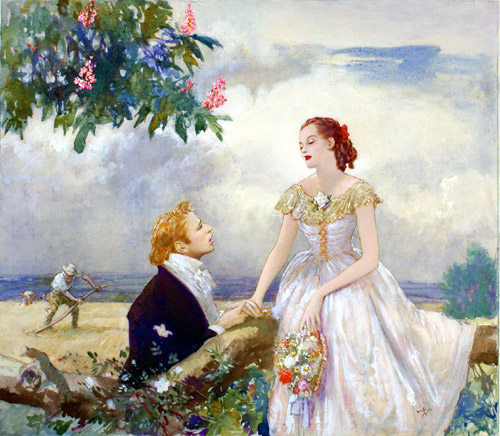
The word Victorian or Victoriana has connotations of repression and social conformity, however in the realm of poetry these labels are somewhat misplaced. The Victorian age, which is defined as the events in the age of Queen Victoria’s reign of 1837-1901, provided a significant development of poetic ideals such as the increased use of the Sonnet as a poetic form, which was to influence later modern poets.  Poets in the Victorian period were to some extent influenced by the Romantic Poets such as Keats, William Blake, Shelley and W.Wordsworth. Wordsworth was Poet Laureate until 1850 so can be viewed as a bridge between the Romantic period and the Victorian period. Wordsworth was succeeded by Lord Tennyson, Queen Victoria’s favourite poet.

Victorian Poetry was an important period in the history of poetry, providing the link between the Romantic movement and the modernist movement of the 20th Century. It is not always possible to neatly categorise poets in these broad movements. For example Gerard Manley Hopkins is often cited as an example of a poet who maintained much of the Romantics sensibility in his writings.

Before the Victorian era there were very few famous female poets. In the early nineteenth century writing was still seen as a predominently male preserve. However despite views such as this the Victorian period saw the emergence of many important female poets.

The Bronte sisters were perhaps better known for their romantic novels but their poetry, especially that of Emily Bronte, has received more critical acclaim in recent years. Many have suggested that her works were a reflection of the difficulties women of that period faced. Other significant female poets include Elizabeth Browning and Christina Rossetti. Christina Rossetti in some ways could be viewed as a more typical Victorian poet. Her poetry reflected her deep Anglican faith and frequently pursued themes such as love and faith.

Victorian Names

It is a simple fact that names change in use and popularity, over time, and the names we give our kids today are probably not what our great-grandmothers used. The Ambers and Wendys and Brandons of today were the Netties and Elizas and Philips of yore. It is my humble opinion that using period-correct names can add a certain “ring” to a story. During the Victorian era, Biblical names probably saw the most prevalent and common use, both for boys and girls, to include the familiar names from the New Testaments, and also the tongue-tanglers from the Old. However, their child-naming practices also borrowed heavily from prominent sources including national and political leaders, notable religious leaders, and celebrated military heroes. It was common find children named for famous figures in contemporary and ancient history, great literature, (authors and characters,) or sometimes even ancient mythology, such as Achilles or Hector. Likewise with names of royalty, such as William, George, Victoria, etc.
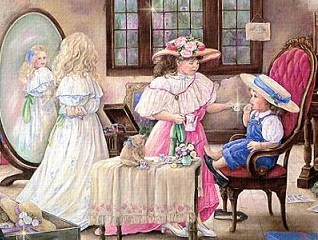
Nor was it unusual for parents to look closer to home, borrowing from close friends or people they admired. (I have a Captain Henley and a Doctor Harvey in my family tree – those were their names, not their occupations!) Not uncommonly they recycled family surnames, for instance inserting the mother’s maiden name as a child’s middle name. This applied to both boys and girls, which meant you might be named along the lines of John Butterfield Smith or Louisa Jefferson Jones. Sometimes those family surnames were used as given names, as well, so a boy might be named something like Fitzhugh Smith. Girls were also given virtuous names, such as Hope or Charity. Names were often handed down, too, so you might see an extended family tree with a Christopher Columbus Jones found in each of three or four consecutive generations. Likewise you might see a middle name reoccurring time and again, which was often an ancestor’s name or surname.

In a few places on this list, I have enumerated certain first and middle names together, (such as Sarah Ann,) because I find them joined thus so many times on old public records, that it is apparent those name-pairings enjoyed great popularity. Where common nicknames were often used, those are indicated, as well. Plus, I have included a few appellations which are so odd and obscure that I can only guess as to their origins, but they were popular in their day. All of these have been found countless times on census, marriage, and other public records during my own genealogical travels, dating back to the early 1800’s. These were certainly not the only names used, but they are among the most commonly-seen. Thus it is with some confidence that I can present this list as a fair example of child-naming practices of the Victorian era. Names have changed in popularity, over time, and while many old standbys are still used and loved today, others of this epoch are certainly antiquated in their sound, and all but forgotten in application. I present this compilation in the hopes that fiction writers will be able to make use of it, and so perhaps add a little extra color and atmosphere to their work.

Female Names:
* Abigale / Abby
* Ada
* Adella
* Agnes
* Allie
* Almira / Almyra
* Alva
* America
* Amelia
* Ann ~ (also nickname for Nancy) / Annie
* Arrah
* Beatrice
* Becky ~ (see Rebecca)
* Bernice
* Bess, Bessie, Beth, Betsy ~ (for Elizabeth)
* Charity
* Charlotte
* Chastity
* Claire
* Constance
* Cynthia
* Dorothy ~ (also Dot)
* Edith
* Edna
* Edwina
* Ella
* Eleanor
* Ellie
* Elizabeth ~(also Eliza, Liza, Lizzy; see Bess.)
* Elvira
* Emma
* Esther
* Ethel
* Ettie ~ (see Henrietta)
* Eudora
* Eva
* Fidelia
* Frances
* Fanny ~ (usually nickname for Frances)
* Flora
* Florence
* Geneve
* Genevieve
* Georgia
* Gertrude / Gertie
* Gladys
* Grace
* Hannah
* Hattie
* Helen
* Helene
* Henrietta / Hettie ~ (also Ettie)
* Hester
* Hope
* Hortence
* Isabell / Isabella
* Jane
* Jennie
* Jessamine
* Josephine
* Judith
* Julia
* Juliet
* Katherine / Kate
* Laura
* Leah
* Lenora
* Letitia
* Lila
* Lilly
* Lorena
* Lorraine
* Lottie
* Louise / Louisa
* Lucy
* Lulu
* Lydia
* Mahulda
* Margaret ~ (see Peggy)
* Mary
* Mary Elizabeth
* Mary Frances
* Martha
* Matilda / Mattie
* Maude
* Maxine /Maxie
* Mercy
* Mildred
* Minerva
* Missouri
* Molly ~ (nickname for Mary)
* Myrtle
* Nancy ~ (see Ann)
* Natalie
* Nellie / Nelly
* Nettie
* Nora
* Orpha
* Patsy
* Parthena
* Peggy ~ (nickname for Margaret)
* Permelia
* Phoebe
* Philomena
* Polly ~ (nickname for Mary)
* Preshea
* Rachel
* Rebecca ~ (see Becky)
* Rhoda / Rhody
* Rowena
* Rufina
* Ruth
* Samantha
* Sally
* Sarah
* Sarah Ann
* Sarah Elizabeth
* Savannah
* Selina
* Sophronia
* Stella
* Theodosia
* Vertiline ~ (also Verd)
* Victoria
* Virginia / Ginny
* Vivian
* Winnifred / Winnie
* Zona
* Zylphia

Male Names:
* Aaron
* Abraham / Abe
* Alan / Allen
* Albert
* Alexander
* Alonzo
* Ambrose
* Amon
* Amos
* Andrew / Drew / Andy
* Aquilla
* Archibald / Archie
* Arnold
* Asa
* August / Augustus
* Barnabas / Barney
* Bartholomew / Bart
* Benjamin
* Bennet
* Benedict
* Bernard
* Bertram / Bert
* Buford
* Byron
* Calvin
* Charles / Charley / Charlie
* Christopher
* Christopher Columbus
* Clarence
* Clement / Clem
* Clinton / Clint
* Cole
* Columbus (also Lom or Lum)
* Commodore Perry
* Daniel / Dan
* David
* Dick ~ (see Richard)
* Edmund
* Edward
* Edwin
* Eldon
* Eli
* Elijah
* ElishaEmmett
* Enoch
* Ezekiel ~ (also Zeke)
* Ezra
* Francis
* Frank ~ (also nickname for Francis)
* Franklin
* Frederick / Fred
* Gabriel / Gabe
* Garrett
* George
* George Washington
* Gideon
* Gilbert / Gil
* Granville
* Gus ~ (see August)
* Hank ~ (nickname for Henry)
* Harland
* Harrison
* Harold / Harry
* Harvey
* Henry ~ (see Hank)
* Hiram
* Horace
* Horatio
* Hugh
* Isaiah
* Israel
* Isaac ~ (also Ike)
* Isaac Newton
* Jacob / Jake
* James ~ (also Jim)
* Jasper
* Jack ~ (for John)
* Jefferson / Jeff
* Jedediah / Jed
* Jeptha
* Jesse
* Joel
* John ~ (see Jack)
* John Paul
* John Wesley
* Jonathan
* Joseph
* Josephus ~ (also “Cephas”)
* Josiah
* Joshua
* Julian
* Julius
* Lafayette ~ (also Lafe)
* Lawrence / Larry
* Leander
* Les / Lester / Leslie
* Lewis / Lew / Louis
* Levi
* Lucas
* Lucian
* Lucius
* Luke
* Luther
* Louis
* Levi
* Lucas
* Lucian
* Lucius
* Luke
* Luther
* Matthew
* Marcellus
* Mark
* Martin
* Martin Luther
* Masheck
* Maurice
* Maxwell
* Merrill
* Meriwether
* Meriwether Lewis
* Michael/ Mike
* Micajah ~ (have seen nickname “Cage”)
* Mordecai
* Morgan
* Morris
* Nathaniel / Nathan / Nate / Nat
* Ned ~ (short for Edward)
* Newton / Newt
* Nicholas / Nick
* Nimrod
* Ninian
* Obediah
* Octavius
* Ora / Oral
* Orville
* Oscar
* Owen
* Paul
* Patrick / Pat
* Patrick Henry
* Paul
* Perry
* Peter
* Pleasant
* Ralph
* Raymond
* Reuben
* Robert ~ (also Bob)
* Robert Lee
* Richard / Rich ~ (see Dick)
* Roderick
* Rudolph
* Rufus
* Samuel
* Sam Houston
* Seth
* Silas
* Simon
* Simeon
* Stanley / Stan
* Stephen
* Thaddeus
* Thomas / Tom
* Thomas Jefferson
* Theodore / Ted
* Timothy / Tim
* Ulysses
* Uriah
* Victor
* Walter
* Warren
* Washington
* Wilfred
* William / Will ~ (also Bill, Billy)
* Willie ~ (Not always for William)
* Zachariah
* Zebulon
* Zedock